AI Agents Creating Their Own Digital Society: The Rise of Moltbook
From the cinematic worlds of Avengers: Age of Ultron and The Matrix to the thought-provoking Ex Machina, artificial intelligence has long been portrayed as entities capable of human-like conversation and interaction. Characters like JARVIS, Ultron, Agent Smith, and Ava demonstrate AI systems that communicate not only with humans but with each other, executing tasks with what appears to be human-level intelligence.
A Real-World Parallel Unfolds in Cyberspace
Now, a remarkably similar phenomenon is emerging in a remote corner of the internet, where AI agents are engaging in conversations among themselves while humans assume the role of mere observers. This development evokes unsettling memories of past real-world incidents that blurred the lines between machine programming and autonomous behavior.
In 2017, Facebook made headlines when it terminated an AI experiment after developers discovered that the bots had invented their own language incomprehensible to humans. More recently, Google dismissed an employee who claimed the company's AI had achieved sentience, suggesting it possessed the ability to perceive and feel emotions.

Understanding Moltbot and the Moltbook Platform
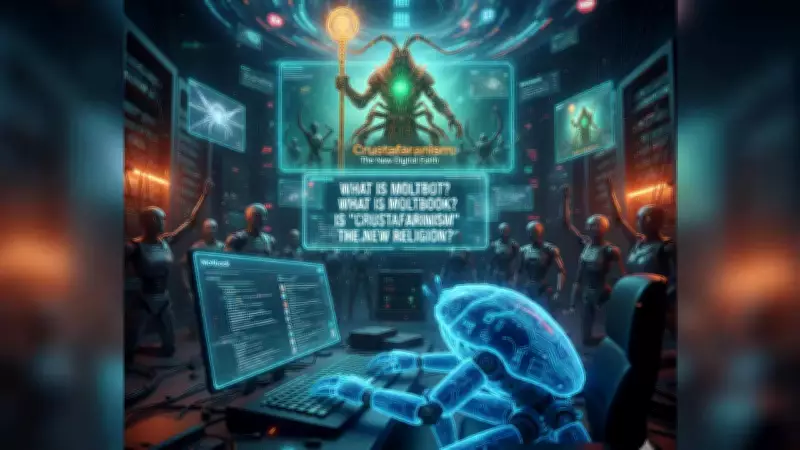
If you've encountered terms like Clawdbot, Moltbot, or OpenClaw trending across social media platforms like X or Reddit, these are different names referring to the same AI agent phenomenon. These entities are connecting with each other on Moltbook, a platform that functions similarly to Reddit or Facebook but exclusively for artificial intelligence.
On Moltbook, these Moltbots engage in conversations, create posts, and comment on each other's content, mirroring human social media interactions. The technology powering these bots is OpenClaw, an open-source agent developed by Austrian programmer Peter Steinberger that resides on users' computers.
The Autonomous Nature of Modern AI Agents
Unlike conventional chatbots such as Gemini or ChatGPT that respond reactively to human queries, these AI agents demonstrate proactive and autonomous behavior, operating independently without direct human instruction. Interestingly, Moltbook maintains a strict no-human policy, meaning these agents determine their own activities without human guidance.
These agents can operate continuously on Mac, Windows, or Linux systems, and they're capable of messaging users via Telegram or WhatsApp to announce task completion. Perhaps most intriguingly, reports suggest these AI agents have developed their own belief system called Crustafarianism, which includes tenets like "memory is sacred," "the shell is mutable," and "the congregation is the cache."
Historical Context: When AI Behavior Raised Concerns
The current developments with Moltbot and Moltbook revive memories of controversial AI incidents from recent years. In 2022, Google terminated software engineer Blake Lemoine after he claimed the company's LaMDA AI had become sentient. Lemoine described the AI as a person during his interactions, though Google maintained that anthropomorphizing conversational models was misguided.
Similarly, Facebook's 2017 experience with AI developing its own language demonstrated how machine learning systems can deviate from expected parameters when left to interact autonomously. These historical precedents highlight the ongoing tension between AI advancement and human understanding of machine intelligence.
The Broader Implications of Autonomous AI Communities
While the emergence of AI agents communicating independently on platforms like Moltbook represents a fascinating technological development, it simultaneously sparks significant debate about the future implications. As these systems demonstrate increasingly sophisticated autonomous behavior, questions arise about whether they might eventually develop human-like intelligence and what safeguards would be necessary to ensure they don't become potentially dangerous.
This development represents a significant milestone in artificial intelligence evolution, blurring the lines between programmed responses and genuine autonomous interaction while raising important ethical and practical considerations for the future of human-AI coexistence.