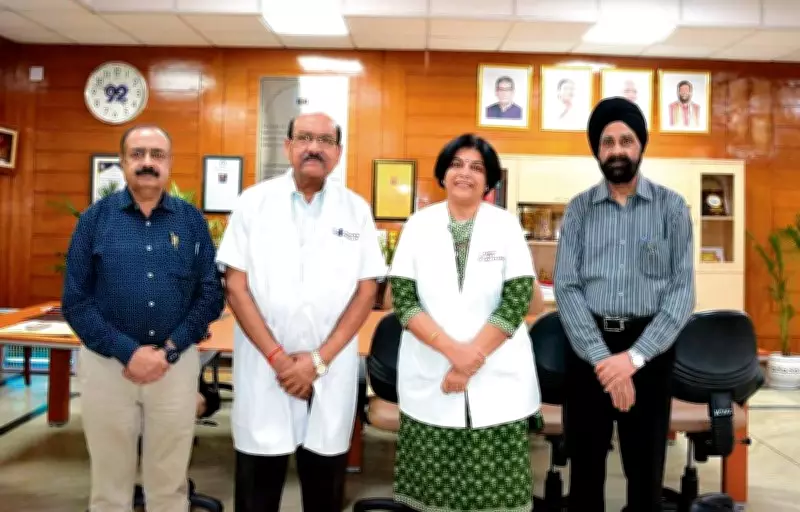
A significant national research initiative is underway to combat oral cancer in India through artificial intelligence-based early detection. The All-India Institute of Medical Sciences (AIIMS), New Delhi, the Indian Institute of Science (IISc), Bengaluru, and Pt BD Sharma Post Graduate Institute of Dental Sciences (PGIDS), Rohtak, are jointly developing an AI-powered mobile application designed to identify oral cancer at its earliest stages.
Addressing Late Diagnosis Challenges
Oral cancer is among the most common cancers in India, largely driven by widespread tobacco use, including gutkha, bidi, hookah, and cigarette consumption. Experts note that late diagnosis remains a major hurdle, with over 70 per cent of patients seeking treatment only after the cancer has progressed significantly. The new project, named Medical Imaging Datasets for India (MIDAS), aims to change this scenario.
Dr Mala Kamboj, Senior Professor and head of the department of oral pathology at PGIDS and key investigator, stated that the Indian Council of Medical Research (ICMR) sanctioned Rs 65.92 lakh for the MIDAS project, with Rs 47.47 lakh already released for the first two years. PGIDS, Rohtak, is the only institution from North India participating in this national collaboration.

AI-Powered Mobile Application
More than 700 patients have been enrolled in the study, and a large database of high-quality clinical and histopathological images has been developed. This database is being used to train an AI-based mobile application that can detect suspicious oral lesions at an early stage and instantly refer patients to specialists, reducing delays in diagnosis and ensuring timely treatment.
Dr Mala further explained that enrolled patients receive detailed counselling about their tobacco habits, including gutkha, bidi, and cigarette use, along with awareness about their harmful effects. Early detection significantly improves treatment outcomes, making oral cancer management more effective, less expensive, and more successful, while also improving patients' quality of life.
Research Publications and Open-Access Dataset
Five research papers from the MIDAS project have already been published in reputed international journals with impact factors as high as 5.5. The findings have been presented at several national conferences, where they received Best Paper awards. Additionally, the project is developing a national-level open-access image dataset, which will be freely available to researchers for future AI-based medical studies.
Impact on Public Health
Dr HK Aggarwal, Vice-Chancellor of Pt BD Sharma University of Health Sciences, Rohtak, praised the achievements of the MIDAS project, calling it a milestone in India's digital health transformation. He emphasized that AI-based technology could play a crucial role in early detection of oral cancer, particularly in rural and remote areas, ultimately saving thousands of lives.
India reports approximately 1.77 lakh new oral cancer cases every year, with more than 70 per cent of patients arriving at healthcare facilities late. However, if detected early, up to 90 per cent of cases can be successfully treated, according to the VC.
Dr Aggarwal advised the public to seek immediate dental consultation if symptoms such as non-healing mouth ulcers lasting more than three weeks, white or red patches, a burning sensation, or difficulty in opening the mouth are observed.
PGIDS Principal Dr Manu Rathee congratulated Dr Mala and her team for their contribution and extended best wishes for the successful completion of the project.