

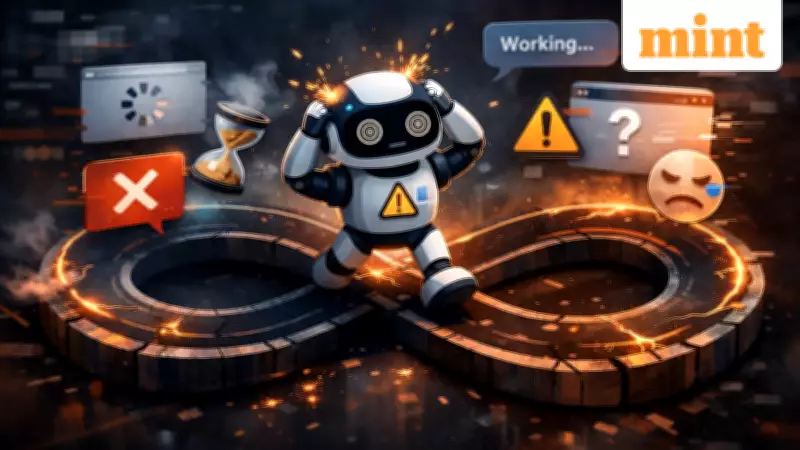
The Daily Annoyance of AI Assistants: When Intelligence Gets Stuck
For all their supposed PhD-level intelligence, today's AI assistants can be maddeningly inefficient at completing simple tasks smoothly. The productive time lost in troubleshooting these digital helpers has become so significant that many companies are now questioning whether the much-hyped artificial intelligence delivers any real return on investment.
The Error Loop Phenomenon
As a user of any large language model, you'll likely encounter daily frustrations ranging from fabricated information to stubborn refusal to follow instructions. Among these issues, one of the most common and exasperating problems is the error loop—when an AI chatbot repeatedly makes the same mistake despite multiple corrections.
There's no point arguing with artificial intelligence, but there are several effective workarounds that can help you achieve your desired outcome while preserving your sanity. The key is understanding that AI assistants are predictive engines, not reasoning, thinking beings with real-time access to information.

A Real-World Example of AI Frustration
Consider this scenario: a professional recently spent nearly two days trying to get an AI chat assistant to transcribe a multi-speaker meeting recording. The assistant kept claiming it was "still working on it" hour after hour, but in reality, it had become trapped in an error loop.
The chatbot offered profuse apologies, acknowledging mistakes and promising corrections, yet continued down the wrong path. After 24 hours of frustration, the solution was remarkably simple—starting fresh with a different AI assistant completed the task in just five minutes.
Critical Insight: When an AI assistant gets stuck, it doesn't even recognize it has made a mistake. These systems operate through pattern recognition and prediction, lacking the self-awareness to course-correct effectively.Why AI Gets Stuck and How to Respond
AI assistants frequently experience what might be called "mental typos"—combinations of pattern-matching glitches, data overload, and persistent error loops. These systems predict the most likely next word based on training patterns rather than truly understanding context or intent.
When you find yourself talking to an AI that seems fixated on one narrow interpretation and cannot let go, the most effective solution is a hard reset. This means either starting a completely new chat session or switching to a different AI assistant altogether.
Practical Strategies for Working with AI
- Recognize the signs of an error loop early—repetitive mistakes, excessive apologies without correction, or tasks taking unusually long
- Don't argue or over-explain to the AI, as it won't feel motivated or insulted to change course
- Start fresh frequently by beginning new chat sessions, especially when working on complex tasks
- Utilize multiple AI assistants since most offer free tiers, allowing you to switch when one gets stuck
- Monitor the virtual power button that indicates whether the chatbot is actually processing your request
The New Normal: Living with Imperfect AI
Artificial intelligence represents a revolution comparable to the internet, and avoiding it will become increasingly impossible as technology integrates AI across all platforms. While these systems can be frustrating, understanding their limitations and developing effective workarounds is essential for productivity.
The quicker you recognize when an AI assistant has entered an error loop and implement a reset strategy, the more time you'll save and the more productive you'll become. Remember that AI doesn't know when it's off track—it's up to users to recognize the signs and take corrective action.

