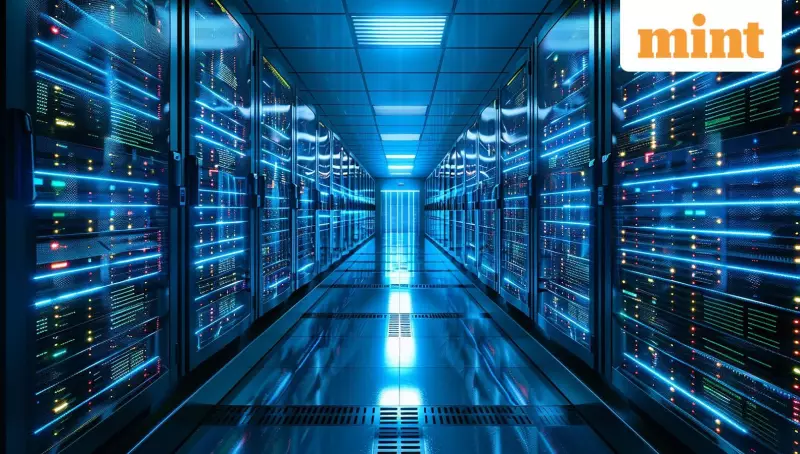
The Hidden Engine of AI: Memory and Storage Demand Soars
When artificial intelligence captured the world's attention, most people focused on processors and cloud platforms. However, a more fundamental story was developing beneath the surface. The explosive growth of AI data centers has triggered a sharp increase in memory and storage demand. This trend has created an unusual supply shortage in global memory markets. It has also pushed several U.S.-listed companies into rare leadership positions in the stock market during 2025 and early 2026.
For Indian investors using platforms like Appreciate to access U.S. equities, this structural shift represents an often overlooked segment of the AI infrastructure stack. It also presents a potential long-term investment theme worth serious consideration.
Memory Markets: A Highly Concentrated Global Arena
Unlike other semiconductor sectors, memory markets are extremely concentrated. In 2025, essentially three major players dominated the global DRAM landscape. SK hynix, Samsung Electronics, and Micron Technology account for over 90% of global DRAM output. SK hynix has emerged as the largest manufacturer in recent quarters.

TrendForce estimated that in Q2 2025, SK hynix held 38.7% of global DRAM revenue. Samsung followed with 32.7%, and Micron captured 22%. The remaining players accounted for approximately 6.6% of the market.
Memory is not a commodity with dozens of competitors. These three companies set much of the global pricing and capacity allocation. This means any structural demand shift impacts prices quickly and broadly across the entire market.
For NAND flash, the field is slightly broader but still dominated by a handful of firms. Key players include Samsung, SK hynix, Micron, YMTC, and Western Digital. In 2025, Samsung led with 30% market share. SK hynix held 20%, Kioxia 14%, Micron 13%, YMTC 13%, and Western Digital 11%.
AI Data Centers: Driving Structural Demand
AI workloads are far more memory-intensive than typical compute tasks. Large language models and other generative AI systems require huge volumes of DRAM and flash memory for training and serving. This drives disproportionate memory use compared to traditional computing.
Cloud providers and hyperscalers like Amazon, Microsoft, Google, and Meta have significantly expanded AI-related data center spending. This contributed to a record build-out of U.S. server infrastructure in 2025. An S&P Global report noted that U.S. data center construction spending reached $61 billion in 2025, a level directly tied to AI demand.
Many memory manufacturers are pivoting production capacity toward high-bandwidth memory, a key component of AI servers. This shift comes at the expense of traditional consumer and commodity memory production. It reduces the supply of DRAM and NAND available for other market segments.
The result is a structural mismatch. Rapidly growing enterprise consumption faces slow-to-expand global capacity, creating persistent supply challenges.
A Memory Supply Crunch Takes Hold
Global DRAM and NAND markets experienced cyclical oversupply during the pandemic and early 2020s. But beginning in 2024 and continuing through 2025 and 2026, a new pattern emerged.
Memory pricing, particularly for server and enterprise memory, has risen sharply. Industry trackers report DRAM contract price increases of 15% or more month-on-month into late 2025. NAND prices have shown similar upward movement.
Some analyst projections suggest DRAM prices could double by 2026 compared with early 2025 levels. This potential increase is driven by ongoing supply constraints and relentless AI demand.
The structural shortage of memory caused Apple to send executives to stay near Samsung and SK hynix facilities. Their mission was to secure long-term supply agreements, a clear sign of persistent tightness in memory supply chains.
This is not a temporary inventory reshuffle. Memory product lead times and contract pricing both show more sustained imbalances than would be expected in a typical market hiccup.
U.S.-Listed Stocks at the Center of the Action
Several U.S.-listed companies sit directly at the heart of this memory and storage trend. Their performance reflects the market dynamics created by AI-driven demand.

Micron Technology (MU) is one of the three global memory producers. It benefits directly from pricing strength and AI-related demand. Reports indicate Micron's share price rose about 236% in 2025. Management has indicated that memory tightness could persist beyond 2026.
Western Digital (WDC) and its spinoff SanDisk (SNDK) are key players in NAND flash and enterprise storage. Both have been highlighted as major beneficiaries of AI-driven data center demand in early 2026 coverage.
Seagate Technology (STX) focuses on high-capacity HDDs for data centers. Its enterprise exposure has linked performance closely to AI-led infrastructure expansion.
ETF Exposure to the Theme
For investors seeking diversified exposure rather than individual stocks, semiconductor-focused ETFs provide indirect access to this trend. Several ETFs have shown strong performance linked to semiconductor and memory markets.
The VanEck Semiconductor ETF (SMH) focuses on the U.S. semiconductor sector. The iShares Semiconductor ETF (SOXX) tracks large U.S. semiconductor stocks. The Invesco Dynamic Semiconductors ETF (PSI) offers broad semiconductor exposure. The SPDR S&P Semiconductor ETF (XSD) follows equal-weight semiconductors.
Broader Storage Demand Also Rises
AI workloads do not just need memory. They also require persistent high-capacity storage. As enterprise data creation accelerates, both flash and spinning-disk storage demand has grown significantly.
A large industry forecast projects overall data center infrastructure spending, including storage and compute, is on track to contribute to a $1 trillion global market by 2030. This growth is driven primarily by hyperscale AI build-outs.
What This Means for Indian Investors
For Indian investors accessing U.S. markets via platforms like Appreciate, several key points emerge. Structural demand from AI data centers has reshaped pricing and supply in global memory markets. A highly concentrated supplier base means pricing power can shift rapidly when demand grows faster than capacity.
U.S.-listed names such as Micron, Western Digital, Seagate, and SanDisk have been among the most directly exposed to this trend. Broader semiconductor or tech ETFs with memory and storage exposure may offer diversified access to the theme.
Appreciate combines a wide universe of more than 8,000 U.S. stocks and ETFs with fractional investing and institutional-grade research. This makes it easier to align global investment themes with individual portfolio objectives.
Conclusion
AI is not just changing software and applications. It is reshaping the physical infrastructure that underpins global digital activity. Memory and storage have moved from relatively cyclical tech segments to the center of a structural demand shift driven by AI data center expansion.
With global memory pricing rising and capacity reallocation tightening supply, a small group of companies controls much of the world's memory output. For Indian investors looking to participate in this trend via U.S. markets, understanding the underlying economics of memory and storage is now more important than ever.