

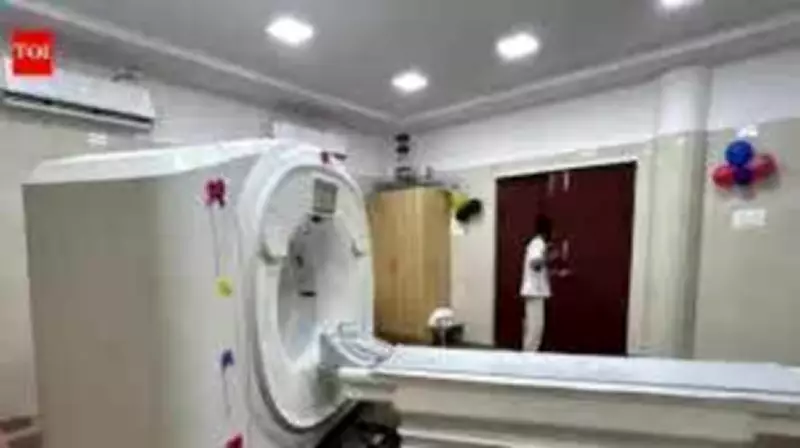
Radiologists at a Chennai city hospital have demonstrated that artificial intelligence can reduce radiation exposure in lung cancer screening by up to 80% while preserving the diagnostic accuracy needed to detect tumors early.
Study Findings
The study, conducted on 179 patients at MGM Malar Hospital in Adyar and presented at the European Congress of Radiology in Vienna, revealed that scans enhanced with deep learning algorithms achieved 83.8% accuracy in detecting malignancies. This compares with 88.8% for human radiologists and 87.2% for traditional machine learning classifiers.
"Radiologist interpretation remains superior, but AI may serve as a valuable assistant," said senior radiologist Dr. Reefath J P Samuel.

Radiation Dose Reduction
AI-enhanced scans delivered radiation doses of just eight to 10 milligray-centimetre, well below international standards and a fraction of those from conventional CT scans. Repeated exposure to conventional CT scans raises concerns about cancer risks. A standard chest CT delivers about 70 times more radiation than a chest X-ray. CT scans use X-ray radiation that can damage DNA, and while most damage is repaired, errors in the repair process can lead to cancer later.
"Ultra-low-dose CT combined with AI-integrated thin-slice reconstruction demonstrates clinically useful diagnostic performance," said the study's lead author, Dr. R J Prabagaran, head of radiology at MGM Malar Hospitals. His team validated the findings against tissue biopsies rather than relying solely on imaging interpretation.
Technology Used
The technology employs DELTA reconstruction algorithms to achieve these results.






