

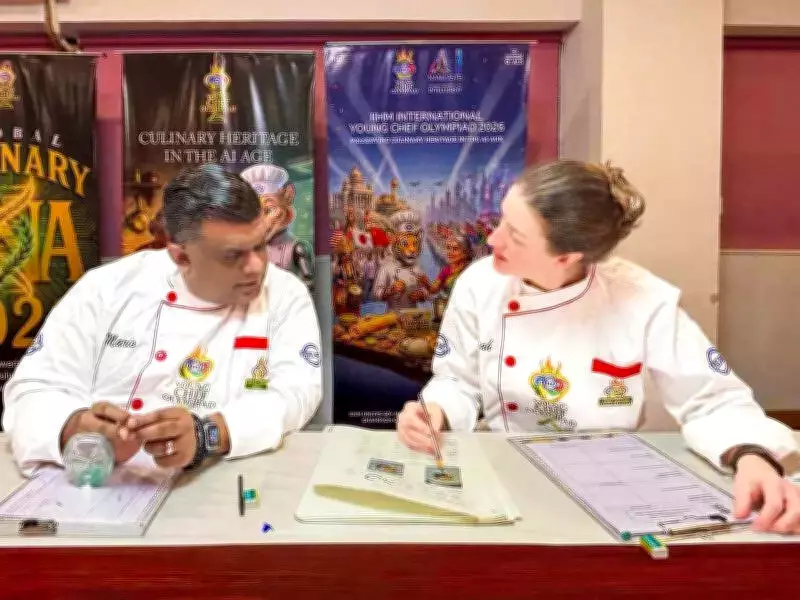
In Pune's vibrant hospitality sector, artificial intelligence is transitioning from a futuristic concept to an indispensable daily tool, transforming both professional kitchens and educational institutions. The technology is no longer viewed as an experimental novelty but rather as a practical asset that enhances efficiency while respecting culinary traditions.
AI as a Cultural Guardian in Culinary Education
During the recent United World of Young Chefs 2026 event held on Monday, students from the International Institute of Hotel Management (IIHM) joined international chefs to discuss technology's growing role in modern hospitality. The conversation revealed that AI's value extends far beyond mere operational efficiency—it's becoming a crucial preserver of culinary heritage.
Through the institute's innovative AI portal called NamAIste, culinary students across India are systematically archiving regional recipes. This digital preservation effort allows traditional dishes to be thoughtfully adapted for contemporary dietary requirements—including allergies and lifestyle preferences—while maintaining their authentic character and cultural significance.

Student Perspectives: AI as Learning Companion
For aspiring hospitality professionals like student Farhan Shaikh, AI has become central to the educational experience. "AI now fundamentally shapes how we learn hospitality management," Shaikh explained. "Rather than relying on standard searches, I use ChatGPT to generate comprehensive ingredient lists, scale recipes for up to 100 portions, and calculate precise measurements. It even helps identify cost-effective suppliers before submitting purchase requests."
Shaikh emphasized that AI serves as a powerful academic resource, condensing extensive syllabi into manageable study points and providing practical guidance for real-world kitchen scenarios.
Second-year student Meet Chandaliya shared similar enthusiasm, particularly regarding Food & Beverage service applications. "I utilize AI to explore innovative cocktail recipes and achieve the exacting precision required in bakery and pastry work," he noted. Having been introduced to AI tools during his first year, Chandaliya views technology as an organizational enhancement rather than a dependency. "It significantly reduces paperwork and accelerates workflow, enabling us to execute tasks with remarkable efficiency."
Professional Chefs: AI as Strategic Support System
From the professional kitchen perspective, consensus emerges that AI functions best as a support mechanism rather than a replacement for human expertise. London-based Chef Sarah Hartnett, recognized as a Global Pastry Icon and Callebaut Ambassador, observed that the industry remains in an exploratory phase regarding AI integration.
"AI remains relatively new to most professional kitchens," Hartnett explained. "We're not forcing it into every process but rather investigating where it genuinely adds value." Interestingly, she believes AI can help the culinary world reconnect with its foundations. "In our fast-paced industry where menus constantly evolve, AI enables us to look backward. It can help revive older techniques that might otherwise disappear over time."
Whether analyzing emerging food trends or generating concepts for themed events, Hartnett maintains that the actual creative process remains firmly within the chef's domain.
The Administrative Advantage
Chef Mario Perera, Executive Chef at Jumeirah Carlton Tower in Knightsbridge, characterizes AI as a "time-saving ally" for chefs who have mastered fundamental skills. "When your basics are strong, technology helps you build faster and smarter," Perera stated. He identified AI's most significant impact in handling administrative burdens.
"Calculating nutritional information, costing analyses, and allergen breakdowns can now be completed instantly. This liberates chefs from computer screens and allows them to concentrate on cooking."

Recognizing AI's Limitations
Despite widespread enthusiasm, both culinary experts clearly acknowledge the technology's boundaries. "AI can organize information effectively, but it lacks human judgment," Perera concluded. "It cannot determine when a dish requires additional cooking time or when flavor profiles achieve perfect balance."
As Pune's hospitality industry continues evolving from classroom instruction to professional kitchen implementation, AI integration suggests a promising future where technology manages data-intensive tasks while chefs preserve the soul and creativity of culinary artistry. This balanced approach ensures that technological advancement enhances rather than diminishes the human elements that make dining experiences memorable.
