AI Transforms Customer Retention: From Prompt to Context Engineering
Acquiring customers has always been a significant hurdle for businesses, but today's market presents an even greater challenge: keeping them. Across both B2B and B2C sectors, retention has become markedly more difficult than initial acquisition, driven by escalating demands for speed, personalization, and seamless service experiences.
Artificial intelligence is emerging as a pivotal solution to meet these heightened expectations. Beyond mere automation, AI facilitates richer, more human-like conversations at scale, enabling companies to distinguish themselves in fiercely competitive environments.
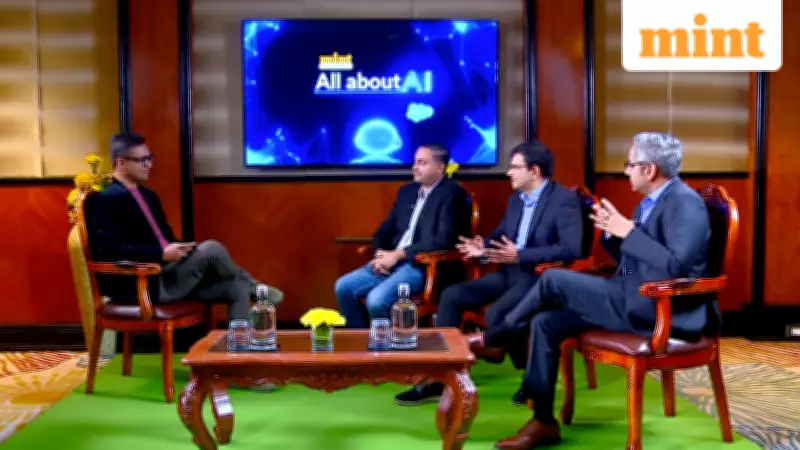
Episode 14 of Mint's All About AI Series
This critical shift was the central theme of Episode 14 of Mint's All About AI series. Abhishek Singh, Deputy Editor at Mint, engaged in a detailed discussion with Aditya Singh, Vice President of Product Management for Agent for Service at Salesforce; Prasad Raje, Senior Vice President of Product Management for Agent for Service at Salesforce; and Deepu Chacko, Vice President of Solution Engineering at Salesforce India.

The conversation delved into why businesses are transitioning from prompt engineering to context engineering, highlighting how this evolution is becoming essential for fostering customer loyalty and ensuring sustainable growth.
Why Retention Has Become Harder Than Acquisition
The dialogue commenced with a straightforward yet increasingly prevalent observation: modern customers are impatient, well-informed, and quick to disengage when their experiences fall short. Retaining them demands far more than efficient transaction processing.
Aditya Singh elaborated on this shift, stating, "In today's age, customers' expectations are increasing. With AI, you can really take advantage of AI and allow service agents and service leaders to stay on top of things and deliver that personalised experience so that it helps them build that trust with their respective brands."
The panel unanimously agreed that personalization is no longer optional; it has become the baseline standard against which customers evaluate service quality, whether interacting with airlines, banks, telecom providers, or enterprise software firms.
The Customer Journey Is Continuous, Not Transactional
Prasad Raje redefined the concept of customer acquisition, arguing that businesses often view it too narrowly. "You are acquiring customers all the time. It's not a one-time thing, because your goal as a provider or as a brand is to make that customer a lifetime customer," he explained.
He described customers as constantly cycling through phases of purchasing, receiving support, and making repeat purchases. Consequently, service and sales are not separate journeys but overlapping ones, with many service interactions—such as order changes or support calls—effectively functioning as sales opportunities.
From Salesforce's perspective, this underscores the necessity of approaching customer engagement as a unified strategy across sales, service, and marketing, rather than as isolated systems. Fragmentation disrupts continuity, and continuity is what customers increasingly expect.
How AI Fits Into This Evolution
To comprehend AI's role, Raje contextualized it within the broader history of technological advancement. Customer service once required physical presence, such as visiting an office to place orders or pay bills. The internet and web revolutionized this by enabling remote transactions, while cloud platforms standardized and scaled these interactions, and mobile technology made them ubiquitous.
AI represents the next major leap forward. "This is the first time computers can speak back to us in a language that is truly human," Raje noted, emphasizing AI's capacity for natural conversation, a capability absent in earlier systems.
This conversational prowess is what renders AI so potent in customer service contexts. However, mere language fluency does not guarantee a positive experience.
Why Prompt Engineering Is No Longer Enough
A recurring theme in the discussion was the limitations of prompt-based AI systems. While they may respond fluently, they often lack awareness of the customer's specific situation.

Deepu Chacko stressed that scale is the real constraint. "Every consumer is expecting a personalised service, and to do that at scale is something that can only be done with AI," he said.
Yet, personalization at scale requires more than effective prompts. It necessitates systems that comprehend business rules, brand tone, policies, and customer history, applying them consistently.
Raje illustrated this with a straightforward airline example. "When you're calling Air India, you expect the agent on the other side to have context about the ticket you just booked, or the flight you have taken, or the baggage issue you already reported," he explained.
A generic AI might communicate well, but without access to such information, it cannot respond meaningfully. "That raw ability to sound human has to be put together with the context of the business," he added.
Context Goes Beyond Data, It Includes Emotion
The panel emphasized that context extends beyond transactional data to encompass real-time emotional states. A customer may begin a conversation calmly but become frustrated or anxious as it progresses. Systems must detect these emotional shifts and respond appropriately, whether through reassurance, offers, or escalation to a human agent.
This highlights the critical importance of seamless hand-offs between AI and human agents. Human representatives must be equipped not only with historical customer data but also with the complete conversational trail leading to the escalation.
AI Already Operating at Scale
Abhishek Singh cited Air India as a practical example of AI-led service advancement, noting that the airline's AI agents now resolve the majority of customer queries, with only a small fraction requiring human intervention.
This example underscored AI's progression beyond experimentation. "We are well past the point of showing proof of concepts and demonstrations," Raje remarked, pointing out that such deployments are already operational across various industries and use cases.
Addressing the Fear of Hallucination
One common concern businesses express about AI is hallucination—the risk of incorrect or fabricated responses.
Aditya Singh addressed this apprehension directly. "Humans give wrong responses as well. It's not just AI that hallucinates," he stated.
Raje elaborated by explaining how expectations around technology have been shaped by decades of deterministic systems. "AI is not deterministic. It is probabilistic and closer to humans," he said.
The key to mitigating this risk lies in context. "If you give the AI agent the right context, it has much less propensity to hallucinate. Output can only be as good as the input," he argued. This context includes accurate data, proper workflow integration, and clearly defined organizational guardrails.
What Businesses Are Asking for Next
Looking ahead, Raje shared emerging customer demands. "Customers are asking if we can convert six-minute conversations into two-minute conversations, or make their call centres operate 24 hours instead of 9 to 5," he revealed.
Businesses seek richer engagement without the prohibitive costs of scaling human-only teams. The panel concurred that AI makes this expansion economically viable.
AI's impact is also extending beyond customer service. Across sales, marketing, operations, and billing, repetitive tasks are being automated, allowing employees to concentrate on higher-value work.
Chacko added that AI is democratizing capabilities, reducing the need for deep technical expertise, enabling faster analysis, and supporting real-time language translation—a particularly significant development in a diverse nation like India.
A Lighter Look at What's Coming
As the session concluded, the conversation turned to lighter topics, offering glimpses into how AI is already reshaping everyday experiences.
Aditya Singh pointed to self-driving taxis in San Francisco as a striking example of AI's progress in the physical world. Raje discussed rapid advances in AI-driven video generation, highlighting how these systems now demonstrate an implicit understanding of real-world physics.
Chacko shared a personal anecdote about using AI to plan a complex international trip, aligning schedules, routes, and preferences in minutes—a task that would otherwise have taken considerably longer.
When asked what they would automate in their own lives, responses ranged from managing Slack messages to grocery shopping and meal planning, reminding us that AI's ultimate ambition extends beyond efficiency to anticipation.
Context as the Foundation of the Future
As the discussion wrapped up, one idea stood out prominently: prompt-based AI can answer questions, but context-aware AI builds relationships.
By integrating historical data, live interaction signals, and emotional awareness, context engineering enables businesses to move beyond transactional service toward trust-based engagement. In a world where loyalty is fragile and expectations are unforgiving, this shift is no longer optional.
It is rapidly becoming the foundation of how modern businesses operate and how they retain the customers they strive so diligently to acquire.
Note to Readers: This editorial initiative by Mint is sponsored by Salesforce.