AI Vocabulary Explained: From LLMs to Guardrails - Key Terms You Should Know
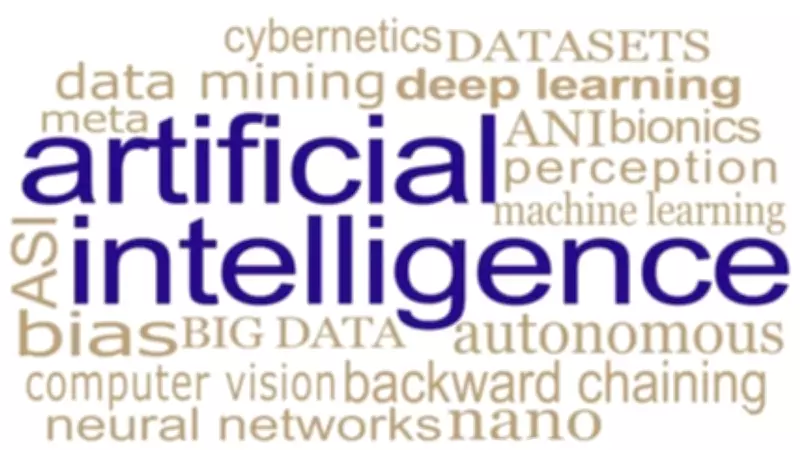
As artificial intelligence continues to transform industries and daily life, understanding its fundamental terminology has become increasingly important. This guide provides a detailed explanation of key AI terms, from foundational concepts to advanced technologies, empowering you to navigate this rapidly evolving field with confidence.
Large Language Models (LLMs)
Large Language Models represent a significant advancement in artificial intelligence, particularly in natural language processing. These sophisticated AI systems are trained on massive datasets of text, enabling them to generate human-like text, translate languages, answer questions, and perform various language-related tasks. LLMs like GPT-4 and BERT have demonstrated remarkable capabilities in understanding context, generating coherent responses, and even creating original content across multiple domains.
Guardrails in AI Systems
Guardrails refer to the safety mechanisms and ethical boundaries implemented within AI systems to prevent harmful or undesirable outputs. These protective measures ensure that AI operates within predefined parameters, minimizing risks such as biased responses, misinformation generation, or inappropriate content creation. Guardrails are essential for responsible AI deployment, particularly in sensitive applications where accuracy and safety are paramount considerations.

Neural Networks
Neural networks form the foundational architecture of most modern AI systems, inspired by the biological neural networks in human brains. These interconnected layers of artificial neurons process information through complex mathematical operations, enabling machines to recognize patterns, make predictions, and learn from data. Different neural network architectures serve specific purposes, from convolutional neural networks for image recognition to recurrent neural networks for sequential data processing.
Machine Learning
Machine learning represents a subset of artificial intelligence focused on developing algorithms that enable computers to learn from data without explicit programming. This approach allows systems to improve their performance over time as they process more information. Machine learning encompasses various techniques, including supervised learning with labeled data, unsupervised learning for pattern discovery, and reinforcement learning through trial-and-error feedback mechanisms.
Natural Language Processing (NLP)
Natural Language Processing enables computers to understand, interpret, and generate human language in valuable ways. This interdisciplinary field combines linguistics, computer science, and artificial intelligence to bridge the gap between human communication and machine understanding. NLP applications range from simple text classification to complex conversational agents, sentiment analysis, and automated translation systems that facilitate global communication.
Training Data
Training data constitutes the information used to teach AI models how to perform specific tasks. The quality, quantity, and diversity of training data directly influence an AI system's performance and capabilities. Well-curated datasets help models learn accurate patterns and make reliable predictions, while biased or incomplete data can lead to flawed outcomes and reinforce existing prejudices within AI systems.
Algorithmic Bias
Algorithmic bias occurs when AI systems produce systematically prejudiced results due to flawed assumptions in the machine learning process or biased training data. This phenomenon can perpetuate and amplify existing social inequalities if not properly addressed. Identifying and mitigating algorithmic bias requires careful data selection, diverse development teams, and ongoing monitoring of AI system outputs across different demographic groups.

Explainable AI (XAI)
Explainable AI focuses on making AI decision-making processes transparent and understandable to human users. As AI systems become more complex, their internal workings often resemble "black boxes" that are difficult to interpret. XAI techniques help users comprehend how AI arrives at specific conclusions, building trust in automated systems and enabling better oversight of critical applications in healthcare, finance, and other sensitive domains.
Computer Vision
Computer vision enables machines to interpret and understand visual information from the world, mimicking human visual perception capabilities. This technology allows AI systems to analyze images and videos, recognize objects, detect patterns, and extract meaningful information from visual data. Applications span numerous fields, including medical imaging analysis, autonomous vehicle navigation, facial recognition systems, and quality control in manufacturing.
Deep Learning
Deep learning represents an advanced approach to machine learning that utilizes multiple layers of neural networks to process data and extract increasingly complex features. This hierarchical learning structure enables deep learning models to achieve remarkable performance in tasks that were previously challenging for traditional machine learning approaches, such as image and speech recognition, natural language understanding, and complex decision-making scenarios.
Understanding these fundamental AI terms provides a solid foundation for engaging with artificial intelligence technologies as they continue to evolve and integrate into various aspects of society. From the basic architecture of neural networks to the ethical considerations of guardrails and algorithmic bias, this vocabulary represents essential knowledge for anyone seeking to comprehend the current state and future direction of artificial intelligence development.