Microsoft Research India Highlights AI's Shift from Demos to Real-World Impact
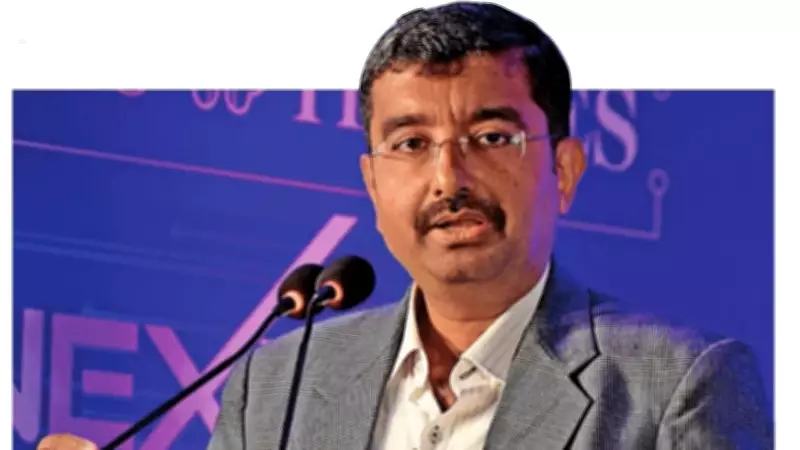
Venkat Padmanabhan, Managing Director of Microsoft Research India, has declared that the world has entered a new era of artificial intelligence, moving beyond mere pilots and demonstrations to genuine adoption that is influencing business outcomes, national competitiveness, and even Gross Domestic Product. In a keynote address, he described this transformative phase as "AI diffusion", a term popularized by Microsoft CEO Satya Nadella to emphasize the current priority of integrating AI into daily workflows to generate measurable effects.
The Three Phases of AI Transformation
Padmanabhan outlined this emerging transformation through three distinct phases, each representing a deeper integration of AI into human activities.
Phase One: AI with Humans in the Loop
The initial phase involves "AI with humans in the loop", where AI assists by handling tedious tasks, enabling human professionals to scale their efforts while maintaining oversight to prevent errors. A prime example is Shiksha, a teacher's copilot tool designed to help educators create lesson plans that align with curriculum standards and local cultural contexts. Padmanabhan noted that generic internet searches for topics like nutrition might yield irrelevant examples for Indian children, but Shiksha tailors content appropriately. This initiative has been piloted with approximately 10,000 teachers in Karnataka and Telangana and is now expanding.

In road safety, Microsoft Research is developing a project to automate driving license tests using smartphones placed on dashboards or windshields. By leveraging device sensors and on-device AI, the system administers tests objectively, addressing issues where licenses are often issued without proper testing, contributing to India's high road accident rates. Padmanabhan stressed that success in these applications hinges on domain expertise, with partnerships like those with educators for Shiksha and Maruti Suzuki for road safety being crucial to avoid tools that fail in real-world environments.
Phase Two: Human on the Loop
The second phase, where the industry is rapidly advancing, is termed "human on the loop". Here, humans set broader goals, and AI agents take charge of planning, reasoning, and execution, with human intervention only when necessary. Padmanabhan cited Microsoft Research work demonstrating AI agents navigating complex websites, such as searching for flight options and completing bookings. This shift carries significant cultural implications, as employees must adapt to collaborating with "digital colleagues" in their workflows.
Phase Three: Reimagining Workflows
The third phase, still emerging, involves completely reimagining workflows rather than simply automating existing processes. Padmanabhan pointed to scientific discovery fields like drug discovery and materials design, where AI can sift through vast numbers of molecule candidates, predict properties, and identify synthesis targets. This compresses work that traditionally took years into mere days or weeks, moving beyond high-performance simulations and wet-lab experiments to accelerate innovation.
Overall, Padmanabhan's insights underscore AI's evolution from experimental tools to integral components driving efficiency and growth across sectors.