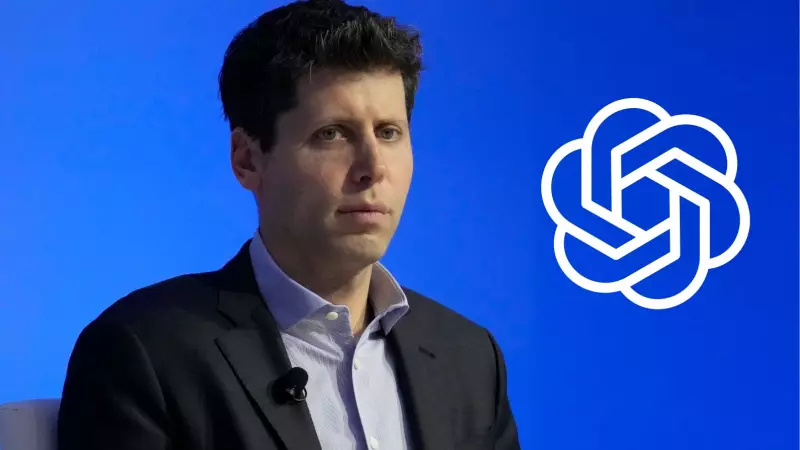
In a significant shift of perspective, OpenAI CEO Sam Altman has declared that the next major frontier in artificial intelligence is not about creating models with superior reasoning capabilities. Instead, the real game-changer will be AI systems endowed with what he terms 'infinite memory'.
Beyond Reasoning: The Memory Revolution
For years, the relentless focus of AI labs has been on enhancing the logical and reasoning prowess of large language models. However, in a recent podcast discussion with journalist Alex Kantrowitz on December 20, 2025, Altman presented a contrarian view. He suggested that the industry's focus might be misplaced. The transformative leap, according to the OpenAI chief, will arrive when AI can persistently remember users, their preferences, and the history of interactions over extended periods.
Altman pointed to ChatGPT's own Memory feature as an early indicator of this shift. This function allows the chatbot to retain specific details shared by a user across different chat sessions, eliminating the need for constant repetition. "The real difference maker has been the memory feature," Altman stated, acknowledging the progress ChatGPT has made while highlighting memory as the pivotal advancement.

The Promise and Peril of Infinite Recall
Drawing a comparison with human limitations, Altman elaborated that even the world's best personal assistant cannot remember every word a person has ever uttered. AI, unbound by such biological constraints, has the potential for near-infinite recall. "I think we have no conception because the human limit... they can't remember every word you've ever said in your life," he remarked.
While admitting that AI memory technology is still in its nascent stages, Altman envisions a future where it could evolve to "remember every detail of your entire life," capturing subtle habits and preferences. This vision, however, is a double-edged sword. It immediately raises profound questions about data privacy and the risks associated with an AI having access to such an intimate, lifelong record of a person's existence.
Personalisation, Companionship, and Intensifying Competition
Despite the privacy concerns, Altman speculated on a profound societal shift. As AI systems become more persistent and personalised through memory, humans might form deeper relationships and even a sense of companionship with them. This level of personalisation is poised to become the new battleground for AI supremacy.
The statement comes at a time when OpenAI, a long-time frontrunner, is facing formidable competition. Altman specifically acknowledged the stiff challenge from Google's Gemini 3 model, which has exceeded expectations. The competitive pressure is palpable within OpenAI; earlier in December, Altman reportedly declared an internal "Code Red," redirecting all resources to accelerate work on a next-generation large language model internally codenamed "Garlic."
Altman's comments reframe the roadmap for AI development. They suggest that the future of practical, everyday AI may hinge less on abstract problem-solving and more on the ability to build a continuous, contextual, and deeply personal understanding of each user over time.