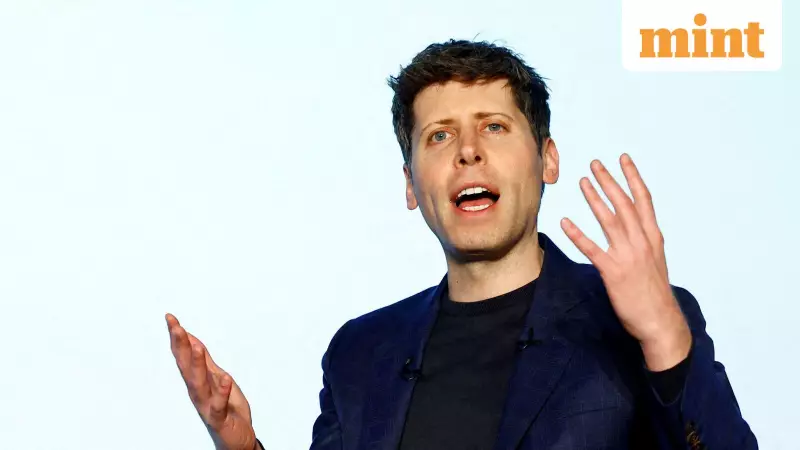
In a significant development that has stirred the technology world, OpenAI CEO Sam Altman has launched a sharp critique against the popular workplace messaging platform Slack, accusing it of generating substantial 'fake work' among professionals. The comments came during a recent public appearance and have since triggered responses from tech billionaire Elon Musk, who renewed his warnings about the competitive dynamics between OpenAI and its major investor Microsoft.
The Slack Criticism: AI-Driven Alternatives on Horizon
During an engaging discussion on the Conversations with Tyler YouTube channel, Sam Altman expressed mixed feelings about Slack's impact on workplace productivity. While acknowledging some positive aspects of the platform, Altman highlighted the overwhelming nature of constant messaging that professionals face daily.
"There are positives about Slack, but there's also a sense of dread during the first hour of the morning and the last hour before bedtime, where I find myself dealing with an explosion of Slack messages," Altman revealed during the conversation recorded in November 2025.

The OpenAI chief didn't mince words when describing what he perceives as the platform's fundamental flaw. "I believe Slack creates a significant amount of fake work," he stated unequivocally. This criticism points to the phenomenon where employees spend considerable time managing communications rather than focusing on substantive tasks.
More importantly, Altman suggested that the current era of workplace productivity tools might be ripe for disruption. He envisioned a future where artificial intelligence could revolutionize how professionals handle their daily tasks. "I suspect there's something new to build that will replace much of the current office productivity suite - whether you think of Docs, Slides, emails, Slack, or similar tools. We're looking at an AI-driven version of all these applications," he elaborated.
Elon Musk's Renewed Warning to Microsoft
Sam Altman's comments provided fresh ammunition for his longtime associate-turned-competitor Elon Musk, who quickly seized the opportunity to reiterate his concerns about Microsoft's relationship with OpenAI. Responding to a video clip of Altman's statements, Musk didn't hold back in his assessment of the situation.
"As I've been saying consistently, OpenAI will compete directly with Microsoft," Musk declared in his characteristically blunt style. The Tesla and SpaceX CEO amplified his warning in response to another post, stating "At this point, it's insanely suicidal for Microsoft to continue supporting OpenAI."
This isn't the first time Musk has sounded alarm bells about the Microsoft-OpenAI partnership dynamics. Earlier in 2025, following the launch of GPT-5, Musk had directly cautioned Microsoft CEO Satya Nadella about OpenAI's potential to capture significant market share from the technology giant. "OpenAI is going to eat Microsoft alive," Musk had remarked in a social media post at that time.
Nadella had responded to Musk's previous warnings with characteristic diplomacy, noting "People have been trying for 50 years and that's the fun of it! Each day you learn something new, and innovate, partner, and compete." This exchange highlighted the complex relationship between collaboration and competition in the rapidly evolving AI landscape.
Growing Competition and Market Realignments
The tensions highlighted by both Altman and Musk reflect broader shifts occurring within the artificial intelligence ecosystem. OpenAI has indeed been launching products that directly compete with its largest investor, Microsoft. Notable examples include the Atlas browser and integrated search features within ChatGPT, which position the company against Microsoft's core offerings.
Meanwhile, the competitive landscape continues to evolve with multiple players jockeying for position. Elon Musk himself has announced ambitions to develop an AI-powered rival to Microsoft, tentatively called 'Macrohard'. Through his artificial intelligence venture xAI, Musk is also developing the Grok AI chatbot, which aims to capture significant market share in the increasingly crowded AI space.

Despite the growing competition, Microsoft continues to rely heavily on OpenAI's models to power AI features across its product portfolio, including Bing search engine and Office applications. However, recent developments suggest Microsoft is diversifying its AI partnerships, having begun to incorporate Claude AI in some newly launched features for Office applications.
The public exchange between these technology leaders underscores the strategic tensions and competitive dynamics shaping the future of artificial intelligence and workplace productivity tools. As AI capabilities advance, the lines between collaboration and competition among tech giants appear increasingly blurred, setting the stage for significant market transformations in the coming years.