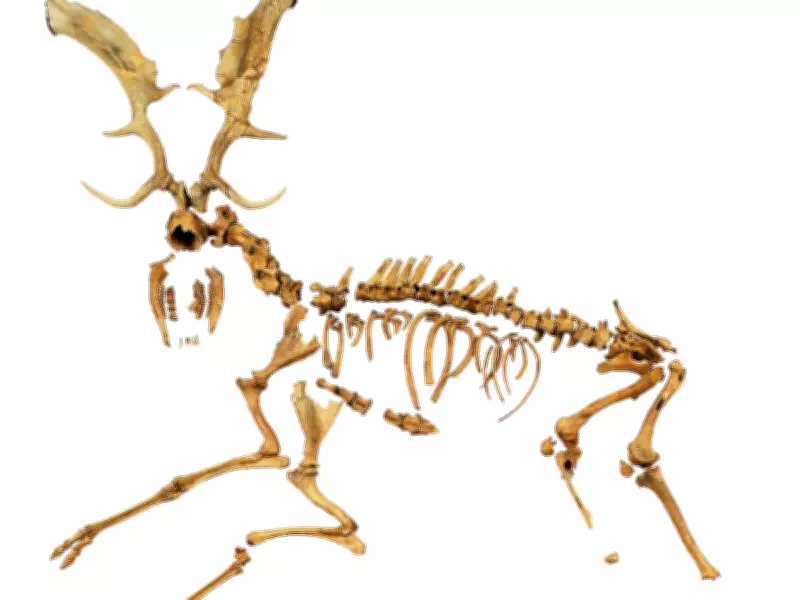
A new study of ancient fallow deer fossils from Germany has uncovered an extraordinary genetic surprise. A single herd of fallow deer in Germany about 120,000 years ago was as genetically diverse as all modern fallow deer across a broad swath of Europe, from Spain to Turkey. This finding provides a rare snapshot of what wildlife was like in Europe prior to the impact of recurring ice ages and millennia of human interference, as reported in the journal iScience. It also appears modern fallow deer represent only a sliver of the genetic richness that once characterised this species.
One Ancient Population Comparable to an Entire Continent
According to researchers, DNA sequencing of ten ancient fallow deer fossils recovered from sediments around a lake bed at Neumark-Nord in Germany revealed levels of genetic diversity that are mostly absent in modern populations today. The fossils found at Neumark-Nord in Saxony-Anhalt, Germany, were exceptionally well-preserved remains from the Eemian interglacial period approximately 120,000 years ago. The site is a well-known archaeological and palaeontological resource. Researchers were able to extract ancient DNA from the ten fossils, and their findings were surprising: the genetic diversity of one herd of ancient fallow deer from Germany was comparable with that of the whole modern Eurasian population from Spain to Turkey today. Modern fallow deer are already known for their relative lack of genetic variation compared to other species like red deer or sambar deer. These new results suggest this low genetic variation is not an age-old trait of the species, but rather the outcome of the dramatic reduction of populations.
Ice Ages May Have Eradicated Entire Genetic Lineages
Climate change throughout the Pleistocene seems to have played a significant role in the extinction of many ancient deer lineages. Fallow deer were widespread in central Europe during warmer interglacial periods but retreated to refuges in areas like Anatolia and the Balkans as the climate shifted to more glacial conditions, as the deer retreated south. According to lead researcher Alberto Rocha-Méndez, a palaeogeneticist from the University of Potsdam, it has been suggested that multiple diverse genetic lineages once evolved in or colonised central Europe, but only one survived after the end of the ice age. Genetic analysis indicates that these genetically unique lineages diverged approximately 200,000 years ago as a result of large shifts in climate throughout the Middle Pleistocene, and it seems probable that the northern population was annihilated during the colder, glacial periods, leaving a few southern populations to reproduce.

Humans Helped Spread the Survivors
It is clear that climate played a major part in the loss of ancient fallow deer lineages, but, as seems likely for most surviving species that originally inhabited more extensive geographical areas, humans appear to have been responsible for the distribution of modern fallow deer across Europe. It is probable that modern fallow deer populations largely descend from lineages that survived in southern refugia such as Anatolia and the Balkans, and it was they who were dispersed by human migration beginning with Neolithic farmers and later with Roman expansion. Romans kept them for their novelty value and as high-status symbols in their hunting parks.
A Species That Might Not Have Been as Genetically Distinct After All
Previous research on Neumark-Nord fallow deer, largely based on their distinct anatomy, indicated they might be a distinct subspecies or even separate species, Dama (dama) geiselana, because their antlers had very different shapes from modern deer. However, these findings contradict that hypothesis as there were only small genetic differences between them and the modern species. Co-author Lutz Kindler of MONREPOS said the species once displayed considerable physical variation, but that variation did not necessarily reflect distinct genetic lineages.

The Significance of the Finding
Conservation scientists rely increasingly on genetic diversity as one of the main components of a healthy population: the greater the genetic diversity of a population, the more likely it is that it can cope with changing climate, new diseases, or other new stresses that may arise. By documenting just how much genetic variation has been lost over millennia, this study serves as a reminder that some species may only carry a fraction of the genetic potential of their ancestors.