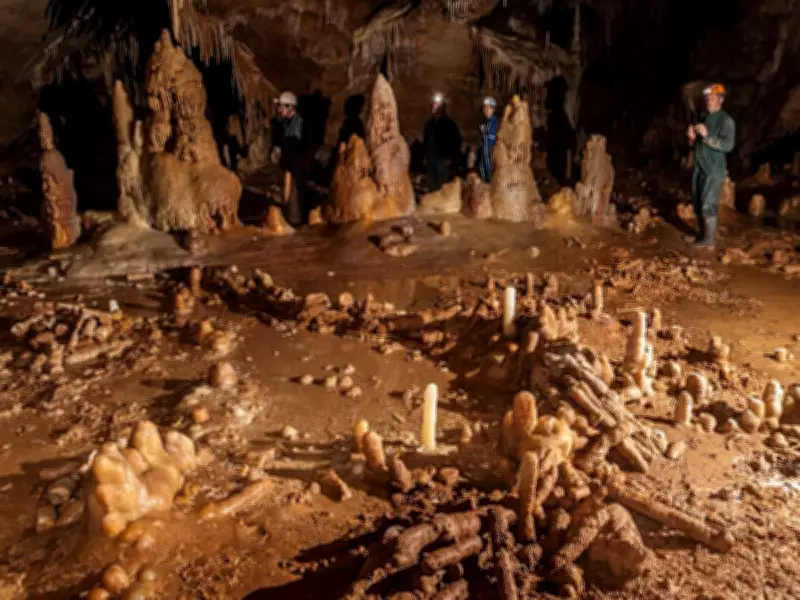
In 2017, scientists achieved a remarkable breakthrough by detecting human traces in ordinary cave dirt through DNA analysis, without finding a single bone. This discovery went far beyond analyzing ancient sediment; it precisely identified who had lived in the darkness thousands of years earlier.
Leaving the Bone Shortage Behind
For generations, the study of ancient human genetics relied exclusively on well-preserved bones or teeth. This limitation created a frustratingly sparse archive of our deep past, as skeletal remains are exceedingly rare. While stone tools, ash, and animal remains are present at hundreds of prehistoric sites, human skeletons are often absent. The 2017 breakthrough changed the kinds of questions researchers could ask. Instead of assuming an empty site held no answers, archaeologists could investigate whether the ground itself carried a biological signature. The real question became not whether ancient DNA could survive outside bone, but whether biological traces could adhere to sediment particles long enough to be reliably detected. The answer was yes.
In the Molecular Archive
The key was a specialized technique that could isolate human genetic material from significant environmental noise. In initial sediment samples, abundant animal DNA made human traces difficult to detect, according to the Max Planck Institute for Evolutionary Anthropology. To overcome this hurdle, researchers targeted specific fragments of human origin, essentially fishing out the genetic material of our extinct relatives. An international team used automation-assisted screening to examine sediment samples from Pleistocene cave layers across Eurasia. They obtained mitochondrial DNA from Neanderthals in eight different archaeological layers from four caves in Eurasia. They also retrieved Denisovan DNA from a Middle Pleistocene layer near the base of the stratigraphy of the famous Denisova Cave. This meant that even in the absence or scarcity of bones, the sediment tied the occupants to their specific geographic homes.

The Soil Is Not Too Old to Establish
The scientists applied stringent contamination controls and damage-pattern analysis to ensure credible results. They did not collect modern stray DNA from visitors or workers. Instead, they examined molecular damage typical of long-term buildup over thousands of years, looking at DNA in well-dated cave layers. Viable DNA was even obtained from sediment samples stored at room temperature for years, the Max Planck Institute reports. Some mineral and organic components of cave dirt naturally adhere to DNA fragments and protect them from complete decay, which explains the excellent preservation. Although this method cannot reveal everything about an individual that a complete skeleton might, it provides experts with a definitive tool to map the timing, species presence, and occupation patterns of extinct hominins.
Questioning the Usual Idea of Dirt
Dramatic, solid artefacts like skulls, stone tools, and primitive jewellery have long dominated popular archaeology. The power to pull history from the dust breaks this myth that archaeology only reads tangible objects. The dirt underfoot, previously overlooked by excavators as simply a background matrix to bucket out, proves to be one of the richest biological archives in a cave system. This hidden significance offers a powerful new view for the general reader. It implies the past is far less lost than we believed. Even if an ancient body was not preserved, the mere act of living, shedding skin, or leaving bodily waste in a dark cave was enough to mark the environment permanently. Modern sequencing machines can see what human eyes cannot.