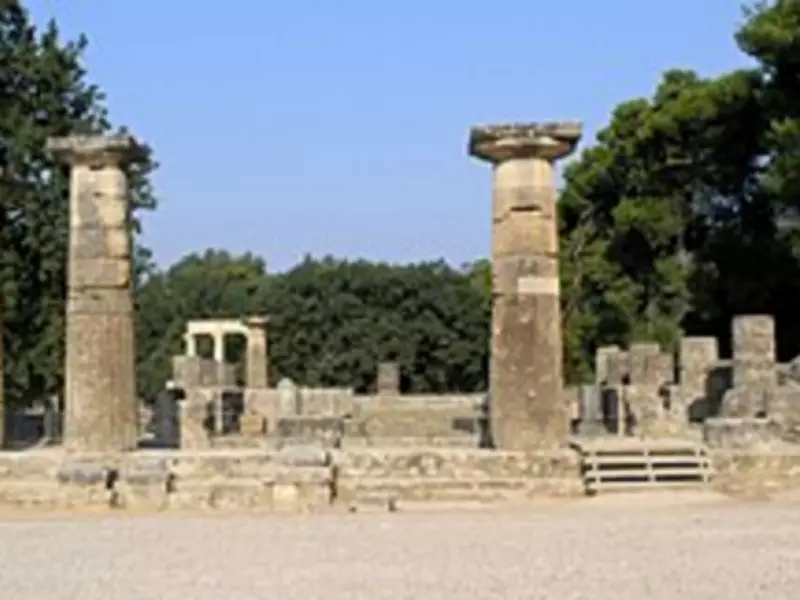
For years, the rich olive groves lining the Peloponnese have kept a secret buried beneath their roots. While tourists and history enthusiasts visit the marble ruins of ancient Olympia to walk the same ground as the world's elite athletes, a significant part of the story has remained hidden. The iconic birthplace of the Olympic Games was not merely a dusty site with trails and temples. New research suggests that Olympia was a bustling, well-connected waterway that may have welcomed visitors arriving by boat directly to the sanctuary's entrance.
A Landscape Shaped by Nature
The current landscape is the result of natural forces. Over centuries, the Kladeos and Alpheios rivers repeatedly flooded, burying the original ground beneath more than twenty feet of sand and silt. This thick layer of sediment acts like a time capsule, preserving archaeological sites that archaeologists long suspected existed but could never access. Using advanced technology, a team of researchers has sifted through this sediment, uncovering findings that challenge everything we thought we knew about how ancient people traveled to the games.
High Tech Meets Ancient History
Uncovering these secrets was no simple task for the research team led by Sarah Baumler from the Institute of Geosciences at Kiel University. Because the sediment layer is so deep, traditional tools like ground-penetrating radar often fail to provide a clear image. To overcome this, the team combined electrical resistivity and seismic measurements to "see" into the earth. Their findings, published in Archaeological Prospection, revealed a massive rectangular basin buried six meters below the surface.

The basin is roughly the size of a modern city block. By studying the soil within it, scientists found evidence of freshwater species that thrived from the 5th century BC to the 6th century AD. This timeline aligns perfectly with the peak of the Panhellenic Games. While some researchers initially speculated whether this was an ancient bathhouse or drainage system, the basin's enormous dimensions and the biomarkers in the soil point to something far more significant: a harbor basin.
Logistics of the Ancient Games
The logistics of the ancient games have always posed a puzzle. Historians believed that visitors had to dock at a remote port and then travel 14 miles in scorching heat to reach the sacred site. However, the discovery of this basin suggests a much more advanced arrangement. If ships could navigate the river all the way to Olympia, it would transform the site from an inland landscape into a lively, easily accessible maritime hub. This discovery challenges previous assumptions about ancient travel logistics and highlights the site's advanced urban planning, including sophisticated flood defenses.
Protecting the Sanctuary from the Elements
Beyond the excitement of a potential harbor, the study also revealed how ancient civilizations battled the forces of nature that eventually buried the area. Researchers traced the course of a massive flood barrier known as the Kladeos wall. This levee is a remarkable engineering feat, standing nearly 9 feet tall and much wider. Its purpose was simple but crucial: to prevent the rivers' unpredictable waters from damaging the sacred temples and athletic fields.
The exact location of the wall helps historians better understand the layout of the sanctuary's "suburbs." It proves that the Greeks were not only master builders of marble and stone but also savvy urban planners who understood the dangers of building near rivers. The research, which draws on geological records published in the Journal of Archaeological Science, shows that there is much more to Olympia than meets the eye.
Modern Challenges and Future Excavations
Today, the area is covered with the same olive trees that made the study so challenging. The trees interfered with the research equipment, forcing scientists to develop unique digital filters to eliminate the "noise" caused by water within the trees. This blend of history and nature makes Olympia an exceptional place. "We can identify these structures from the outside, but the next step will be careful excavation to see these walls with our own eyes," said Baumler.

The discovery is a reminder that the past is often layered. Beneath the feet of every visitor to Olympia lies a complex system of embankments and waterways that once served the greatest spectacle of ancient times. It seems the greats of the past did not just need to run fast; they were part of a world designed to connect people across oceans.