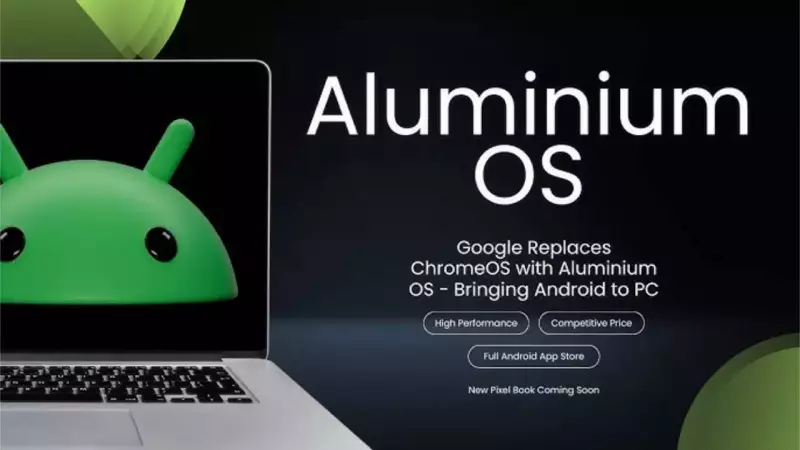
A significant leak has emerged from Google's own Chromium Issue Tracker, where a bug report has inadvertently revealed multiple details about Android's upcoming desktop interface, codenamed AluminiumOS. The leak, first spotted by 9to5Google, includes screenshots that provide a clear look at Google's desktop-focused version of Android, which appears to be in active development.
Chromium Bug Report Exposes AluminiumOS Details
The leak surfaced in a report concerning Chrome Incognito tabs, but it contained far more revealing information about Google's desktop ambitions. According to the documentation, the interface was recorded on an HP Elite Dragonfly 13.5 Chromebook, specifically identified by the board codename "Brya (Redrix)." This device was powered by a 12th Generation Intel Core processor, indicating that Google is testing the desktop interface using existing Chromebook hardware rather than developing entirely new devices.
Build Information Links to Android 16
The build information referenced in the report clearly mentions "ALOS," which stands for Aluminium OS. This is Android's internal desktop codename and appears to be directly linked to Android 16. The specific build details noted in the report were: "DEVICE: Brya(Redrix) CHROME BUILD: 145.0.7587.4(Dev before upgrade) and 146.0.7634.0(Dev after upgrade) ALOS: ZL1A.260119.001.A1." This technical data confirms that AluminiumOS is not just a conceptual project but is actively being tested in development environments.

What the Leaked Interface Reveals
The screenshots from the bug report show a status bar that is notably taller and better optimized for larger screens compared to tablet or phone-based desktop modes. The top row displays the time, including seconds, followed by the date. On the right side of the status bar, users can see the Android 16 M3E battery icon, a Wi-Fi indicator, a notification bell, an "EN" label for the selected keyboard language, the Gemini icon, and a screen recorder control. Interestingly, the recording interface maintains similarity with the mobile version, suggesting continuity across platforms.
Taskbar, Mouse Cursor, and Chrome Interface
The taskbar in the leaked interface remains largely unchanged from the current version, maintaining familiarity for users. However, the mouse cursor has received a subtle update, now featuring a trailing effect that enhances visual feedback during navigation. The Google Chrome interface in AluminiumOS closely matches the existing large-screen Android layout, but with a significant addition: an Extensions button that is currently exclusive to desktop browsers. This inclusion hints at Google's intention to bridge mobile and desktop functionality seamlessly.
Multitasking and Windowing Features
The report also sheds light on how split-screen multitasking will operate within the Android-based desktop interface. This feature is crucial for productivity on larger screens and appears to be a key focus of AluminiumOS. Additionally, the windowing system remains mostly unchanged, with the app name displayed on the left and standard window controls—minimize, fullscreen, and close buttons—positioned on the top right, similar to the layout seen in ChromeOS.
This leak suggests that Google is making substantial progress in developing a cohesive desktop experience based on Android, potentially positioning AluminiumOS as a competitor to traditional desktop operating systems. By leveraging existing Chromebook hardware, Google could accelerate deployment and integration, offering users a unified ecosystem across mobile and desktop devices.