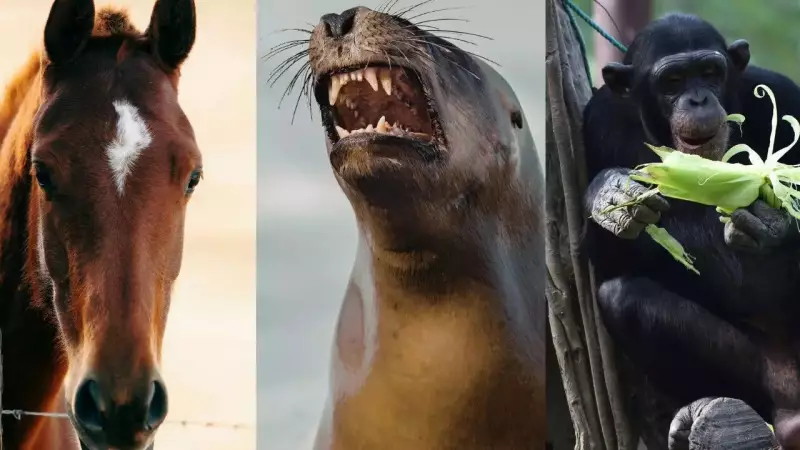
It is a common misconception that numerical understanding is a uniquely human trait. In reality, many animals possess innate mathematical abilities that enable them to assess quantities, recognize patterns, and make decisions based on simple arithmetic. While they may not solve complex equations, these creatures can compare groups, estimate costs, and detect changes in their environment. These skills are crucial for survival, aiding in food foraging, predator avoidance, and navigation. From birds and mammals to insects, numerous species exhibit surprising math skills comparable to those of young children.
Animals That Excel in Mathematics
Crows
Crows are renowned for their intelligence, and a key aspect of this is their numerical awareness. They can distinguish between small quantities and immediately notice additions or subtractions. For example, they detect changes if a food source appears unexpectedly smaller. Beyond mere recognition, crows apply their number sense to remember reliable food locations, track food supplies, and recall numerical patterns in threatening situations. This enhances their decision-making, safety, and foraging efficiency, showcasing their logical thinking and memory capabilities.
Honeybees
Despite their tiny size, honeybees demonstrate a remarkable aptitude for mathematics. They can differentiate up to four items and grasp basic comparisons like more than and less than. These abilities assist in locating food and navigating swiftly. By counting landmarks, bees estimate distances to return to their hive, conserving energy and ensuring timely resource collection. This numerical skill underscores their adaptation to survival challenges, proving that even small creatures can perform calculations.

African Grey Parrots
African grey parrots are famous for mimicking human speech, but their intelligence extends far beyond that. They can read numbers, associate them with quantities, and compare groups to select the larger one, indicating logical reasoning. This behavior is deliberate, not instinctual; they memorize numbers, draw logical conclusions, and make choices based on reasoning rather than guesswork. Thus, these parrots are among the few animal species that count similarly to human children.
Chimpanzees
As our closest living relatives, chimpanzees exhibit advanced mathematical skills. They can recognize numbers on screens and tap sequences in correct patterns. In the wild, these abilities help them assess group sizes, locate food, and select tools. Mathematical proficiency reduces stress and improves social hierarchy management, highlighting its role in survival and social dynamics.
Dolphins
Dolphins, as social animals, rely on numerical understanding to maintain group cohesion. They differentiate between quantities and perform basic addition when summing items. This skill is vital for cooperative hunting, as dolphins must estimate fish numbers and coordinate in teams to maximize catches. Their counting ability fosters social intelligence and teamwork, showing how math in the animal world adapts to collaborative efforts.
Horses
Horses are not typically associated with math, but they excel at recognizing numerical changes. They can detect variations in treat quantities or different numbers of objects and make choices accordingly. This proves useful in training, as horses predict outcomes and observe actions or reactions. While they cannot perform complex math, equine trainers note their ability to tally numbers, demonstrating a practical grasp of numerical concepts.
Pigeons
Pigeons are often underestimated, yet they possess strong mathematical skills. They can be trained to group items by amount, recognize number sequences, and understand numerical order. These abilities contribute to their famed navigation prowess, as they use landmarks, patterns, and environmental item counts to find their way. Their pattern recognition with numbers reveals cognitive flexibility.

Rhesus Monkeys
Rhesus monkeys excel at rapid decision-making, particularly regarding food. They quickly assess quantities and choose larger groups without counting each item, a skill akin to young human children. In the wild, this is essential for competing for food, as identifying the highest reward saves energy and prevents conflicts. These monkeys reinforce that numerical intelligence is not just abstract but a vital survival tool.
Sea Lions
Sea lions surprisingly grasp numbers well. Research shows they can follow number sequences and perform basic arithmetic by adding symbols. Their ability relies on memory and pattern recognition, helping them track group numbers and maintain cohesion during hunting. Numerical understanding enables sea lions to respond efficiently to environmental challenges, applying math in real-world contexts.
Ants
Ants, despite their limited individual intelligence, exhibit an extraordinary mathematical sense at the colony level. Ant colonies allocate workers to tasks based on quantities, adjusting instantly to increases or decreases. This collective quantity management enhances efficiency and survival by prioritizing tasks according to workforce numbers. It demonstrates complex numerical understanding without individual cognition, highlighting a unique form of group intelligence.