Apple Selects Google's AI for Major Siri Upgrade
Apple made a significant announcement on Monday. The company revealed it will use Google's Gemini artificial intelligence models to power its upgraded Siri and Apple Intelligence features. This multi-year partnership represents a strategic choice that provides insights into the current state of the AI competition.
The companies issued a joint statement explaining the decision. "After careful evaluation, Apple determined that Google's AI technology provides the most capable foundation," they said. This agreement means Apple's next-generation AI capabilities, including a smarter Siri scheduled for release this spring, will operate using Google's technology and cloud infrastructure.
OpenAI's Diminished Role
Apple emphasized that its existing arrangement with OpenAI remains unchanged. Users can still access ChatGPT for certain queries through Siri. However, this appears more like a supplementary feature rather than a core partnership. When Apple needed to select the primary intelligence behind Siri's most substantial upgrade in years, the company chose Google instead of OpenAI.

This decision carries weight because Apple approaches such choices methodically. The company famously canceled its AirPower charging mat after announcement because it failed to meet reliability standards. It delayed the HomePod smart speaker. Apple spent nearly a year evaluating potential AI partners before making this commitment.
CEO Tim Cook stressed the importance of artificial intelligence during an all-hands meeting last August. He told employees "Apple must do this" regarding AI development. The company takes such directives seriously.
Apple's Challenging Path to External Partnership
This outcome differs from Apple's original plan. The company initially intended to develop its own AI models but encountered repeated obstacles. At WWDC 2024, Apple demonstrated an AI-enhanced Siri capable of understanding personal context and performing actions across different applications.
The presentations appeared polished and impressive. Behind the scenes, however, the technology struggled to meet Apple's exacting standards.
Software chief Craig Federighi later explained the difficulties. "We initially wanted to do a hybrid architecture," he stated. "We realized that approach wasn't going to get us to Apple quality." The challenge proved more complex than anticipated. Apple needed to merge routine smartphone functions like setting alarms with sophisticated language models that could genuinely comprehend user intentions.
By March 2025, Apple publicly postponed the Siri upgrade. "It's going to take us longer than we thought to deliver on these features," the company acknowledged. Federighi informed The Wall Street Journal that the team eventually concluded "this just doesn't work reliably enough to be an Apple product."
Organizational Consequences
The technical struggles prompted organizational changes. Apple removed AI chief John Giannandrea from Siri development responsibilities. The company reassigned the project to Federighi and Vision Pro creator Mike Rockwell.
Meanwhile, Apple's Foundation Models team began experiencing significant turnover. This group was responsible for building on-device AI for features like text summaries. Chief architect Ruoming Pang departed for Meta in July, accepting a $200 million compensation package and a senior position in the company's Superintelligence Labs.
Several colleagues followed Pang to Meta. Other team members who remained at Apple began interviewing elsewhere. Some expressed concern about Apple shifting toward external technology solutions. Others found themselves tempted by substantial compensation offers from competitors.
This talent drain signaled an important development. Apple recognized it could not build this technology independently.
The Competitive Evaluation Process
Apple did not make this decision impulsively. The company initiated a systematic evaluation process beginning last summer. Federighi and Rockwell, along with Apple's corporate development chief Adrian Perica, conducted meetings with Anthropic, OpenAI, and Google regarding potentially powering the new Siri.

Apple created two internal versions for testing purposes. One version, codenamed "Linwood," utilized Apple's proprietary models. Another version, called "Glenwood," operated on external technology. Both underwent rigorous stress testing against Apple's quality benchmarks.
Anthropic's Strong Start and Pricing Challenge
Anthropic emerged as an early frontrunner in the evaluation process. Its Claude model impressed Apple engineers with robust performance and safety features. However, Anthropic's pricing structure proved too aggressive for Apple's preferences. These financial demands prompted Apple to expand its search beyond its initial favorite.
Google began training a customized Gemini model during the summer that could operate on Apple's servers. The search giant possessed relevant experience, already powering much of Samsung's AI functionality on Galaxy smartphones. More importantly, Google offered financial stability and infrastructure that Apple valued.
OpenAI participated throughout the evaluation process. The company had existing momentum from its ChatGPT integration in iOS 26, announced at WWDC 2024. Users could already access ChatGPT through Siri for complex queries. Apple had even aired television commercials promoting this feature.
OpenAI's Missed Opportunity
OpenAI ultimately failed to secure the partnership. Its GPT-5 release in August disappointed users who complained about a colder conversational tone and difficulties with straightforward questions. OpenAI spent months adjusting the model to make it warmer and more reliable. This inconsistency represented precisely the type of problem Apple sought to avoid through partnership.
Diverging Trajectories
The timing proved particularly challenging for OpenAI. Google released Gemini 3 in November, and the model achieved top positions on industry benchmarks. This successful launch demonstrated that Google's AI investments were yielding results. Alphabet's stock surged, climbing 65% throughout 2025 and outperforming other major technology companies.
CEO Sundar Pichai had been pushing his teams intensively. The effort showed tangible results. Google's cloud division secured more billion-dollar deals during the third quarter of 2025 than it had managed in the previous two years combined. Google also made progress developing custom AI chips, creating energy-efficient alternatives to Nvidia's power-intensive processors.
OpenAI's Internal Challenges
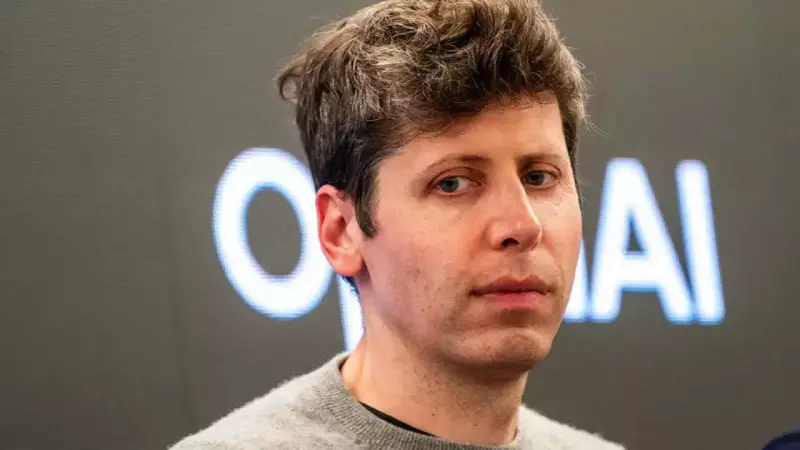
OpenAI was moving in the opposite direction. CEO Sam Altman issued a "code red" memo to employees in December. He acknowledged that ChatGPT required urgent improvements. Altman identified specific problems with personalization, speed, reliability, and the range of questions the chatbot could handle properly.
Altman postponed other projects to concentrate resources on fixing ChatGPT's core experience. These delayed initiatives included advertising features, AI agents for health and shopping applications, and a personal assistant called Pulse. The company began holding daily calls for teams working on improvements. This emergency response indicated recognition that OpenAI was losing competitive ground.
The contrast between the two companies became increasingly apparent. OpenAI reportedly spends over $100 billion annually without generating profits, constantly seeking new funding rounds. According to its own projections, the company needs approximately $200 billion in revenue by 2030 just to break even. Google funds its AI development through advertising and cloud revenues. When the AI race demands continuous investment in computing power and talent, this financial cushion provides significant advantage.
Broader Implications Beyond Revenue
Neither company disclosed specific financial terms, though Bloomberg previously reported Apple would pay around $1 billion annually for Gemini access. This amount is substantial but not unprecedented. Google already pays Apple an estimated $20 billion yearly to remain Safari's default search engine.
Apple emphasized that Gemini will process data on Apple devices and Private Cloud Compute servers. This approach keeps user information separate from Google's infrastructure. The method mirrors how Apple handles other cloud services, utilizing Mac chips in data centers to maintain privacy standards.
The improved Siri should arrive with iOS 26.4, expected in March or April. This update will finally deliver features Apple first demonstrated at WWDC 2024. Users will ask Siri complex questions that leverage personal context. For example, they might request Siri find a podcast a friend recommended weeks earlier by searching through old text messages and emails.
Strategic Significance for OpenAI
For OpenAI, losing this partnership extends beyond immediate revenue implications. The decision signals that despite having 800 million weekly ChatGPT users, the company is not considered the most reliable AI partner when stakes are highest. Apple could have selected OpenAI to avoid strengthening ties with Google, a direct smartphone competitor. It chose not to do so.
This development also complicates OpenAI's path to profitability. Enterprise customers remain important, but consumer deals with companies like Apple provide essential scale and steady revenue streams. Losing this opportunity to Google makes the financial calculations more difficult.
There exists particular irony in this outcome. At WWDC 2024, Federighi told YouTuber iJustine that Apple eventually wanted to let users choose between different AI models. "We think ultimately people are going to have a preference perhaps for certain models," he explained. "We may look forward to doing integrations with different models like Google Gemini in the future."
Two years later, OpenAI finds itself observing from the sidelines while Google assumes the central role. For a company that dominated AI headlines just two years ago with ChatGPT's launch, this shift proves sobering. The artificial intelligence race continues accelerating. Currently, OpenAI is experiencing what it feels like to lose ground to a competitor with deeper financial resources and a longer operational runway.