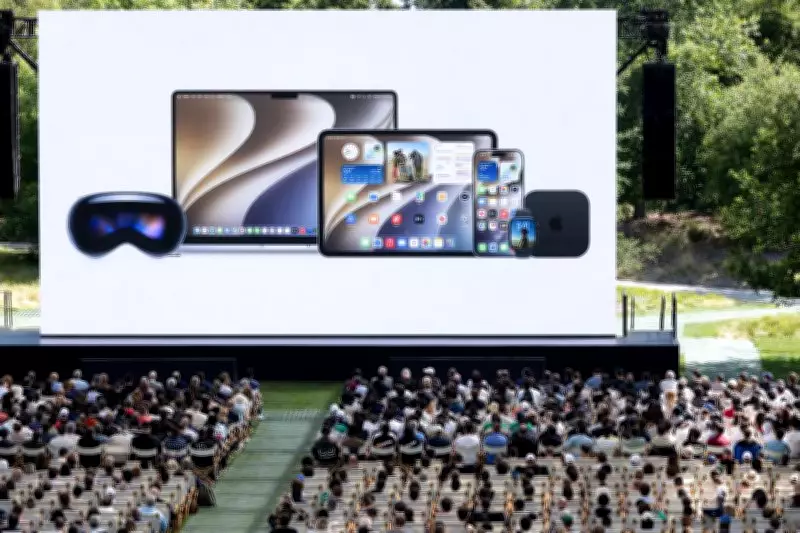
Apple Reveals Siri AI Upgrades and Privacy-Focused Strategy at WWDC
Apple on Monday unveiled new artificial intelligence advances, including significant upgrades to its Siri assistant, emphasizing a focus on privacy and everyday utility as the iPhone maker strives to catch up with rivals in the AI space.
The announcements were made at the start of Apple's annual Worldwide Developers Conference (WWDC) in Cupertino, California. Siri AI, which debuted in 2011, had fallen behind other voice assistants and faced criticism even from Apple enthusiasts. The revamped Siri is now described as a "much more capable assistant" that can help users find information and complete tasks across Apple devices.
This year's WWDC is particularly notable as it marks the last appearance of CEO Tim Cook before he hands over the reins to John Ternus in September. Cook received an extended standing ovation and expressed his gratitude, stating, "I am deeply grateful to have been on this journey with you" and adding that "the energy around Apple platforms has never been stronger."

Apple Steps Up Its AI Game
Apple is distinguishing itself from competitors by highlighting a privacy-centered approach and integrating AI across its devices and apps. Notably, there was no mention of artificial superintelligence or companion chatbots. Instead, Apple focused on demonstrating how its AI tools can simplify daily life.
Apple software chief Craig Federighi took subtle jabs at unnamed AI companies that seem to be "pursuing AI for the sake of AI" without clear consideration for the people it is meant to serve. At Apple, he said, "we believe that truly helpful AI should be centered around you and your needs," which means embedding AI into products used every day, with a strong emphasis on privacy.
The conference unveiled updates to Apple Intelligence, first announced in 2024. It now incorporates Google's Gemini AI model to power its features, processing user requests and interactions on the device itself and privately on the cloud, ensuring inaccessibility to others.
New Siri Capabilities
The centerpiece is the new Siri, which Apple claims is now a more capable assistant that can help users find what they need and accomplish tasks across various Apple devices. For example, Siri can create a menu and gather recipes from the web or from text messages for a World Cup viewing party, and even invite friends from a group chat. In camera mode, Siri can identify objects and provide relevant information, such as the nutritional details of a plate of food.
Siri's visual intelligence also works with images on the screen. It can determine whether a backpack will fit as carry-on luggage for a flight or whether a pair of hiking boots will fit inside it.
Apple also announced improvements to its AI photo editing tools, including spatial reframing, which allows users to adjust the framing of a photo after it was taken, as if the camera had been repositioned during capture.
A standalone Siri AI app is set to launch later this year, though it will not initially be available in Europe or China due to regulatory issues.
Tim Cook's Final WWDC
Cook announced his retirement in April, ending a 15-year tenure during which Apple's market value soared by more than $4 trillion, driven largely by the iPhone's success. John Ternus, who has been with Apple for 25 years and oversaw engineering for the iPhone, iPad, and Mac for the past five years, is set to succeed Cook. Ternus did not appear onstage during Monday's event.
The leadership transition comes at a critical time for Apple. Artificial intelligence has sparked significant industry disruption since the first iPhone was unveiled in 2007. Apple has faced challenges in AI, having stumbled in its efforts to deliver new features promised nearly two years ago. Cook called his time at Apple "the honor of a lifetime" and expressed optimism, saying, "I truly believe the best is still ahead."