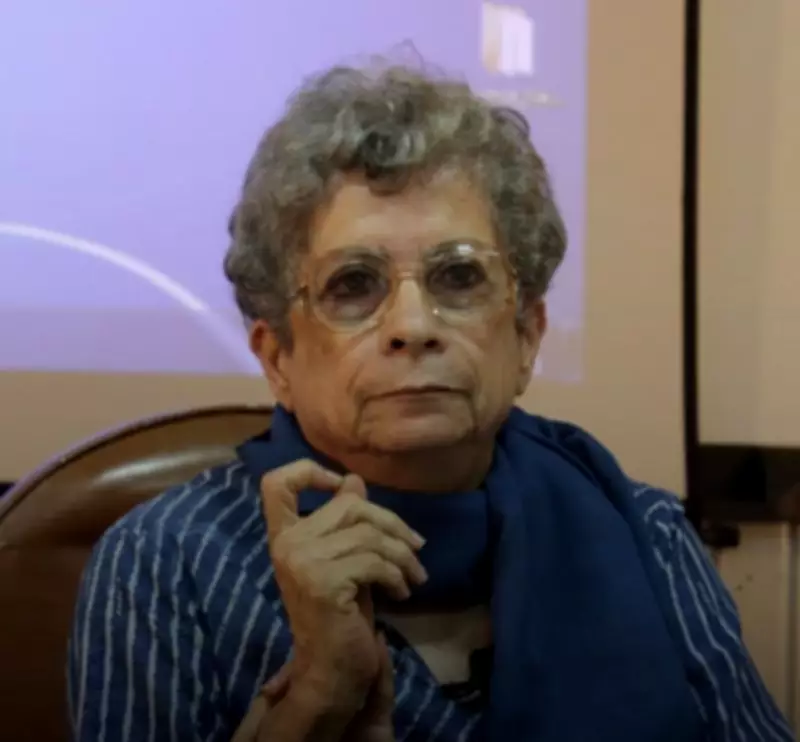
Eminent archaeologist Shereen Ratnagar passed away in Mumbai on Wednesday after a brief illness. She was 86. Ratnagar was widely recognized for her extensive research on the Indus Valley Civilization and her critical perspectives on early Indian history.
A Life Dedicated to Archaeology
Born in 1938, Ratnagar pursued her higher education at the Deccan College in Pune and later at the University of London, where she earned her PhD. She taught at various institutions, including Jawaharlal Nehru University (JNU) in New Delhi and the University of Mumbai. Her academic career spanned several decades, during which she authored numerous books and articles that challenged conventional narratives about ancient India.
Key Contributions
Ratnagar is best known for her work on the Indus Valley Civilization, particularly her studies on trade and exchange networks. Her book Encounters: The Westerly Trade of the Harappa Civilization is considered a seminal work in the field. She also wrote extensively on the decline of the Indus cities, arguing against simplistic theories of invasion or environmental collapse.

Controversial Stances
Ratnagar was not afraid to court controversy. She critiqued the politicization of archaeology and spoke out against the appropriation of the Indus Valley Civilization by modern political groups. Her book The End of the Great Harappan Civilization sparked debates about the role of climate change and resource management in the decline of ancient societies.
Legacy and Tributes
Colleagues and students remember Ratnagar as a rigorous scholar and a passionate teacher. Professor Nayanjot Lahiri, a fellow archaeologist, described her as "a towering figure in Indian archaeology whose work will continue to inspire generations." The Archaeological Survey of India also expressed condolences, noting her contributions to the understanding of India's ancient past.
Ratnagar is survived by her daughter and son-in-law. Her funeral was held in Mumbai, with close family members in attendance.