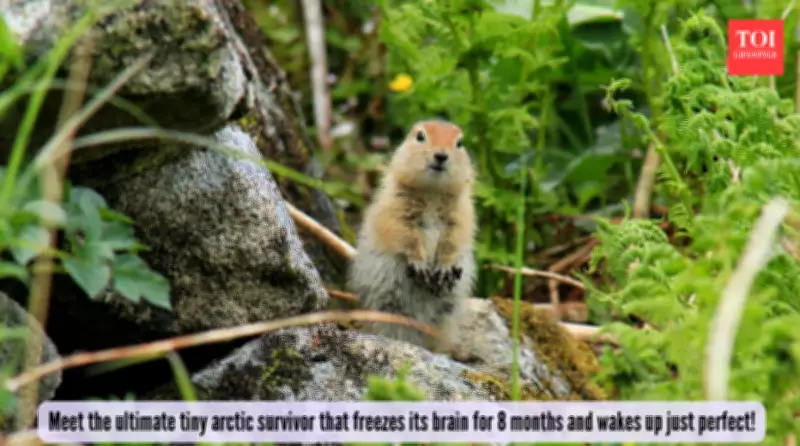
The Arctic Ground Squirrel: Nature's Ultimate Survival Artist
Animals possess an extraordinary capacity to humble humanity. Just when we believe we have mastered the principles of survival, nature unveils strategies that border on the miraculous. Imagine a realm where the landscape remains perpetually cloaked in dazzling white snow, where sunlight becomes a rare visitor for months on end, and where cold transcends mere discomfort to become a life-threatening force.
Life in the Frozen North
This is the daily reality of the Arctic, one of Earth's most unforgiving environments. Inhabiting this harsh domain is a creature so diminutive that its very survival through the brutal winter seems implausible. Meet the Arctic ground squirrel—a shrew-sized, lightweight mammal that appears entirely unremarkable at first glance.
Yet this tiny animal endures nearly eight months of extreme Arctic winter, where temperatures routinely plummet below -30°C and the very soil remains frozen solid. Conditions that would prove fatal to most organisms don't merely challenge this squirrel; they activate its most astonishing survival mechanism.

The Science of Survival: Extreme Hibernation
Rather than battling the cold, the Arctic ground squirrel employs a radical strategy: it shuts down its own bodily functions. As winter's grip tightens, this remarkable creature enters a profound hibernation state known as torpor. During this period, its body temperature drops to an astonishing -2.9°C—the lowest ever recorded in any mammal.
Physiological Transformations During Torpor:
- Heart rate plummets from approximately 200 beats per minute to fewer than 10 beats
- Breathing becomes shallow and infrequent
- Brain activity nearly ceases entirely
Weeks later, the squirrel awakens without confusion, damage, or memory loss—emerging alert and ready to forage as if nothing extraordinary had occurred.
How the Brain Survives Extreme Conditions
The squirrel's brain enters an extreme power-saving mode during torpor. Normal brain activity that typically consumes substantial energy is dramatically reduced. The organism maintains tight control over chemicals that could cause damage during stress, while cell membranes remain stable and specialized proteins prevent ice crystal formation within brain tissue.
Essentially, the brain becomes cold yet protected—paused rather than compromised.
Even more remarkable is how the squirrel manages oxygen deprivation. When blood flow slows and oxygen levels drop, human brain cells typically panic and perish. The Arctic ground squirrel's brain cells respond differently, maintaining steady energy systems and releasing antioxidants that neutralize harmful by-products.
During deep hibernation, the squirrel's brain connections intentionally shrink. Upon rewarming, these connections rapidly regenerate without causing long-term harm or cognitive decline—a controlled biological reset.
The Maintenance Cycle: Periodic Awakening
Contrary to what one might expect, the squirrel doesn't remain frozen throughout the entire winter. Every one to three weeks, it briefly awakens, with its body temperature rising to approximately 36°C for about a day. Though energetically costly, this periodic warming serves crucial functions:
- DNA repair and maintenance
- Protein restoration and correction
- Brain chemical resetting
This cycle represents essential biological maintenance before the squirrel returns to its frozen state.
Medical Implications and Research Potential
Scientists are captivated by this survival cycle because it contradicts conventional understanding of brain damage. Conditions that typically cause strokes or neurodegeneration in humans leave no lasting impact on these resilient squirrels.
Researchers believe this tiny Arctic survivor may hold significant clues for human medicine. Understanding its unique biology could potentially help medical professionals protect human brains during:
- Stroke events
- Heart attacks
- Traumatic injuries
Some experts even speculate this research could inspire advancements in safer long-term space travel or improved emergency medical cooling techniques.

A Testament to Nature's Ingenuity
For now, the Arctic ground squirrel stands as one of nature's quiet marvels—a creature that deliberately freezes its brain, withstands Earth's most severe winter conditions, and awakens perfectly intact. This represents not dramatic survival, but rather pure, elegant biological brilliance that continues to inspire scientific discovery and deepen our appreciation for nature's adaptive wonders.