

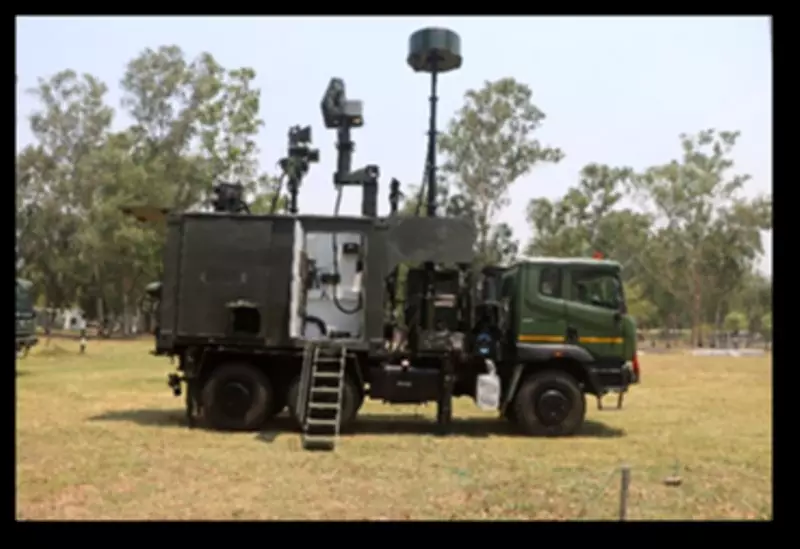
The Indian Army is undertaking a significant upgrade to its Akashteer air defence system, focusing on enhancing mobility and survivability in the aftermath of Operation Sindoor. The system, originally mounted on trucks for strategic movement, is now being integrated onto tank chassis to provide greater tactical flexibility on the battlefield.
Strategic Shift in Mobility
The transition from wheeled trucks to tracked tank platforms marks a paradigm shift in how the Akashteer system will be deployed. Tank-mounted variants offer superior cross-country mobility, allowing the system to keep pace with armored formations during rapid advances or retreats. This change addresses a critical vulnerability exposed during recent exercises, where truck-based systems struggled to operate in rough terrain and under direct fire.
Enhanced Survivability and Protection
By mounting the Akashteer on a tank chassis, the system gains inherent armor protection, shielding sensitive radar and command equipment from small arms fire and shell fragments. This reduces the risk of mission kill and enables the system to operate closer to the front lines. The tank platform also provides improved crew safety, with better blast protection and NBC (nuclear, biological, chemical) sealing capabilities.

Operational Benefits Post Op Sindoor
Operation Sindoor highlighted the need for air defence systems that can rapidly reposition and provide continuous coverage. The upgraded Akashteer will feature a faster setup and teardown time, enabling quick displacement to avoid counter-battery fire. Its integrated power supply and communication suite allow for autonomous operation, reducing logistical dependency.
Technical Upgrades and Integration
Alongside the platform change, the Akashteer system is receiving software and hardware enhancements. These include improved radar range, advanced electronic counter-countermeasures, and integration with network-centric warfare systems. The system can now share real-time data with other air defence assets, creating a layered shield against aerial threats.
Indigenous Development and Future Prospects
The upgrade is being executed by the Defence Research and Development Organisation (DRDO) in collaboration with private industry partners. This indigenization effort not only reduces reliance on foreign components but also allows for rapid customization based on user feedback. The modified Akashteer is expected to enter service within the next two years, with further upgrades planned for electronic warfare and directed energy capabilities.
In conclusion, the Indian Army's decision to enhance the mobility of its Akashteer air defence system reflects a commitment to modernizing battlefield air defence. The tank-mounted variant will provide a robust, agile, and survivable solution to counter evolving aerial threats, ensuring the Army's air defence umbrella remains effective in high-intensity conflicts.






