The Escalating Conflict Between Artists and Artificial Intelligence Companies
The ongoing confrontation between creative professionals and artificial intelligence corporations has dramatically intensified, moving far beyond the confines of courtrooms and private negotiations. This struggle has now become a highly publicized and vocal movement, gaining substantial backing from numerous prominent figures within the cultural and entertainment industries.
Massive Open Letter with Over 800 Signatories
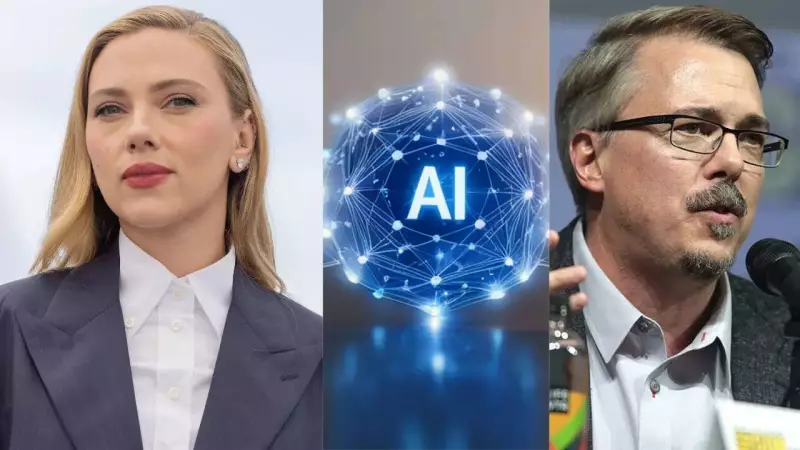
According to detailed reports from January 2026, more than eight hundred distinguished creators united to endorse a powerful open letter, urgently requesting artificial intelligence firms to immediately cease utilizing copyrighted materials without obtaining proper authorization. The impressive roster of signatories featured acclaimed actors such as Scarlett Johansson and Cate Blanchett, the legendary musical group R.E.M., and Vince Gilligan, the mastermind behind the groundbreaking television series Breaking Bad.
Their collective message conveyed a straightforward yet profound principle: technological advancement should never be achieved through the appropriation of someone else's intellectual labor. For an extended period, authors, musicians, photographers, and filmmakers have observed their original content being systematically harvested from the internet and incorporated into artificial intelligence training datasets. Typically, these creators received no prior consultation, received no financial compensation, and were provided with no viable mechanism to exclude their work from these processes.

Organized Resistance Through Multiple Channels
Presently, a growing coalition of artists is mounting a coordinated counteroffensive, employing a multifaceted strategy that includes legal proceedings, awareness campaigns, and sustained public advocacy. This movement has transcended mere technological concerns, evolving into a fundamental struggle concerning professional survival, intellectual property rights, and basic respect for creative endeavor.
The influential open letter was disseminated as part of the Human Artistry Campaign's "Stealing Isn't Innovation" initiative. While some signatories possess worldwide fame, many others are less recognized professionals who equally depend on their creative output for livelihood. The document explicitly urged artificial intelligence corporations to establish ethical collaboration frameworks with content creators, demanding an immediate halt to the unauthorized utilization of books, films, musical compositions, journalistic articles, and visual imagery.
The letter issued a stern warning that prevailing practices risk causing long-term damage to the creative economy. One particularly notable section emphasized that America's creative sector provides substantial employment, drives export revenue, and stimulates economic expansion, yet certain technology enterprises are constructing enormous artificial intelligence platforms by exploiting this very work without legal consent. Essentially, artists perceive their creative labor being treated as complimentary feedstock for multibillion-dollar technological systems.
Proliferating Legal Challenges Across Continents
Parallel to the public letter, legal confrontations are accelerating rapidly. By the beginning of 2026, approximately sixty copyright-related lawsuits were actively progressing within the United States judicial system alone, with comparable legal actions emerging throughout various European nations.
These cases involve diverse plaintiffs including writers' associations, media corporations, photographic professionals, and music recording companies. A common focal point across numerous lawsuits is the allegation that artificial intelligence systems were trained utilizing copyrighted content without securing appropriate permissions. Some legal actions specifically target large language models trained on news reporting and literary works, while others concentrate on image generation tools that learned from millions of copyrighted photographs and artistic creations.

Current legal outcomes present a mixed picture, with certain cases being dismissed, others advancing through judicial processes, and many remaining entangled in prolonged legal procedures. Nevertheless, one reality has become unmistakably clear: judicial institutions are now profoundly engaged in determining the future operational parameters of artificial intelligence technology.
The Technical Process Behind AI Training
Contemporary artificial intelligence systems predominantly acquire capabilities through analyzing enormous datasets, which frequently encompass:
- News articles and journalistic reports
- Blog entries and online publications
- Literary novels and written narratives
- Song lyrics and musical compositions
- Photographic images and visual artworks
- Paintings and graphic illustrations
- Video recordings and motion pictures
- Social media posts and user-generated content
The underlying software identifies patterns within this material, learning linguistic structures, visual compositions, and melodic progressions. Through this process, the system eventually develops the capacity to produce novel content that appears original. The fundamental controversy revolves around data acquisition methodologies, which often involve automated web scraping from publicly accessible sites without notification, licensing agreements, or contractual arrangements. While technically efficient, this approach feels to creators like systematic reproduction on an unprecedented scale.
The Contentious Fair Use Doctrine Debate
Artificial intelligence companies frequently invoke the "fair use" doctrine as a primary legal defense. This principle permits limited use of copyrighted material without permission for specific purposes such as scholarly research, educational activities, or critical commentary. Technology advocates contend that artificial intelligence training constitutes transformative usage, arguing that systems neither store nor directly replicate original works but merely learn from them.
Creative professionals vehemently dispute this interpretation, maintaining that their complete works are copied and retained within training databases. They highlight instances where artificial intelligence outputs bear striking resemblance to source materials and emphasize that these systems directly compete with human creators in the marketplace. For independent writers, photographers, and composers, this situation carries profound personal implications, as machines trained on their creative output potentially render their professional contributions obsolete, making fair use arguments appear fundamentally inequitable.
The Scarlett Johansson Voice Controversy
One particularly emblematic incident occurred during 2024 when Scarlett Johansson expressed serious concerns regarding OpenAI's Advanced Voice functionality. A voice option named "Sky" exhibited remarkable similarity to her vocal performance in the film Her. Johansson publicly stated that she had explicitly declined to license her voice for such applications, prompting her legal representatives to formally contact OpenAI. The company subsequently suspended the controversial feature.
This episode evolved into a symbolic representation of broader issues, demonstrating both the remarkable capacity of artificial intelligence systems to emulate real individuals and the rapid erosion of trust when ethical boundaries are disregarded. Since this occurrence, increasing numbers of prominent personalities and performers have publicly denounced voice cloning technology, deepfake productions, and unauthorized digital replicas.
A Sustained Movement Gaining Momentum
The January 2026 open letter represents not an conclusion but rather a significant milestone in an expanding movement. Additional creators continue joining the cause, new lawsuits are being initiated regularly, and vigorous debates persist within film studios, news organizations, and technology enterprises.
This conflict does not represent a simplistic dichotomy between opposing forces. Numerous artists actively utilize technology and acknowledge its transformative potential, while many artificial intelligence engineers genuinely respect creative work. However, a significant trust deficit currently exists, and restoring confidence will require more than superficial statements and experimental initiatives. Establishing transparent regulations, implementing equitable compensation structures, and fostering open dialogue will be essential components of any meaningful resolution.
Until such frameworks materialize, underlying tensions will undoubtedly persist. Creative professionals, through both discreet actions and public declarations, will continue reminding the world that behind every dataset exists an individual who transformed imagination into tangible creation.