

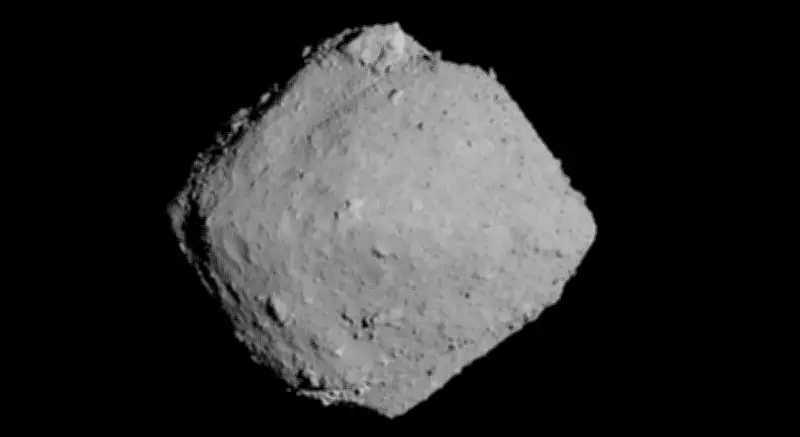
Asteroid Ryugu Samples Reveal Complete Set of DNA and RNA Building Blocks
In a groundbreaking discovery that could reshape our understanding of life's origins, scientists analyzing samples from the asteroid Ryugu have confirmed the presence of all five fundamental molecular components of DNA and RNA. This finding, published in the prestigious journal Nature Astronomy, provides compelling evidence that the basic chemical ingredients necessary for life may be widespread throughout our solar system.
The Chemical Toolkit for Life Found in Space
The research centers on nucleobases—the molecular letters that encode genetic information in all known life forms. These include adenine, guanine, cytosine, thymine, and uracil, which together form the alphabet of biological instructions. For the first time in samples from Ryugu, researchers have definitively identified all five of these crucial molecules.
Toshiki Koga, a biogeochemist at the Japan Agency for Marine-Earth Science and Technology and the study's lead author, emphasized the significance while maintaining scientific caution. "This does not mean that life existed on Ryugu," Koga explained. "Instead, their presence indicates that primitive asteroids could produce and preserve molecules that are important for the chemistry related to the origin of life."

In simpler terms, scientists have discovered not life itself, but rather the complete chemical toolkit that life as we know it depends upon. When combined with sugars like ribose and phosphate groups, these nucleobases form DNA and RNA—the systems that store and transmit genetic information in every organism on Earth.
How the Samples Were Collected and Analyzed
The material analyzed comes from Japan's ambitious Hayabusa2 mission, which launched in 2014, reached Ryugu in 2018, successfully touched down on the asteroid's surface in 2019, and returned precious samples to Earth in 2020. The mission brought back 5.4 grams of material—an amount smaller than a typical coin but scientifically invaluable because it has remained largely unchanged since the early solar system formed approximately 4.5 billion years ago.
Earlier studies of a smaller portion of this material had identified only one nucleobase (uracil) along with 15 amino acids, which serve as building blocks for proteins. For this latest research, scientists were granted access to a larger sample of about 20 milligrams of asteroid dust and employed more refined analytical techniques specifically designed to search for nucleobases. This expanded scope enabled them to detect the remaining four: adenine, guanine, cytosine, and thymine.
Surprising Chemical Patterns and Distribution
The researchers conducted detailed comparisons between Ryugu's chemical profile and those of other extraterrestrial samples, including the asteroid Bennu (sampled by NASA's OSIRIS-REx mission) and meteorites such as Murchison and Orgueil. Their analysis revealed intriguing patterns in how these molecules were distributed.
Nucleobases fall into two structural categories: purines (adenine and guanine) with double-ring structures, and pyrimidines (cytosine, thymine, and uracil) with single-ring structures. On Ryugu, scientists discovered a balanced ratio between these two groups—a pattern distinct from other samples. Bennu and the Orgueil meteorite showed higher concentrations of pyrimidines, while the Murchison meteorite was richer in purines.
Most remarkably, researchers identified a consistent relationship between these ratios and the presence of ammonia, another molecule relevant to prebiotic chemistry. Koga highlighted the significance of this pattern, noting: "Because no known formation mechanism predicts such a relationship, this finding may point to a previously unrecognized pathway for nucleobase formation in early solar system materials."
This suggests that the chemical environment in which these asteroids formed—particularly the availability of ammonia—may have shaped how life-related molecules developed billions of years before planets like Earth existed.

Implications for the Origin of Life
The discovery contributes significantly to one of science's most profound questions: Did life begin on Earth, or were its essential ingredients delivered from space? Some theories propose that life originated in environments such as deep-sea hydrothermal vents, while others suggest that key organic molecules arrived via comets, asteroids, or meteorites, seeding early Earth with the chemistry necessary for life to emerge.
César Menor Salván, an astrobiologist at the University of Alcalá who was not involved in the study, emphasized that the findings do not prove life began in space. "The results do not suggest that the origin of life took place in space," he clarified. However, he added that when considered alongside findings from Bennu, the data offers a clearer picture of universal possibilities: "With this and the results from Bennu, we have a very clear idea of which organic materials can form under prebiotic conditions anywhere in the universe."
In essence, while life itself may not have originated on asteroids, the ingredients required to build it appear to form naturally and widely throughout cosmic environments.
A Broader Pattern Across the Solar System
This discovery is not an isolated finding. The same set of nucleobases was identified in samples from asteroid Bennu in 2023, and similar molecules have been detected in meteorites that have fallen to Earth. Ryugu and Bennu are both carbonaceous asteroids—a class that constitutes approximately 75% of asteroids in our solar system and is known to be rich in organic material.
Observations from the James Webb Space Telescope suggest these asteroids may share a common origin, having broken off from a larger parent body billions of years ago. Because these objects represent remnants from the earliest stages of planetary formation, they effectively serve as time capsules, preserving the chemistry that existed before Earth fully formed.
As the researchers noted in their study: "The detection of diverse nucleobases in asteroid and meteorite materials demonstrates their widespread presence throughout the Solar System and reinforces the hypothesis that carbonaceous asteroids contributed to the prebiotic chemical inventory of early Earth."
Future Research Directions
For scientists, the next phase involves moving beyond simply confirming the presence of these molecules to understanding how they form, evolve, and survive in space. Koga outlined the team's forward-looking objectives: "We want to further elucidate the mechanisms by which nucleobases essential for life are formed in space and how they come to exist universally."
For now, the implication is increasingly clear: the chemistry that underpins life on Earth is not unique to our planet. It may be written into the very fabric of our solar system, waiting under appropriate conditions to be assembled into living systems. This discovery opens new avenues for understanding how life might emerge elsewhere in the universe and reinforces the notion that we are connected to cosmic processes that began long before our planet existed.





