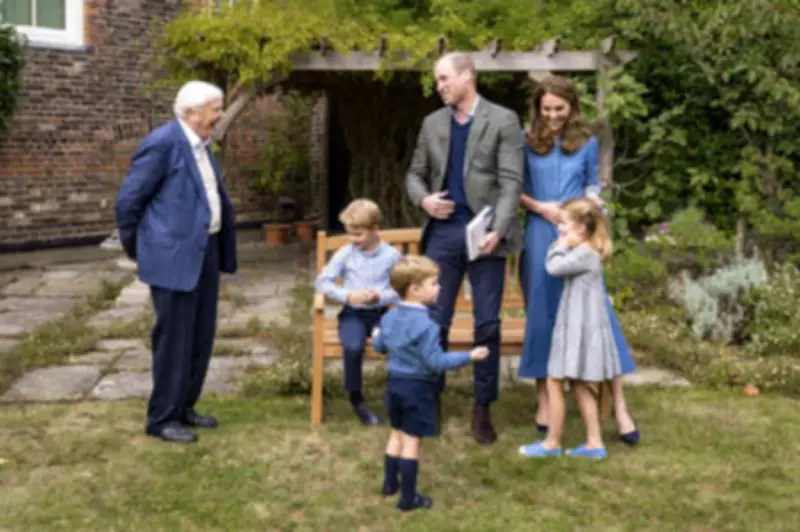
Sometimes, a royal occasion may rely on an object that is prehistoric in nature. When Sir David Attenborough met Prince George at Kensington Palace in 2020, the object that captured their attention was not something fancy or ceremonial but a huge fossilized shark tooth. The image, shared by Kensington Palace and covered by international media, became one of the most talked-about royal photos of that year.
The Event and the Gift
Attenborough visited Kensington Palace for a socially distanced outdoor screening of his documentary A Life on Our Planet alongside Prince William and his family. During the visit, he presented Prince George with a fossilized tooth of the extinct shark Otodus megalodon.
Why the Picture Resonated
The photo's impact stemmed from its simplicity. It showed a young royal examining a gigantic prehistoric fossil next to one of the world's most renowned natural scientists. The image spoke for itself, needing no further explanation.

Scientific Significance of the Tooth
The fossil held genuine scientific and historical value. Megalodon teeth are among the most recognizable prehistoric fossils, offering insights into one of the largest predatory animals ever to inhabit Earth's oceans. According to research published in PNAS and indexed on PubMed, these teeth have been used in geochemical and isotope analysis to study the biology and body temperature regulation of Otodus megalodon. This scientific relevance gave the object importance beyond its dramatic appearance.
The megalodon could reach up to 15 meters in length, accounting for the massive size of its teeth, even when held by a person.
Visual Impact of the Fossil
The picture became widely circulated because the fossil served as an immediate focal point. Without additional context, viewers could see that the object was old, unique, and enormous. The contrast between royal formality and the fossil's gigantic size gave the photo its dynamic appeal.
Additionally, the human element made the scene special. Children often get excited by large or fantastical objects, and the fossil tooth fit that description perfectly. Attenborough's presence enhanced this effect, as he has been the face of natural science and education for decades.
A Brief Heritage Debate
Shortly after the images were published, a wider debate emerged. According to international media reports, Maltese cultural officials briefly worried about the fossil staying in Britain, as Attenborough reportedly found it while on vacation with his family in Malta during the 1960s. However, this minor dispute quickly subsided, and Prince George was allowed to keep the gift.
Why the Image Endures
Years later, the photograph continues to circulate online because it spans multiple realms. Royal experts see the family aspect, natural history enthusiasts focus on the fossil, and general viewers appreciate the juxtaposition and Prince George's evident interest.
The tooth itself holds unique appeal. Fossils condense millions of years of history into a single physical object. The megalodon tooth is not just a reminder of a lost animal but of a lost world. This is why the photograph has stood the test of time: while the royal setting initially drew people in, the fossil left a lasting impression, transforming a formal event into a memorable moment.