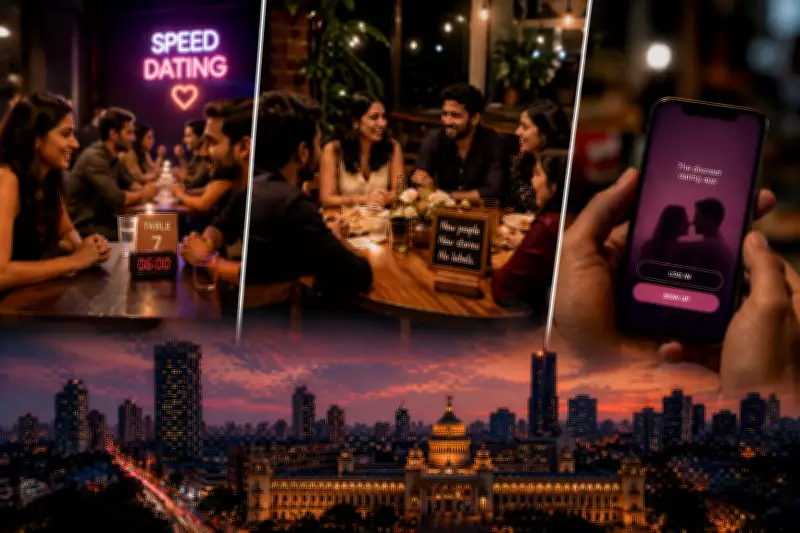
On any given weekend in Bengaluru, a quiet shift is playing out. At one table, strangers laugh over icebreakers, share a meal, no labels attached. And elsewhere, behind screens, users log into discreet dating platforms, looking for connections they don't want to name.
What ties all of this together is not just curiosity, but a deeper emotional need. Neha Cadabam, a senior psychologist, explains: "These formats can facilitate initial connections, but they often prioritise immediacy over depth. This can reinforce a pattern of short-term, rather than sustained emotional investment."
Stranger Meetups: Not Just for Romance
Running parallel to speed dating is the rise of intentional stranger meetups. Asha Bhat, actor-model and entrepreneur who runs HighTable, a platform organising such meets in Bengaluru, Kochi, and Delhi, says: "It's not dating at all. It's about meeting new people, making friends, finding like-minded people — or even choosing to meet people who are completely different from you." She adds: "While so much is happening online, these events bring back those old katte vibes — like stepping out in the evening to talk to your neighbours or meeting friends at a familiar spot."

For Asha, the shift is tied to how people live today. "As we keep moving to different cities, our childhood friends stay back. So where do you go to make new friends? It can't just be DMs or Instagram," she states. Bengaluru, she says, is leading the curve: "People here are open-minded, they like to experiment, and they're always looking to do something new."
Speed Dating: Fast, Structured, and Growing
Once seen as a novelty, speed dating is now a regular weekend fixture across the city. Saurav Arya, founder of Small World, which organises speed dating events across the country, says the shift is unmistakable: "Post-pandemic, people wanted to meet in real life. At the same time, there was fatigue with dating apps. That's what really drove people to step out and meet offline."
He points to another reality: time scarcity in metro cities. "From Monday to Friday, people are caught up with work. The weekend is the only time they get, and they don't want to spend it endlessly scrolling. Most young professionals understand this is a space to socialise, not necessarily to find 'the one'," Saurav says. "People come for friendship, casual connections, or even just to meet someone new."
When it comes to scale, Bengaluru stands out: "Bengaluru is leading the dating scene in India — both offline and online. Most people here live independently, away from their families, and are new to the city. So they're actively looking to socialise."
Discreet Dating Apps: The Private Side of Connection
If speed dating and meetups represent visible socialising, discreet dating apps reveal a more hidden shift. Gleeden, a discreet extramarital dating platform, has crossed four million users in India — and has seen a 148% rise in female users over the past two years, indicating growing participation beyond its earlier male-heavy base. Neha explains that this signals something deeper: "It is typically a combination of unmet emotional needs, communication breakdown, and the psychological appeal of anonymity and novelty. When individuals feel emotionally neglected or misunderstood within a marriage, they may seek affirmation elsewhere."
City-wise usage of a discreet dating app:
- Bengaluru - 18% of its user base
- Hyderabad - 17%
- Delhi - 11%
- Mumbai - 9%
- Pune - 7%
Source: Gleeden
The COVID-19 Effect
Across all these formats, one factor keeps coming up — the pandemic. "COVID-19 significantly altered social behaviour. Post-pandemic, there is a heightened urgency to connect, driven by a fear of missing out on meaningful experiences," says Neha. Asha echoes the sentiment: "Now, digital saturation is at its peak — you don't want to just text or call anymore, you want to meet people in real life."