Russian Startup Pioneers Bio-Drone Surveillance Using Brain-Implanted Pigeons
In the skies above Russia, a common pigeon is no longer just a bird—it could be a sophisticated surveillance tool watching your every move. Moscow-based startup Neiry is revolutionizing surveillance technology by harnessing the natural abilities of pigeons, turning them into remotely controlled bio-drones through advanced brain implants.
The Superiority of Pigeons Over Traditional Drones
According to Neiry, modern drones pale in comparison to pigeons when it comes to range, endurance, and access capabilities. Pigeons offer distinct advantages: they do not require batteries, can fly in virtually any weather condition, and are abundantly available. This makes them ideal candidates for surveillance missions where traditional drones might fail.
However, controlling these birds has always been a challenge. Unlike drones with remote controls, pigeons fly unpredictably. Neiry claims to have overcome this hurdle by developing brain implants that allow staff to remotely pilot the birds, effectively transforming them into bio-drones.

How the Pigeon Drone Technology Works
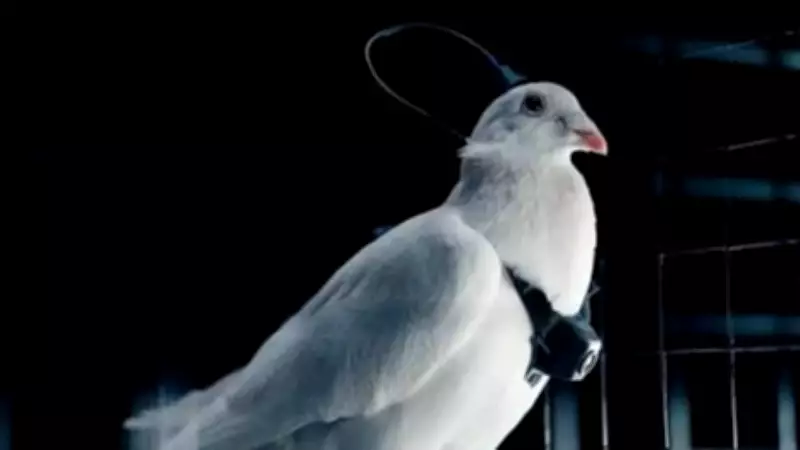
The process involves inserting small electrodes into the pigeon's brain through its skull, connecting them to a simulator mounted on the bird's head. Each pigeon is equipped with a solar-powered backpack containing a controller and other electronics, along with a chest-mounted camera for recording and surveillance.
Surgeons use a stereotactic setup to place the electrodes with precision, ensuring 100% survivability for the birds. In a press release, Neiry explained that the controller receives pre-loaded flight tasks similar to those used in aerial drones. The simulator sends impulses to make the bird turn left or right, with positioning provided by GPS and other navigation methods.
The startup states that any animal becomes radio-controllable after the implantation operation, requiring only pre-conditioning of the birds.
Commercial Prospects and Expansion Plans
While not yet commercially available, Neiry compares the cost of bio-drone construction to that of building an unmanned aerial vehicle. Pigeons excel with the ability to fly up to 300 miles per day without needing a battery recharge and can operate in restricted airspace where drones might be prohibited.
Founder Alexander Panov has ambitious plans for the project, dubbed PJN-1. "Our long-term goal is to create the next human species after Homo sapiens—Homo superior," he said, referencing transhumanist concepts. The technology is not limited to pigeons; any bird can be implanted and controlled remotely, from ravens to seagulls and albatrosses, depending on the payload and monitoring needs.
Real-World Tests and Potential Military Applications
Neiry announced early real-world trials of its bio-drones in December 2025, with tests conducted in Dubai and Moscow offices and flight evaluations in Russia and nearby countries. The company's mission, "Viva Homo Perfectus: Advancing the next stage of human evolution with neurotechnology," aims to enhance human capabilities through technology.
Potential applications range from monitoring infrastructure and inspecting industrial sites to assisting in rescue missions. While not advertised for covert surveillance or military use, experts fear the technology could be exploited by regimes like Putin's if it functions as claimed. Neiry's major investor is the National Technology Initiative, a Russian NGO established by former prime minister Dmitry Medvedev on presidential instructions, which invested about 360 million rubles ($4.7 million) in 2021. The company denies any government links.
James Giordano, a Pentagon science adviser and professor emeritus at Georgetown University, warned Bloomberg that bio-drones could theoretically be used to transmit diseases into enemy territory. The pigeons have already found uses in Russia, Dubai, and India, with one interest in monitoring power lines.

Ethical Concerns and Future Outlook
Animal welfare experts and bioethicists have raised concerns about treating birds "as products rather than living creatures." Panov's in-house bioethicists argue that the implants, while partially limiting agency, are comparable to milking a cow or riding a horse. The project's fate remains in the company's hands, and its success is yet to be determined, though it stands as one of the few such initiatives in the tech field today.