New Study Reveals Chemical Goldilocks Zone for Alien Life Beyond Water
For decades, the fundamental principle guiding the search for extraterrestrial life has been straightforward: follow the water. Scientists have long assumed that if a distant planet possesses liquid water, and potentially oxygen in its atmosphere, it could be considered potentially habitable. However, groundbreaking new research led by scientists at ETH Zurich suggests this traditional approach may be critically incomplete.
The study reveals that a planet can feature oceans and continents yet remain chemically incapable of supporting life. The true constraint for habitability may lie far deeper, embedded within the fundamental chemistry of a planet's formation process itself.
A Chemical Goldilocks Zone Beneath the Surface
The research, published in the prestigious journal Nature Astronomy under the title "The chemical habitability of Earth and rocky planets prescribed by core formation," was spearheaded by Dr. Craig R. Walton, a postdoctoral researcher at the Centre for Origin and Prevalence of Life at ETH Zurich. He collaborated with Professor Maria Schönbächler and other colleagues.

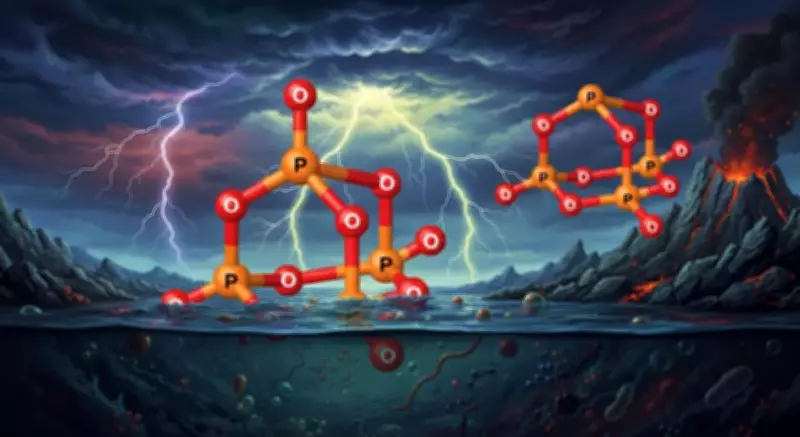
Their central thesis is precise and transformative: life depends not merely on the presence of surface water and atmospheric oxygen, but on whether two absolutely critical elements—phosphorus and nitrogen—remained accessible in a planet's mantle during its earliest, molten stages of formation.
Phosphorus is indispensable for constructing DNA and RNA, the molecules responsible for storing and transmitting genetic information. It also plays a pivotal role in cellular energy systems like ATP. Nitrogen, meanwhile, is an essential component of all proteins, the fundamental structural and functional building blocks of cells. The researchers assert that without accessible reserves of both elements, life "as we know it simply cannot form."
The Delicate Oxygen Balance During Planetary Birth
"During the formation of a planet's core, there needs to be exactly the right amount of oxygen present so that phosphorus and nitrogen can remain on the surface of the planet," explained Dr. Walton. Young rocky planets begin as entirely molten bodies. As they gradually cool, dense elements like iron sink inward to form the metallic core, while lighter silicate materials rise to form the mantle and crust.
Concurrently, the overall oxygen levels within this primordial mix determine how elements chemically partition between the sinking metal and the rising rock. If oxygen is too scarce, phosphorus bonds preferentially with iron and is dragged into the core, effectively removing it permanently from the future surface environment. If oxygen is overly abundant, phosphorus may stay in the mantle, but nitrogen becomes volatile and is more likely to escape into the atmosphere, eventually being lost to space.
"Having too much or too little oxygen in the planet as a whole – not in the atmosphere per se – makes the planet unsuitable for life because it traps key nutrients for life in the core," Walton told the Daily Mail. "A different oxygen balance means you have nothing to work with left at the surface when the planet cools and you form rocks."
Using sophisticated numerical modeling, the team identified what they describe as a remarkably narrow "chemical Goldilocks zone"—an intermediate, precise range of planetary oxygen content during formation where both phosphorus and nitrogen remain in the mantle in quantities sufficient to eventually seed and sustain life.
"Our models clearly show that the Earth is precisely within this range," Walton stated. "If we had had just a little more or a little less oxygen during core formation, there would not have been enough phosphorus or nitrogen for the development of life." Earth appears to have struck this delicate chemical balance approximately 4.6 billion years ago.

Rethinking Planetary Habitability and the Search for Life
These findings profoundly reshape our understanding of what makes a planet habitable. They suggest that countless exoplanets previously considered promising candidates—simply because they orbit within their star's "habitable zone" and may contain water—could be chemically unsuitable for life from their very inception.
While no known life can survive without liquid water, the researchers argue that using water or atmospheric oxygen alone as primary markers for habitability is potentially misleading. A planet's total oxygen balance during its formative epoch, not merely its later atmospheric composition, is a decisive factor in whether life-critical elements remain bioavailable.
Walton warned this new criterion may significantly narrow the estimated number of habitable worlds in the universe. He suggested the actual count of potentially life-supporting planets could be just one to ten percent of previous, more optimistic estimates.
"It would be very disappointing to travel all the way to such a planet to colonise it and find there is no phosphorus for growing food," he remarked. "We'd better try to check the formation conditions of the planet first, much like ensuring your dinner was cooked properly before you go ahead and eat it."
Implications for Mars and Future Exploration
Closer to home, the research offers insights into our solar system. It indicates that Mars lies just outside this critical chemical Goldilocks zone. Analysis suggests Mars contains relatively abundant phosphorus but exhibits significantly lower accessible nitrogen levels near its surface. Combined with harsh surface salts and other challenging chemistry, this makes the Martian soil currently inhospitable for Earth-like life.
"Mars is fairly similar to Earth, and its formation conditions mean there is more phosphorus, not less. This means growing food there might be relatively easy," Walton noted. However, he emphasized the nitrogen deficit and hostile surface chemistry pose major, fundamental obstacles: "It is not that different, but it is not currently habitable. Elon Musk will have to come up with a clever way to change the composition to grow food there."
Refining the Search: Looking at the Right Stars
Directly measuring the internal chemistry of distant rocky exoplanets remains an immense technological challenge. However, astronomers can infer probable planetary compositions by studying the properties of their host stars. Planets coalesce from the same protoplanetary disk material as their parent star. Therefore, the oxygen abundance and overall chemical makeup of a star directly shape the composition of its entire planetary system.
This insight provides a new filter for the search for extraterrestrial life. Solar systems whose central stars closely resemble our own Sun in chemical composition may offer better odds of harboring planets within the chemical Goldilocks zone.
"This makes searching for life on other planets a lot more specific," Walton concluded. "We should look for solar systems with stars that resemble our own Sun."
This pioneering work fundamentally reframes the enduring quest for life beyond Earth. Water remains a necessary ingredient, but it is no longer sufficient. A planet's ultimate fate—whether it remains a sterile rock or blossoms with biology—could be determined by a delicate chemical equilibrium established in its first fiery, molten moments, long before its oceans, atmosphere, or continents ever took shape.