China's Robotaxi Revolution: How Government Support and Cost Advantages Are Driving Global Leadership
In the global race to develop autonomous taxi services, China is emerging as a formidable frontrunner. The country's unique combination of government enthusiasm, technological innovation, and cost advantages is creating an environment where robotaxis are transitioning from experimental projects to commercial reality.
The Current Landscape of China's Autonomous Taxi Services
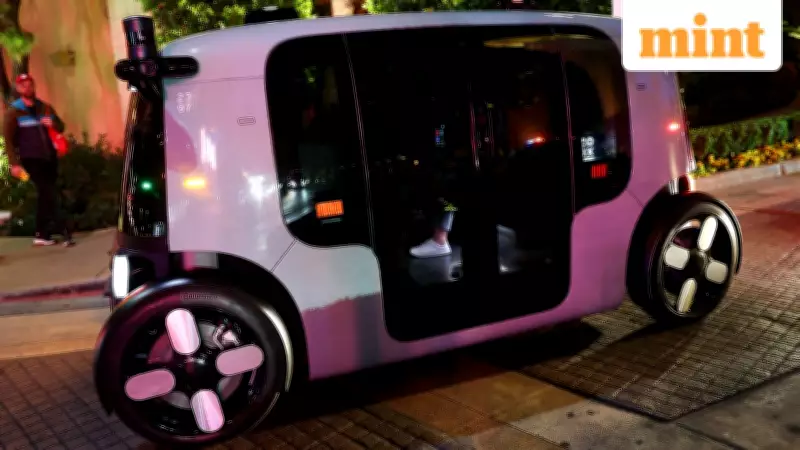
A journey in one of Pony.ai's robotaxis offers both familiar and futuristic experiences. While the frequent horn honking resembles traditional Chinese cabs, the self-moving steering wheel and real-time vehicle detection screens showcase cutting-edge technology. Pony.ai represents just one player in China's rapidly expanding autonomous vehicle ecosystem.
Multiple Chinese companies have launched commercial robotaxi services across various cities:

- Apollo Go, owned by tech giant Baidu, has deployed over 1,000 self-driving cars primarily in China with ambitions to operate 20,000 robotaxis worldwide by 2027
- Pony.ai has launched services in four Chinese cities
- WeRide operates in three urban centers
- CaoCao Mobility, the ride-hailing division of Geely, has begun trials in two cities
The supporting infrastructure continues to develop with partnerships like Momenta's collaboration with state-owned SAIC to build robotaxis and Xpeng's announcement of dedicated robotaxi production starting next year.
Financial Projections and Market Potential
Financial institutions paint an optimistic picture of China's robotaxi future. HSBC describes the industry as "on the cusp of commercial breakout," while Goldman Sachs projects revenue growth from just over $50 million this year to nearly $50 billion by 2035. Their analysis suggests that by that time, 1.9 million robotaxis in China could represent 25% of all ride-hailing vehicles.
UBS offers an even more bullish forecast, estimating the market could reach approximately $180 billion by the late 2030s. These projections reflect China's substantial urban advantages: over 50 cities permit self-driving car testing on public roads, with commercial operations active in at least ten cities—double the number in America.
The scale potential is enormous with China containing 139 cities boasting populations exceeding one million and an urban population more than three times larger than America's.
Key Advantages Driving China's Leadership
Government Support and Infrastructure Development
China's central government views autonomous technology as crucial for strengthening national technological capabilities. Simultaneously, local governments eager to attract investment have rapidly approved robotaxi pilots while installing necessary infrastructure. In Wuxi, for example, 1,723 crossroads feature traffic lights connected to intelligent networks, and 330 city locations have sensors specifically designed to facilitate robotaxi movement.
Cost Advantages in Vehicle Production
Chinese robotaxis benefit from significantly lower production costs compared to Western counterparts. While America's Waymo spends between $130,000 and $200,000 per vehicle, HSBC estimates the average Chinese robotaxi costs just $40,000. Baidu's RT6, developed with state-owned Jiangling, comes in at only $35,000.
Several factors contribute to these cost advantages:
- An enormous domestic market and intense competition have reduced overall vehicle costs
- Basic self-driving systems in even affordable cars have created scale economies
- Chinese companies dominate the global lidar market, with four firms controlling approximately 90% of production
Challenges and Regulatory Considerations
Despite these advantages, profitability remains elusive for China's robotaxi operators. Low taxi driver wages and competitive fares create challenging economics. Apollo Go previously projected breaking even by late 2024 and achieving profitability this year but has since remained silent on the matter. WeRide and Pony.ai remain several years from profitability, with their declining Hong Kong stock prices reflecting investor skepticism about near-term cash generation.

Goldman Sachs anticipates the industry might achieve operating profit breakeven in China's largest cities by 2032 but expects continued losses in smaller urban centers.
Additional challenges include:
- Customer acquisition difficulties as Didi, controlling 70% of China's ride-hailing market, protects its own autonomous vehicle efforts rather than opening its platform to competitors
- Regulatory caution with over 70 new autonomous driving regulations implemented across various jurisdictions in just the first half of this year
- Limited testing permissions in major cities like Beijing and Shanghai, where officials remain hesitant about widespread robotaxi deployment
Global Expansion and Future Prospects
These domestic challenges are prompting Chinese robotaxi companies to look internationally. UBS estimates the robotaxi market outside China could exceed $210 billion by the late 2030s, excluding America where entry appears difficult.
Chinese companies are already establishing international presence:
- Pony.ai is testing services in Luxembourg, Dubai, and Seoul with permission to operate across South Korea
- Apollo Go began Hong Kong testing last year, has approvals in Abu Dhabi and Dubai, and plans Swiss trials with PostBus
- WeRide holds permits to test or operate commercial robotaxis in six countries outside China
As Chinese companies continue to refine their technology and business models, the experience of hailing a self-driving cab may soon become commonplace across global urban landscapes. The combination of government support, technological innovation, and cost advantages positions China uniquely in the race to develop autonomous transportation at scale.