Chinese AI Developers Face Reality Check on US Chip Gap
After a year of optimistic headlines about China's artificial intelligence advancements, a sobering realization is settling in among the country's elite AI researchers. Many now believe China's chances of catching up to the United States in the short term appear slim. The primary reason? A severe bottleneck in accessing advanced semiconductor chips.
"The truth may be that the gap is actually widening," stated Tang Jie, founder of Chinese AI startup Zhipu, during a recent conference in Beijing. "While we're doing well in certain areas, we must still acknowledge the challenges and the disparities we face."
The Nvidia Problem and Creative Workarounds
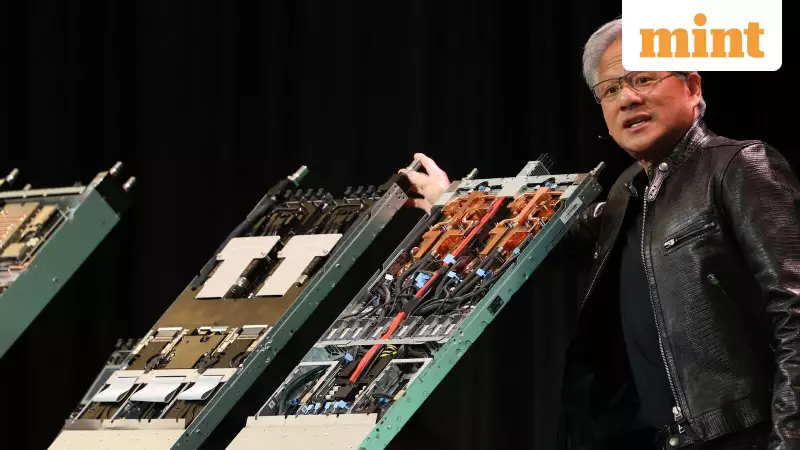
This disparity became starkly clear in January when Nvidia, the global leader in AI chips, unveiled its next-generation Rubin hardware. The company listed several American firms as customers but pointedly excluded Chinese AI developers. U.S. export regulations effectively block direct sales of these advanced chips to China.

Faced with this barrier, Chinese companies are exploring unconventional solutions. According to industry insiders, discussions are underway about renting computing power at data centers located in Southeast Asia and the Middle East. This strategy aims to provide indirect access to the coveted Rubin chips, following similar efforts last year to obtain chips from Nvidia's Blackwell series.
While such deals are generally considered legal, they involve circuitous arrangements. These workarounds typically leave Chinese AI developers with fewer chips and significantly more operational inconvenience compared to their well-funded American competitors.
Resource Constraints and Divergent Paths
The impact of these restrictions is profound. Washington's export controls have discouraged many Chinese companies from pursuing cutting-edge AI research, which demands enormous computing power. Instead, they are increasingly focusing on applying AI technology for everyday, practical uses. Meanwhile, American firms continue to invest heavily in the latest chips to push the boundaries of what's possible.
"A massive amount of compute at OpenAI and other American companies is dedicated to next-generation research, whereas we are stretched thin," explained Justin Lin, who leads development of Alibaba's AI model Qwen. "Just meeting delivery demands consumes most of our resources."
The financial gap is substantial. UBS analysts estimate that the combined capital spending of China's internet giants—a significant portion earmarked for AI—totaled approximately $57 billion last year. That figure represents roughly one-tenth of the spending by their U.S. counterparts.
Adaptation, Innovation, and Persistent Optimism
Despite these challenges, no one is writing off China's AI ambitions. Developers like DeepSeek have demonstrated remarkable skill at adapting to limited resources. This month, two other prominent AI developers, Zhipu and MiniMax, raised over $1 billion combined through initial public offerings in Hong Kong. MiniMax's share price more than doubled from its IPO price in just two trading days, signaling strong investor confidence.
"Despite a more challenging operating environment, investors continue to price in the possibility of technological catch-up or breakthrough," noted Alyssa Lee, a veteran tech investor now working at an AI startup. "That optimism itself speaks to the level of innovation Chinese companies have demonstrated."
Chinese firms are making tangible progress. DeepSeek, which gained international attention a year ago with a high-quality AI model, has been publishing techniques to improve AI development efficiency. Some of these methods have been adopted by Western researchers. This month alone, DeepSeek published two research papers discussing a new training architecture for developing larger models with fewer chips and a memory design that boosts model efficiency.
According to data from nonprofit researcher Epoch AI, models developed by DeepSeek and Alibaba have narrowed the performance gap with the best U.S. models. The lag is now as little as four months, compared to an average gap of seven months in recent years.

Open-Source Advantage and Domestic Chip Hurdles
Many of China's leading AI models are open-source, meaning they are freely available for users to download and modify. This approach is helping Chinese firms raise their global profile while top American models like those from OpenAI remain closed-source.
Yet the reliance on foreign chips persists. Last year, when DeepSeek was developing its new flagship model, it initially tried using less-advanced chips from Huawei and other domestic vendors. The results were unacceptable, forcing the company to turn to Nvidia chips for some critical training workloads, according to people familiar with the development. DeepSeek made progress afterward and is preparing to introduce the model in the coming weeks.
Chinese chipmakers are making headway. Huawei and several domestic startups have advanced their products. Zhipu announced this week that it created an open-source image-generation model using only Huawei chips. However, the performance gap with the best American chips remains wide.
The core issue is manufacturing capacity. "The primary bottleneck is chip-manufacturing capacity," said Yao Shunyu of Chinese internet giant Tencent at the Beijing conference. Yao recently left OpenAI to lead Tencent's AI initiatives. China is barred from acquiring top-tier chip-making technology. Companies cannot utilize leading Asian manufacturers like Samsung and Taiwan Semiconductor Manufacturing Co. for many advanced chips. Instead, they must rely on less-advanced imported and domestic machinery to scale up production.
Limited Relief and Government Guidance
Washington's recent decision to allow Nvidia to sell its H200 chip in China is unlikely to be a game-changer, according to industry observers. While Nvidia CEO Jensen Huang has noted high Chinese demand for the chip, tech company insiders in China say the H200—which is two generations behind the Rubin series—has become insufficient for training state-of-the-art AI. Companies are still awaiting Beijing's approval to purchase the H200s.
Chinese officials have recently provided guidance to some companies, indicating that any purchases should be for "necessary" uses such as advanced AI research. The guidance also reaffirmed China's commitment to pushing for the adoption of domestic semiconductor chips, underscoring the long-term strategic importance of achieving self-reliance in this critical technology sector.