

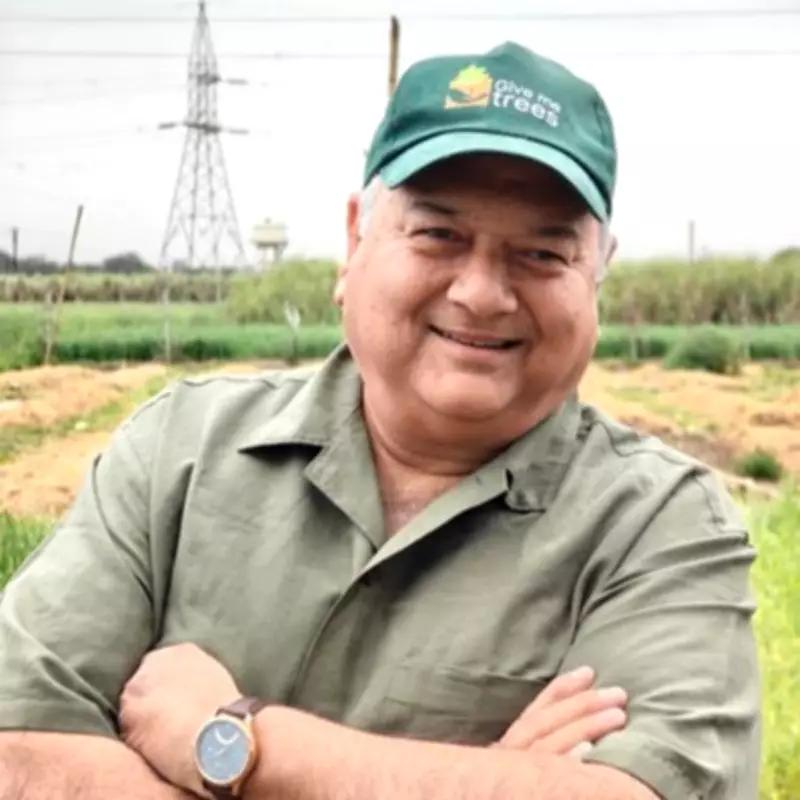
Environmentalist Peepal Baba has stated that the fate of civilisations has historically been tied to the health of their soil, asserting that societies which honoured their land flourished while those that neglected it collapsed.
In his newly released memoir, 'Ghosts on Peepal Trees', the conservationist describes soil as the bedrock of agriculture, afforestation, nature conservation, and human civilisation.
Soil as the Foundation of Civilisation
“Every civilisation that respected its soil prospered; every one that ignored it perished. The Indus Valley, Mesopotamia, the Mayans—all rose on fertile floodplains and fell when their soil turned to dust,” he writes in a chapter titled 'Soil Matters'.

Drawing from lessons imparted by his grandmother, Peepal Baba emphasises that understanding soil is key to understanding nature itself.
“Everything begins with the soil and ends with the soil. In fact, soil is the only thing to understand. Farming, agriculture, afforestation, social forestry, nature conservation, grasslands, wetlands—whatever you wish to study, you have to first study the soil,” he says.
About Peepal Baba
Swami Prem Parivartan, popularly known as Peepal Baba, is an environmentalist who, along with his team, has planted and preserved over 26 million trees across 226 districts in 21 states of India, according to the book.
Peepal Baba began working with trees at the age of 11 and later founded the Give Me Trees Trust in 2011, an organisation focused on ecological and habitat restoration.
The book reveals that Peepal Baba was deeply influenced by the teachings of Osho and joined the Neo-Sannyas Movement, where he was given the name “Swami Prem Parivartan”.
The Soul of Everything
The author describes soil as “the soul of everything”, stating it holds “the planet’s memory, its chemistry, its poetry, its destiny”. According to him, every society’s relationship with the land beneath its feet ultimately shapes its future.
Warning against taking soil for granted, he writes that people routinely walk on it, build over it, and bury their dead in it, but rarely pause to understand its significance.
“Even today, our future depends not on satellites but on soil samples,” he says, arguing that soil remains one of the most misunderstood elements of the natural world despite sustaining ecosystems, agriculture, and human settlements.
Blending Memoir and Advocacy
The book blends memoir, environmental advocacy, and reflections from decades of conservation work, exploring the relationship between people and nature through the symbolism of the Peepal tree.
It draws on personal memories and experiences to make the case for environmental stewardship and a deeper connection with the natural world.
Published by Penguin, 'Ghosts on Peepal Trees' explores themes of ecology, spirituality, and human emotion while advocating greater awareness about environmental conservation and the need to reconnect with nature.
The book was launched on World Environment Day, June 5.
Through its reflections on soil, trees, and civilisation, the book argues that environmental change begins not only with policies and institutions but also with individual responsibility and collective action.






