Pandemic Pause Altered Urban Bird Beaks, Then Change Faded
For a short time during the pandemic, cities across the world experienced an unprecedented slowdown. Streets became quiet. Daily human movement dropped dramatically. Food waste from restaurants and campuses declined sharply. This sudden reduction in human activity created a unique pause for wildlife living alongside people.
New scientific research now reveals this period left a physical mark on at least one urban bird species. Scientists studying dark-eyed juncos in California discovered that birds born during COVID-19 restrictions developed different beak shapes compared to those raised before and after lockdowns.
How COVID Restrictions Created an Accidental Experiment
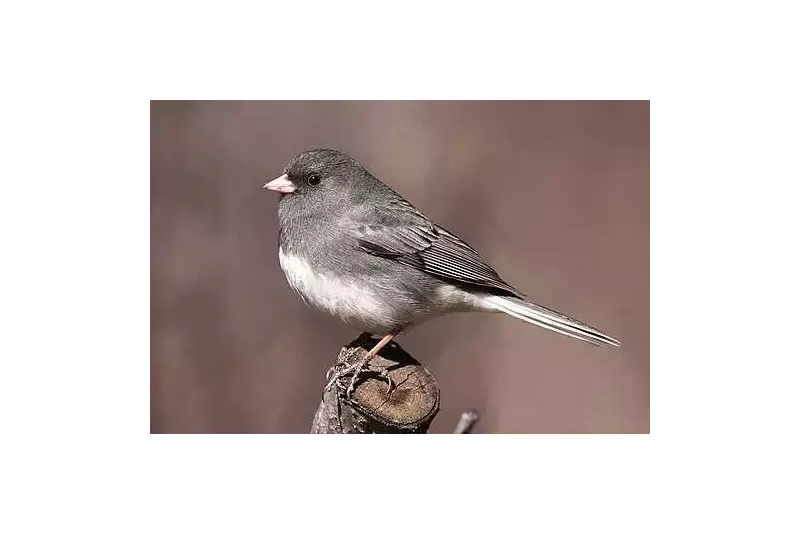
Dark-eyed juncos are small grey birds common throughout North America. In California, some populations have permanently settled in urban areas, including the University of California, Los Angeles campus. Researchers have studied these city-dwelling juncos for decades.

Before the pandemic, scientists noticed urban juncos in Los Angeles typically had shorter and thicker beaks than their wildland relatives. One leading theory pointed to access to human food waste. Processed scraps might favor stronger, broader bills rather than longer ones used for natural foraging.
When COVID lockdowns began in March 2020, the UCLA campus transformed almost overnight. Classes moved online. Foot traffic plummeted. Most food outlets closed completely. Researchers later measured approximately a sevenfold reduction in human activity during the strictest period.
This sudden shift created what scientists call an anthropause—a temporary reduction in human pressure. For the junco population, it meant significantly less discarded food and fewer daily interactions with people.
Birds Temporarily Shifted Toward Wildland Form
The research findings revealed a clear pattern. Juncos that hatched during the anthropause developed beaks that were longer and narrower. Their bill shape closely resembled birds from neighboring mountainous wildlands.
Birds born in early 2020 did not show immediate changes. However, those hatched in 2021 displayed a clearer transformation after experiencing reduced human presence throughout their early development. This suggests a population-level lag rather than an instant reaction.
For a brief period, urban birds physically resembled their non-urban relatives. The city juncos had temporarily shifted toward a wildland form.
Change Reversed as Human Activity Returned
As restrictions eased in late 2021 and into 2022, human movement and food waste increased again. Birds hatched during this recovery period showed a shift back toward the earlier urban beak shape.
By 2023 and 2024, the junco population had largely returned to its pre-pandemic form. The transformation was not permanent. It tracked closely with human behavior patterns.
This rapid back-and-forth change suggests the birds responded to immediate environmental conditions rather than undergoing long-term genetic adaptation. Developmental flexibility likely played a significant role.
Food Waste Emerges as Key Driver
Among various urban factors, food availability stood out prominently. During lockdowns, campus dining halls and cafés remained closed for months. Organic waste dropped sharply.
With fewer easy calories from human scraps available, birds may have relied more on natural food sources that favor longer, narrower bills. When human food returned, the advantage shifted back again.
The study could not completely rule out other influences. However, food waste remains the strongest explanation that fits both the timing and direction of the observed changes.
Small Human Shifts Shape Wildlife Quickly
These findings add to growing evidence that wildlife responds rapidly to human patterns. Behavioral changes during the anthropause were widely reported. Physical transformations have been harder to document.
In this case, the shift occurred within just a few years and reversed just as quickly. It highlights how urban animals are not merely living near people but are intimately tied to our daily routines.

The junco study raises important questions about how future changes in cities might shape wildlife in subtle ways. Not all effects are immediately obvious. Some manifest quietly in small physical details, then fade back when urban life resumes its normal pace.
Researchers published their work under the title "Rapid morphological change in an urban bird due to COVID-19 restrictions." The study demonstrates how temporary reductions in human activity can create natural experiments that reveal surprising connections between urban ecosystems and human behavior.