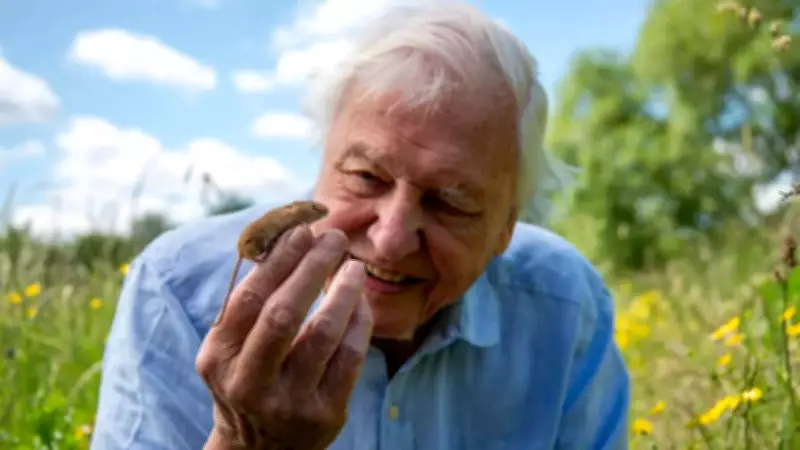
Sir David Attenborough stands among the most recognized broadcasters worldwide, admired for his calm narration and profound connection with the natural environment. Born on 8 May 1926 in Isleworth, Middlesex, England, he has dedicated most of his life to bringing the wonders of the natural world to global audiences. Through decades of documentary filmmaking, he has enabled people to explore Earth’s diverse ecosystems, from dense rainforests to the deepest oceans. His work has significantly shaped public understanding of wildlife and environmental change. With a career spanning over seven decades, Attenborough has become a trusted voice in natural history storytelling, inspiring generations to appreciate nature and raising awareness about the importance of protecting the planet’s fragile ecosystems.
Early Life and Academic Foundations
David Attenborough grew up in Leicester, England, in an intellectual household. His father, Frederick Attenborough, was the principal of University College, Leicester, which exposed him to books, science, and research from an early age. He spent much of his time in nature, collecting fossils and insects. He attended Cambridge University, where he studied geology and zoology. According to experts, this academic background significantly influenced his scientific approach to narration. After completing his studies, he served briefly in the Royal Navy before entering the world of publishing and television broadcasting.
BBC Breakthrough and the Rise of the ‘Life’ Series
Attenborough began working with the BBC in the 1950s, initially as a backstage producer. One of his first important works was Zoo Quest, a program featuring live animals in their natural habitats. However, he soon became more recognizable on-screen, and his cool, contemplative demeanor became well-known among viewers. This transition marked the beginning of a new era in natural broadcasting. Later, he held a position of authority at BBC Two, where he contributed to the creation of various influential TV programs. He promoted culturally significant scientific series that helped establish the BBC’s reputation as an educational channel. Undoubtedly, the highlight of Attenborough’s career is the “Life” series. It began with Life on Earth in 1979, followed by sequels like The Living Planet, The Life of Birds, and The Life of Mammals. The production process was extremely demanding. Crews reportedly traveled across continents, filming in remote forests, deep oceans, and harsh climates. Some sequences took years to capture. The use of slow motion, time-lapse, and underwater filming created a new visual standard for documentaries.

Climate Focus and Environmental Advocacy
Later, Attenborough’s work took an increasingly environmental bent, addressing issues from plastic pollution to habitat destruction and global warming through series such as Blue Planet II and Our Planet. His tone became more urgent, though always understated and balanced. He featured in films like A Life on Our Planet, sharing reflections on nature’s evolution over his lifetime. According to experts, this stage represents a shift from narrative storytelling to advocacy. Attenborough has also addressed international forums, such as United Nations climate summits, calling for urgent measures to protect the environment. His calls have become more explicit as signs of climate change have mounted.
Enduring Legacy at 100
As David Attenborough approaches 100 years of life, his influence remains strong. New documentaries continue to feature his narration, and his earlier work is still widely watched. His career spans more than seven decades, covering a period of major technological and environmental change. He has received numerous awards and honors for his contributions to broadcasting and conservation. However, his greatest impact may be the way he changed public attention toward the natural world. Even today, his voice is associated with discovery, calm observation, and environmental awareness. His work has created a lasting connection between audiences and nature, one that continues to shape how people view the planet.