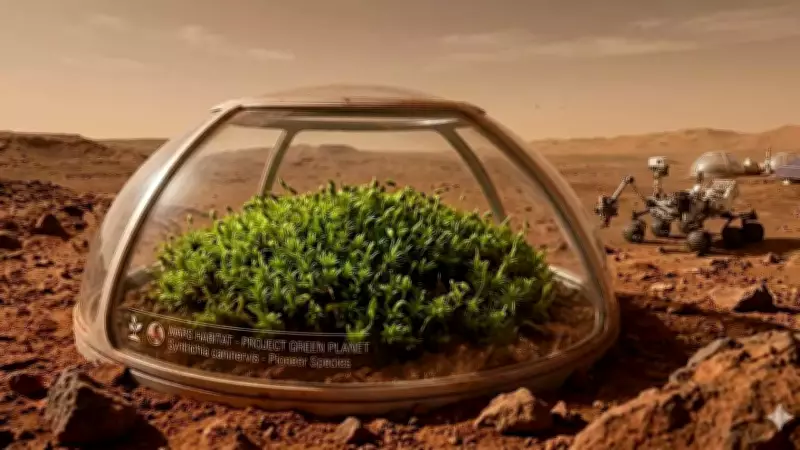
Desert Moss Discovery Brings 'Green Mars' Closer to Reality
In a groundbreaking scientific breakthrough that could revolutionize space colonization, researchers have identified a desert moss species with extraordinary survival capabilities that may enable it to pioneer the terraforming of Mars. The remarkable plant, Syntrichia caninervis, has demonstrated near-supernatural resilience under conditions simulating the harsh environment of the Red Planet.
Unprecedented Dehydration and Revival Capabilities
According to a comprehensive paper published in the prestigious journal The Innovation from Cell Press, this desert moss can lose more than 98 percent of its cellular water content and enter a state of complete dormancy for extended periods. The most astonishing aspect is its rapid recovery: when rehydrated, the moss resumes full photosynthetic activity within just two seconds, essentially 'coming back to life' from a completely desiccated state.
Surviving Mars Simulation Conditions
Scientists subjected the moss to rigorous 'Mars Simulation' experiments that replicated the planet's challenging atmosphere. The test conditions included:

- 95% carbon dioxide atmosphere (similar to Mars' thin air)
- Extremely low atmospheric pressure
- Intense ultraviolet radiation levels
- Temperatures plunging to -196 degrees Celsius
- High-dose radiation exposure up to 5,000 Gy
The Chinese Academy of Sciences reported that the moss not only survived these extreme conditions for seven days but subsequently regenerated new green branches, demonstrating remarkable recuperative abilities.
Outperforming Even Tardigrades
The research reveals that Syntrichia caninervis exhibits greater survivability than tardigrades (commonly known as water bears), which were previously considered the most resilient complex organisms on Earth. While a radiation dose of just 5-10 Gy is typically lethal to humans, this moss withstood a staggering 5,000 Gy of radiation for 30 days, showcasing its exceptional DNA repair mechanisms and biological durability.
Terraforming Potential for Martian Colonization
Scientists classify this moss as 'extremotolerant' and believe it could serve as a biological model for future terraforming efforts. The plant's capabilities suggest several potential applications for Mars colonization:
- Soil Creation: As the moss grows and decays, it produces organic materials that can mix with sterile Martian regolith (sand), gradually creating fertile soil suitable for agriculture.
- Oxygen Production: The moss's photosynthetic activity could contribute to sustainable oxygen generation in controlled environments.
- Pioneer Species: Its ability to survive extreme conditions makes it an ideal candidate to establish initial biological presence on Mars, potentially paving the way for more complex plants and crops.
Implications for Future Space Exploration
This discovery represents a significant step toward making Mars habitable for human colonization. The moss's ability to endure the unshielded cosmic radiation, extreme temperatures, and atmospheric conditions found in deep space positions it as a potential keystone species for extraterrestrial ecosystems. While the moss itself isn't edible for humans, it could create the foundational conditions necessary for growing food crops like potatoes or oxygen-producing trees in future Martian greenhouses.
The research underscores the incredible adaptability of Earth's biodiversity and offers tangible hope that biological solutions might one day transform the barren landscape of Mars into a more hospitable environment for human exploration and settlement.