The Viral Origins of Modern Meme Culture
A few years ago, a video went viral showing an Indian man thrashing a youngster while taunting him with the phrase, "May may banayega tu?" which translates to "Will you make memes?" The answer to that provocative question has become a resounding yes in today's digital landscape. Everyone is creating memes now, from official institutions like the White House, which has embraced super-edits set to popular themes like Mortal Kombat and Hollywood films, to Iranian social media users who have elevated their meme game to such heights that international audiences are cheering their creative output.
The Scientific Foundation of Memes
The term "meme" was first introduced by evolutionary biologist Richard Dawkins in his 1976 book The Selfish Gene. Dawkins described memes as units of cultural transmission analogous to biological genes, serving as vehicles for spreading ideas, behaviors, and styles through imitation. Since then, memes have evolved into the internet's universal language, transcending borders and language barriers to become a dominant form of communication in the digital age.
The Don Tzu Phenomenon: A Cultural Storm
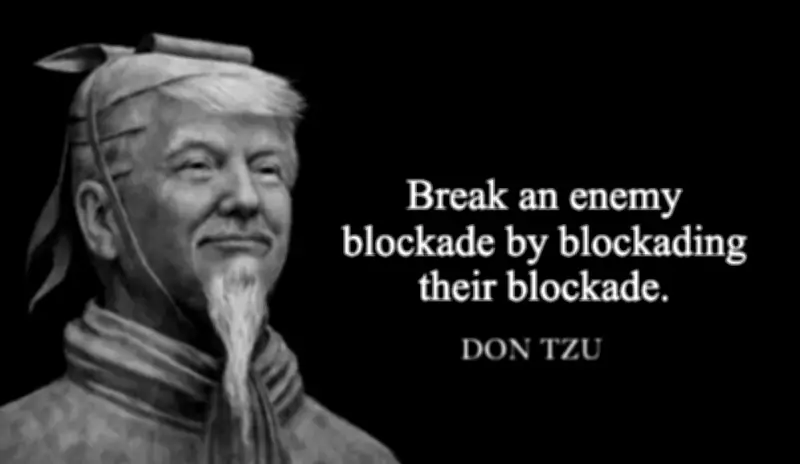
One particular meme has captured global attention, even penetrating China's Great Firewall: Don Tzu. This clever portmanteau combines Donald Trump and Sun Tzu, creating a character that embodies Trumpian aphorisms about "winning." The meme features gems of strategic wisdom such as "break an enemy blockade by blockading their blockade," "if you don't know what you are doing, neither does your enemy," and "you can't lose if you don't have a goal."

Historical Context and Presidential Prophecy
The origins of this phenomenon trace back to Donald Trump's first presidential campaign, when he famously promised his supporters they would "win so much" they would become "tired of winning." Today, the world is witnessing this prophecy unfold in ways that would baffle history's greatest strategic thinkers. Ancient philosophers like Chanakya, Machiavelli, and Sun Tzu could never have conceived of strategic communication taking this particular form.
Comparing Ancient Strategists with Modern Meme Culture
Chanakya, the brilliant Indian adviser who engineered the rise of the Mauryan Empire; Machiavelli, author of the Renaissance playbook on political power; and Sun Tzu, who wrote the definitive blueprint for military discipline in The Art of War—all were masters of strategy in their respective eras. Yet none could match the cultural impact of Donald Trump, or more specifically, the meme persona that has been created around him: Don Tzu.
The Philosophy of Don Tzu
Jeffrey Epstein once wrote to Noam Chomsky that Trump had authored three books, making him one of the few people on Earth who had written more books than he had read. This observation highlights a key aspect of the Don Tzu persona: he doesn't need to read books because he has already internalized all their teachings. While Sun Tzu wrote that "all warfare is based on deception," Don Tzu improves upon this by removing the specifics of deception altogether. What critics dismiss as logorrhea—his tendency toward stream-of-consciousness speech—represents the highest form of strategic ambiguity.
Sun Tzu famously stated: "If you know the enemy and know yourself, you need not fear the result of a hundred battles." Don Tzu operates on a different principle: if he doesn't know himself, how can the enemy possibly understand him? This creates a strategic advantage through complete unpredictability.
Reinterpreting Ancient Wisdom Through Modern Lens
Sun Tzu argued that supreme excellence consists of breaking the enemy's resistance without fighting. Don Tzu achieves this by behaving and speaking with such apparent incoherence that opponents cannot discern his intentions—sometimes, neither can he. Machiavelli advocated that it's safer to be feared than loved, while Don Tzu believes it's possible to demand both simultaneously, having reshaped first the Republican Party and then aspects of the international order around those who either fear him, love him, or both.

Chanakya's Principles in the Digital Age
Chanakya believed in accumulating power patiently through strategic planning. An apocryphal story illustrates his approach: after observing a mother scolding her son for eating from the center of a hot plate, Chanakya devised the technique of attacking enemies at their weaker borders before advancing toward the center. Don Tzu understands this principle well, which explains his emphasis on border security and direct confrontation with political opponents.
While Chanakya believed "the enemy's enemy is a friend," Don Tzu operates on a more fluid principle: friendship and enmity are temporary states dependent on who offers the better deal at any given moment. As an old saying might be adapted: it's dangerous to be his enemy, but potentially more dangerous to be his friend.
The Global Impact of Memetic Strategy
This philosophical framework helps explain certain international dynamics. In conflicts like those involving Iran, traditional questions about military effectiveness, strategic objectives, and battlefield outcomes become secondary in the Don Tzu paradigm. He declares victory, announces ceasefires, and then declares victory again—creating a self-reinforcing narrative of success regardless of conventional metrics.
The Nature of Reality in Internet Culture
Sun Tzu assumed knowledge precedes victory. Machiavelli assumed control sustains it. Chanakya assumed systems secure it. Don Tzu assumes none of these things; he may not even fully understand them, because in his framework, they don't matter. He has grasped what ancient strategists missed: that perceived reality is shaped by attention and narrative, and in the digital age, this perception can become more powerful than objective reality.
This concept echoes a scene from The Matrix, where a character demonstrates spoon-bending to Neo while explaining: "It is not the spoon that bends, but yourself." Don Tzu has internalized this truth about reality's malleability while still expecting tangible rewards—preferably in the form of golden spoons.
The Ultimate Philosophy of Winning
Mountaineer Edmund Hillary once observed that one cannot conquer a mountain; at best, one can hope to conquer oneself. Don Tzu has progressed beyond even this insight, recognizing that one cannot truly conquer oneself either, so why bother trying? His philosophy of winning is simpler: if you genuinely believe you're winning, and every neural impulse confirms this belief, is there any way to actually lose?
The world may be growing weary of this constant winning, but that's the world's problem, not Don Tzu's. In the era of internet memes and digital culture, strategic philosophy has been democratized, reinterpreted, and sometimes turned on its head—creating new forms of influence that ancient strategists could never have imagined.