

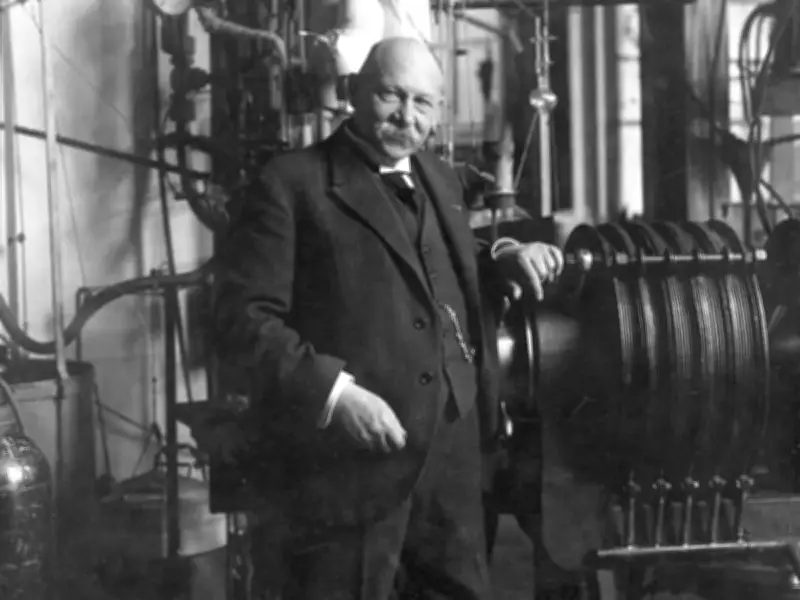
The discovery of superconductivity is attributed to Dutch physicist Heike Kamerlingh Onnes, who made the groundbreaking observation in 1911. While conducting experiments in his laboratory in the Netherlands, Onnes cooled mercury to approximately 4.2 kelvin and observed that its electrical resistance vanished completely. What initially appeared to be a laboratory curiosity later became the foundation of superconductivity, a phenomenon where electricity flows without any energy loss. This discovery marked the beginning of active research in the field, as documented in numerous historical analyses.
Why Onnes Explored Extreme Cooling
Onnes was already renowned for his work in low-temperature physics. His experiments aimed to achieve near-zero temperatures to study the behavior of matter under such conditions. Superconductivity was not his primary goal; rather, he sought to investigate how electrical resistance changed with temperature. According to a peer-reviewed article in Philosophical Transactions of the Royal Society A, the sudden disappearance of resistance was unexpected. At the time, scientists believed that resistance would decrease gradually, not vanish abruptly.
The Moment Resistance Disappeared
In ordinary conductors, resistance causes energy to be lost as heat. However, when Onnes cooled mercury below 4.2 kelvin, the resistance dropped to zero instantaneously. The National Institute of Standards and Technology (NIST) notes that this marked the discovery of superconductivity, proving that perfect current transmission without losses was possible.

Impact of Superconductivity
This phenomenon opened up new scientific challenges, requiring physicists to understand how materials achieve zero electrical resistance. It quickly became clear that superconductivity was essential for technologies requiring powerful magnetic fields and highly efficient circuits, such as MRI machines and particle accelerators. Modern publications still reference Onnes's 1911 experiment as the historical starting point of superconductivity research, highlighting its enduring relevance over a century later.
An Accidental Discovery Built on Preparation
Superconductivity is often considered an accidental discovery, but it was rooted in extensive preparation. Onnes had built a state-of-the-art laboratory and developed advanced cooling techniques. Years of low-temperature research preceded the breakthrough. Scientists sometimes describe this as "serendipity with preparation," where a prepared mind recognizes the significance of an unexpected observation. According to Philosophical Transactions, the development of superconductivity resulted from a deliberate scientific program exploring super-low temperatures. Without such groundwork, the peculiar behavior of mercury might have been dismissed.
Why the 1911 Experiment Remains Significant
Nearly a century later, physicists still refer to Onnes's experiment because it transformed the understanding of matter. Before 1911, low temperatures were seen merely as an experimental challenge. After the discovery, they became a gateway to a new realm of physics. The phenomenon demonstrated that even familiar substances can behave unpredictably under specific conditions, influencing fields like quantum mechanics and electronics. The story's simplicity—involving a single material and basic equipment—makes it memorable.






