Elon Musk vs OpenAI: What the Unsealed Court Documents Show
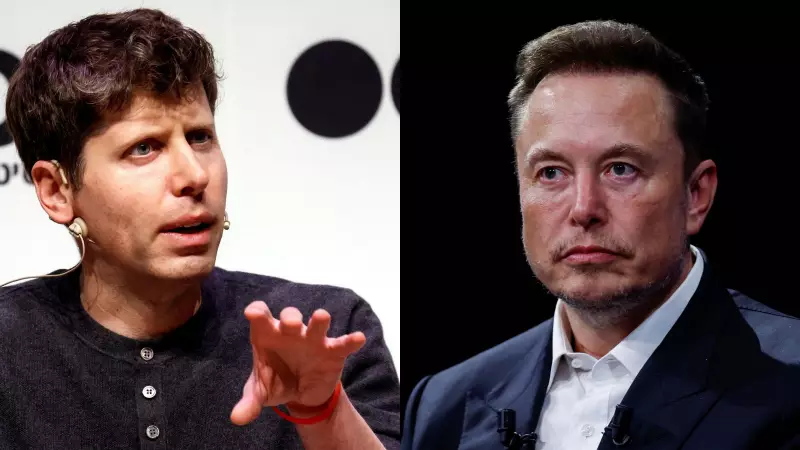
Elon Musk has been using recently unsealed court documents to criticize OpenAI and its leaders in posts on X. This legal fight centers on whether OpenAI misled Musk by taking his money as a non-profit and later shifting to a for-profit model. The case is now headed to trial in April 2026, making it one of Silicon Valley's most contentious disputes.
Judge Rules for Trial Based on Evidence
In his 2024 lawsuit, Musk accused OpenAI of abandoning its original non-profit mission that he funded. On January 15, US District Judge Yvonne Gonzalez Rogers decided the case should go to trial. She cited evidence from hundreds of unsealed documents. The judge dismissed efforts by OpenAI and Microsoft to have the lawsuit thrown out. She noted that a jury will need to assess the credibility of witnesses.
The trial is scheduled for April 27, 2026, in a Northern California federal court. This high-stakes jury trial is expected to reveal new details about OpenAI's early days. It may also shed light on CEO Sam Altman's brief ouster and Microsoft's relationship with the company.

Key Revelations from the Unsealed Documents
More than 100 documents related to Musk's lawsuit were unsealed last week. These include thousands of pages of evidence. Depositions come from key figures like Sam Altman, Greg Brockman, Ilya Sutskever, Mira Murati, and Satya Nadella. Former OpenAI board members Helen Toner and Tasha McCauley are also involved.
A diary entry by Greg Brockman, OpenAI's president, has drawn particular attention. In it, he expresses doubts about pushing Musk out and committing to a non-profit-only entity. Brockman wrote about the possibility of losing Sam Altman and questioned Musk's leadership. He also discussed funding options from Tesla or Google.
Brockman's entries indicate uncertainty about staying non-profit. He wrote that saying they were committed could be a lie if they later became a for-profit. The diary also mentions his desire to be a billionaire. Judge Rogers used these entries to rule that Musk had enough evidence of being misled.
The documents reveal other insights. Satya Nadella was concerned about Microsoft's position in AI when considering OpenAI. In 2022, Sutskever and Murati were worried about the rise of open-source lab Stability AI. OpenAI leaders thought about banning investors from backing competing labs.
Microsoft secured an early partnership with OpenAI over Amazon because Musk opposed working with Jeff Bezos. Musk called Bezos a tool and preferred Microsoft, despite disliking their marketing department.
OpenAI's Response to Musk's Claims
Musk has attacked OpenAI on X, accusing them of fraud and stealing a charity. He argues that the unsealed evidence shows OpenAI knew about for-profit plans early and misled stakeholders.
OpenAI responded by accusing Musk of cherry-picking from Brockman's private journal. In a blog post titled 'The truth Elon left out', OpenAI claimed Musk himself wanted OpenAI to be for-profit. They said Musk talked about needing $80 billion for a Mars city and wanted majority equity. He also mentioned his children controlling AGI in succession discussions.
Background of the Musk-OpenAI Feud
In 2015, Musk and Altman co-founded OpenAI as a non-profit with charitable goals. They aimed to develop AGI for humanity's benefit and counter Google's lead. By 2017, tensions grew between Musk and Altman. Musk left and started xAI in 2023.
OpenAI operated with a non-profit controlling a for-profit arm. In 2023, the non-profit board fired Altman for not being candid. Microsoft hired him briefly, but after staff threatened to quit, Altman was reinstated, and the board was replaced.
In 2024, OpenAI proposed becoming a for-profit public benefit corporation. After backlash, they backtracked, keeping non-profit control. By October 2025, they completed the transition to a for-profit PBC.
Musk initially sued in a California state court, withdrew it in June 2025, and filed a federal suit in August 2025. His lawyers described the situation as having Shakespearean levels of deceit.