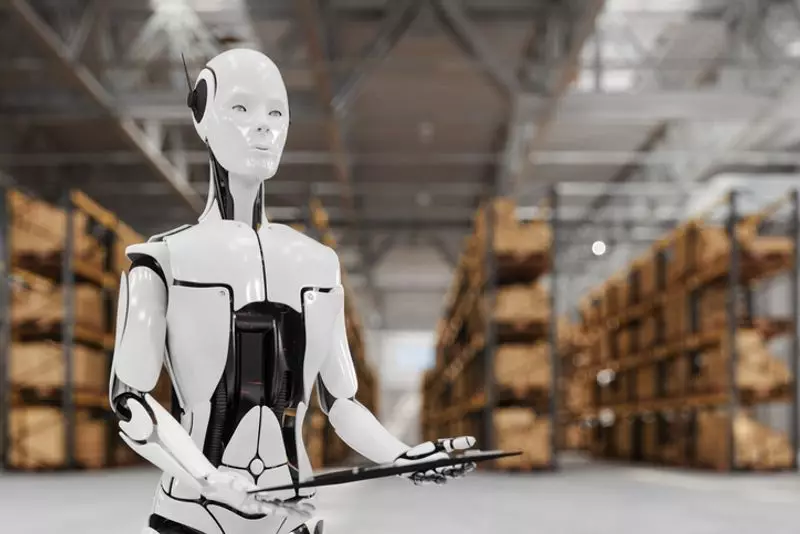
In a move that blurs the lines between science fiction and reality, tech mogul Elon Musk has unveiled the latest iteration of Tesla's ambitious humanoid robot, Optimus. The demonstration of the Optimus Gen-2, shared online, shows a robot performing delicate tasks with surprising grace, sparking a global conversation about the trajectory of artificial intelligence and its impact on the human experience.
Optimus Gen-2: From Concept to Careful Movement
The newly revealed prototype marks a significant technical leap from its predecessors. The video demonstration, which quickly went viral, showcases the humanoid robot walking at a steady 30% increased speed compared to earlier models. Its movements are fluid and balanced, a testament to advances in actuator and sensor integration.
More impressively, the robot is shown performing tasks requiring fine motor control and sensory feedback. In a carefully staged sequence, Optimus Gen-2 handles an egg, demonstrating a gentle grip that avoids crushing the fragile shell. It also operates a Tesla Cybertruck-inspired coffee machine, suggesting a future where such machines could navigate and interact with human-designed environments and tools.

These capabilities are powered by a sophisticated end-to-end neural network, trained entirely by Tesla's AI team. This system processes video input from the robot's cameras, recognizes the environment and objects, and generates precise commands for its limbs and hands, all in real-time.
The Grand Vision: A Future of Robot Butlers and Laborers
Elon Musk's vision for Optimus is characteristically grandiose. He frames these humanoid robots not as niche industrial tools but as a mass-market product destined for global adoption. Musk predicts a future where humanoid robots outnumber humans, taking over dangerous, repetitive, or mundane jobs.
The stated goal is profoundly utilitarian: to solve the problem of labor scarcity and free humanity from work they do not want to do. "The foundation of the economy is labor," Musk has argued, suggesting that a limitless supply of robotic labor could usher in an age of unprecedented abundance. Tesla aims to produce these robots at scale, potentially pricing them comparably to a mid-range car, which would represent a seismic shift in manufacturing and economics.
The Human Cost: Connection in an Age of Automation
However, this technological optimism is met with deep-seated philosophical and psychological concerns. Experts in AI ethics and human-computer interaction warn that replacing human roles with machines, especially in caregiving, education, or service, could have unintended consequences.
The core of the critique centers on human connection. A robot nurse might efficiently dispense medicine, but it cannot offer genuine empathy or compassion. A robot teacher might deliver information flawlessly, but it cannot inspire or understand a student's emotional struggles. Psychologists point out that many jobs provide not just income but also social identity, community, and a sense of purpose.
Widespread automation could lead to what some theorists call a "crisis of meaning," where human skills and interactions are devalued. The question becomes: In striving to create machines that mimic us, are we inadvertently engineering a world that needs the human touch less and less?
The debate is no longer about technical feasibility; Optimus Gen-2 proves that is rapidly being solved. The real debate is about the kind of future we are building. Do we want a world of efficient robot butlers where human labor is obsolete, or do we want to leverage AI to augment human capabilities and strengthen our communities?
Elon Musk and Tesla are charging ahead, betting that the market will embrace their mechanical helpers. As Optimus learns to walk, handle eggs, and make coffee, society must grapple with a much heavier task: defining the irreplaceable value of being human in an age of brilliant machines.