

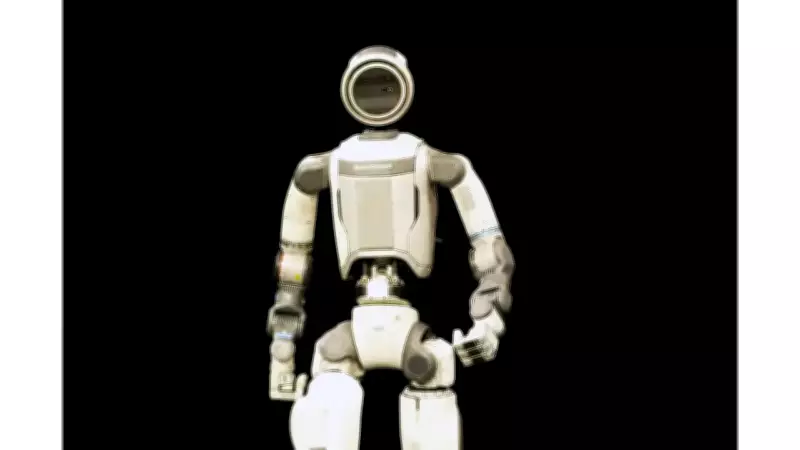
Former NASA robotics chief Robert Ambrose has identified a critical misconception in both the United States and China regarding robotics: the belief that humanoid robots will completely replace human jobs. In a statement shared with Fortune, Ambrose wrote, "What both the U.S. and China still misunderstand is the assumption that humanoids will replace jobs wholesale. Rather, they'll generate value by filling the gaps that current automation can't reach."
Focus on demonstrations, not real-world utility
Ambrose argued that while both nations are investing heavily in humanoid robotics, they are overly focused on flashy demonstrations and technical milestones rather than building machines capable of operating effectively across a range of real-world tasks. According to him, the future of robotics lies in complementing human workers, not replacing them entirely.
Performance gap between demos and reality
Ambrose highlighted the stark contrast between robotics demonstrations and their actual deployment in the field. Many state-of-the-art robots can perform complex movements and manipulate objects under controlled conditions, but their performance drops sharply in unpredictable real-world environments. He cited a Stanford report showing that robots achieving nearly 90% success rates in simulations managed only 12% of household tasks in real settings.

He also referenced Figure AI's 02 humanoid robot deployed at BMW's Spartanburg plant. While the robot reportedly logged 1,250 hours and handled more than 90,000 components, Ambrose noted it performed a single repetitive task over a ten-month period. He questioned whether such deployments justify the investment for many manufacturers, especially smaller firms.
Lessons from NASA
Drawing from his experience at NASA, Ambrose said machines designed for only one scenario often prove less useful than systems adaptable for multiple purposes. Current humanoid robots remain highly capable within specific conditions but lack the flexibility that human workers bring to manufacturing and logistics environments.
Robots as complements, not replacements
According to Ambrose, the value of human workers lies in their ability to switch between tasks, solve unexpected problems, and adapt to changing conditions. Future humanoid robots must demonstrate similar adaptability to play a meaningful role in factories and warehouses. Instead of replacing entire jobs, robots will be most useful for handling "in-between" tasks that are too variable for traditional automation but too repetitive for skilled human labor. Examples include transferring materials between workstations, restocking, operating single-purpose machines, and inspecting hazardous or confined areas.
Policy gaps and the path forward
Ambrose added that the U.S. lacks a clear policy framework to drive large-scale adoption of humanoid robots. "Incentives should be for deployment and integration, not just research and development," he said. He advocated for expanded manufacturing assistance programs and interoperability standards to help businesses deploy robots into existing workflows.
Ambrose concluded that success in robotics will depend less on building machines capable of impressive demonstrations and more on creating systems that can be deployed efficiently at scale. While America has the resources to lead that transition, he warned that current efforts remain focused on the wrong objectives.






