Throughout history, many great inventions have taken years to develop, but sometimes even our most vital safety innovations originate from a simple accident. In 1903, French chemist Édouard Bénédictus found himself holding a flask that had slipped out of his hands and fallen off a shelf. Expecting the familiar sound of shattering glass, he was surprised to hear only the noise of a bottle falling without breaking.
From a Laboratory Accident to a Protective Screen
While many people would have merely cleaned up the mess and moved on, Bénédictus followed his natural curiosity. He discovered that the flask had contained a special liquid substance known as cellulose nitrate. Even after the substance was gone, an invisible, extremely thin membrane clung to the glass walls inside. This sticky layer acted like a spider web, keeping all the pieces glued together despite the cracks.
It took Bénédictus considerable time and effort to turn the broken flask into a part of ordinary vehicles. He worked on creating a technique to embed cellulose nitrate between two glass sheets. According to the American Chemical Society, this "Triplex" glass was initially expensive but later used for making gas masks during World War I. It was not until the 1930s that the automotive industry fully embraced this invention. With increased car speeds came a greater danger of injury from flying glass. A study titled Motor Vehicle Safety – Has Technology and Legislation Made a Difference? explains that laminated glass became a game-changer in auto manufacturing. As soon as Ford adopted this material, there was a significant reduction in severe injuries caused by broken windshield glass.

Reducing Injuries on Roads
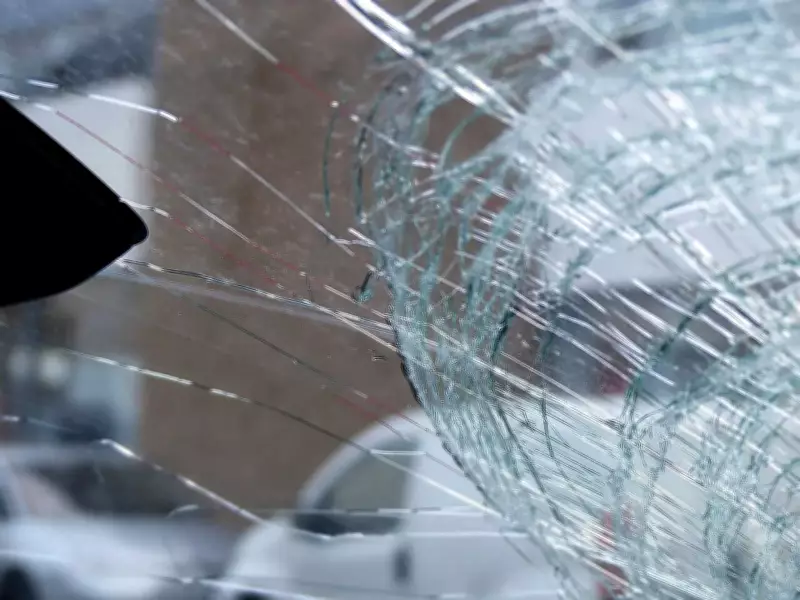
The effect of this invention is best observed in medicine. Before laminated windshields, injuries from flying glass often led to permanent scarring and blindness. Modern statistics highlight the great impact of Bénédictus's discovery. By absorbing the energy of an impact, the glass cracks into a spiderweb pattern but remains flexible, preventing jagged edges from slicing through anything in their path. It is an invisible guardian that most of us never think about until we need it.
Today, laminated glass is used not only in cars but also in skyscrapers, jewelry storefronts, and glass floors of tourist attractions, all thanks to a film of dried plastic in a French lab. This story exemplifies the importance of recognizing the significance of details when turning an oversight into something revolutionary. What started as a broken glass bottle became a spark that impacted countless lives, yet Bénédictus himself would never know the full extent of his contribution.
About the Author
The TOI Science Desk is an inquisitive team of journalists who delve into the realms of discovery to curate a captivating collection of news, features, and articles from the world of science. Whether it's genetic engineering, space exploration, or artificial intelligence, the TOI Science Desk ensures readers stay connected to the pulse of the scientific world.