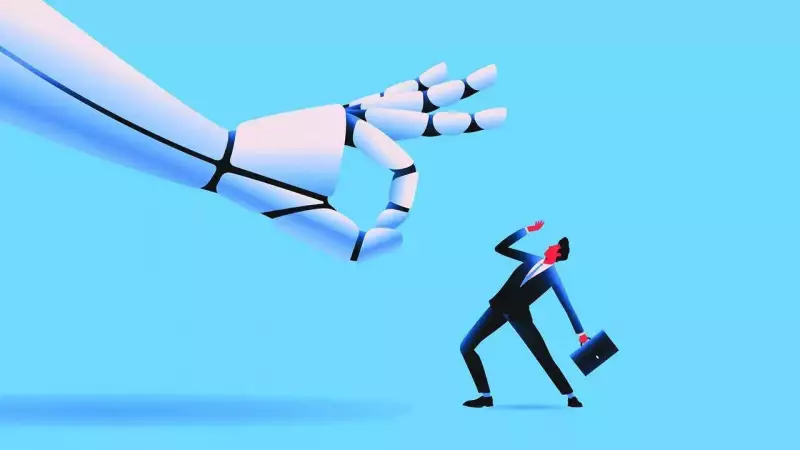
Goldman Sachs Predicts AI Will Automate a Quarter of All Work Hours
Analysts at Goldman Sachs have made a striking prediction about artificial intelligence. They say AI could automate twenty-five percent of all work hours globally. This automation will lead to significant job displacement across many sectors. However, the analysts believe it will stop short of causing a complete employment crisis.
Details of the AI Impact Forecast
Goldman Sachs analysts Joseph Briggs and Sarah Dong based their findings on Department of Labour job numbers. Their research paper states that the AI transition will displace a meaningful amount of labor. They estimate that six to seven percent of jobs could be displaced during the adoption period.
The analysts do not expect AI to eliminate jobs evenly. Different industries will feel the impact in varying degrees. Their baseline forecast includes a fifteen percent AI-driven labor productivity uplift. This productivity gain historically relates to job loss figures.

They project a peak gross unemployment rate increase of around 0.6 percentage points. This corresponds to roughly one million more unemployed workers at the peak.
Historical Context: From Horses to Humans
The research paper tackles a question first raised by economist Wassily Leontief in 1983. Leontief, a Nobel Prize winner, wondered if technology could become so advanced that humans might follow the path of horses. He referred to how tractors replaced horses in farming and transportation in the early 1900s.
Could computers make human thinking obsolete the way engines made horsepower unnecessary? The Goldman Sachs analysts concluded that people should be concerned but not overly worried. Their analysis suggests a balanced view is necessary.
Why Overly High Concern May Be Unwarranted
The prediction sounds alarming, but the analysts point to historical silver linings. Past periods of major technological change have consistently created many new, unforeseen jobs.
Technological change is a primary driver of long-run job growth through new occupations. Today, only forty percent of workers hold jobs that existed eighty-five years ago. This indicates that AI will likely create new roles even as it makes others obsolete.
More than six million workers now fill computer-related occupations that did not exist three or four decades ago. Another eight to nine million work in roles enabled by the gig economy, e-commerce, content creation, or video games. These sectors barely existed a generation ago.
Parallels from History: The Frozen Food Revolution
Fundstrat head of research Tom Lee recently drew a similar historical comparison. On the Prof G Markets podcast, he compared the current AI boom to the introduction of flash-frozen foods in the 1920s.
Lee cited research showing frozen food reduced farm workers from forty percent of the US workforce to just two percent. Yet, enough new jobs were created in other areas that the overall change proved positive for the economy.
"It freed up time," Lee noted. "It allowed people to be repurposed, and it created a completely new labor force." He imagined economists in 1920 fearing frozen food would wipe out the economy, when in reality it spurred new growth.
A Measured Conclusion on the Future of Work
The Goldman Sachs analysis ultimately urges a measured perspective. While AI automation presents real challenges for the workforce, history suggests resilience and adaptation. New technologies tend to reshape labor markets rather than destroy them entirely.
The key takeaway is that disruption is coming, but so is innovation in employment. The role of humans in production will evolve, but is unlikely to be eliminated. The transition requires careful management, but panic about a job apocalypse appears premature based on historical patterns.