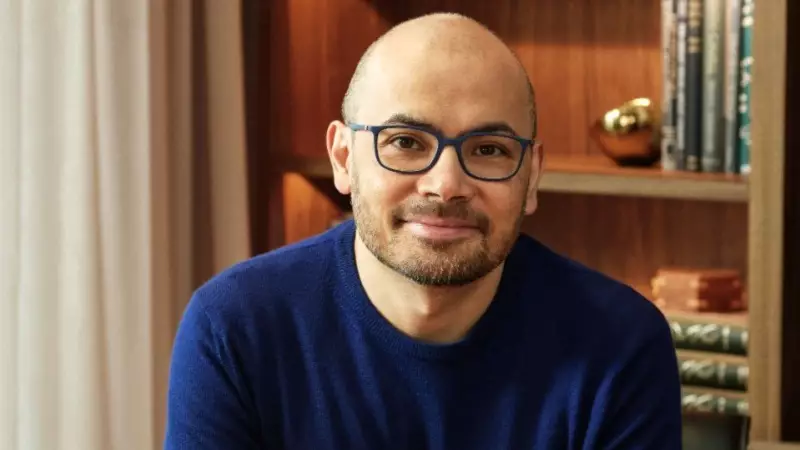
Demis Hassabis, the CEO of Google DeepMind, has made a striking statement about the current state of artificial intelligence. He claims that today's advanced AI models are missing several critical capabilities that are essential for true intelligence.
What AI Models Are Missing
According to Hassabis, modern large language models (LLMs) still lack important abilities. These include long-term planning, continual learning, and better reasoning skills. Even powerful systems like Google's Gemini 3, which can process text, images, and video, fall short in fundamental areas.
The Nobel Prize-winning researcher explains that current AI doesn't properly understand physics or causality. It cannot grasp how actions affect outcomes over time. This represents a significant limitation in today's artificial intelligence systems.

The World Models Solution
Hassabis believes the solution lies in developing what he calls 'world models.' These would be AI systems that better understand how the physical world operates. Such models could run simulations in their 'minds' to test hypotheses, much like human scientists do.
"If you really want to understand how the world works," Hassabis explained on a recent CNBC podcast, "so that maybe you can invent something new in the world, or explain something about the world that was not known before, which is basically what scientific theory does, then you have to have this accurate model of how the world works."
He emphasized that this understanding must start with intuitive physics but extend all the way to biology and economics. Only with such comprehensive models can AI achieve true scientific understanding and innovation.
Shared Vision Among AI Leaders
Hassabis is not alone in championing world models as AI's next frontier. Yann LeCun, former chief AI scientist at Meta and a renowned AI researcher, shares this vision. In December 2025, LeCun announced his new startup called Advanced Machine Intelligence (AMI), which will focus specifically on developing world models.
This convergence of opinion among top AI researchers signals a potential shift in the field's direction. Both leaders recognize the limitations of current approaches and see world models as the path forward.
Diverging Views on Intelligence
Despite their shared belief in world models, Hassabis and LeCun disagree on several fundamental concepts. Their most notable disagreement concerns the definition of general intelligence.
LeCun has argued that the concept of general intelligence doesn't really exist. He suggests that what we call human-level intelligence isn't truly general but rather super-specialized. "We think of ourselves as being general," the Turing Award winner said, "but it's simply an illusion because all of the problems that we can apprehend are the ones that we can think of."
Hassabis responded strongly to this perspective. He called LeCun's view "plain incorrect" and accused him of "confusing general intelligence with universal intelligence." In a post on X, Hassabis wrote: "Brains are the most exquisite and complex phenomena we know of in the universe (so far), and they are in fact extremely general."
Implications for AI Development
These discussions among AI leaders highlight important questions about the future of artificial intelligence. The debate between Hassabis and LeCun reflects deeper philosophical differences about what intelligence really means and how we should approach creating it.
Hassabis remains optimistic about AI's potential, particularly in fields like drug discovery. However, he insists that achieving this potential requires overcoming current limitations through better models of how the world works.
The push toward world models represents a significant evolution in AI research. Rather than focusing solely on processing information, researchers are now seeking to create systems that truly understand the underlying principles of reality.
As these discussions continue, they will likely shape the direction of AI development for years to come. The outcome could determine whether artificial intelligence remains a powerful tool or evolves into something approaching true understanding.