Google DeepMind CEO Demis Hassabis Opens Up About His Unconventional Sleep Habits
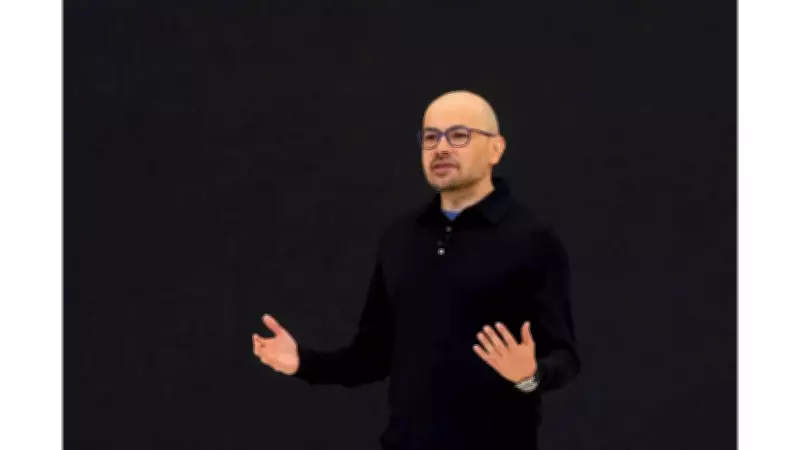
In a revealing video interview with Fortune, Google DeepMind CEO Demis Hassabis has candidly discussed his highly unusual sleep routine. The artificial intelligence pioneer admitted that he sleeps "very little," typically aiming for around six hours per night. Hassabis explained that he manages his waking hours by dividing them into two distinct workdays, a practice he has maintained for approximately a decade.
The Structure of a Two-Day Work Schedule
Demis Hassabis detailed his daily rhythm with remarkable clarity. His first workday consists of office hours packed with back-to-back meetings, followed by returning home for valuable family time and dinner. Around 10 p.m., Hassabis embarks on what he calls his "second day of work," which often extends until 4 a.m. This late-night block is specifically reserved for creative thinking and deep research.
"I can't imagine being creative at four in the morning. But, I come alive at about 1 a.m.," Hassabis told Fortune, highlighting how his productivity peaks during these unconventional hours. Despite this unusual pattern, he emphasized that he tries to maintain at least six hours of sleep, acknowledging that his habits are far from typical.

A Critical Warning About Sleep Deprivation
Despite his own minimal sleep schedule, Hassabis issued a serious warning about the dangers of insufficient rest. He stressed that getting less than six hours of sleep can become harmful to brain function and may lead to chronic sleep deprivation. These comments create an interesting tension between his personal habits and his professional understanding of cognitive science.
The Google DeepMind CEO's remarks underscore the importance of balance between acknowledging individual productivity patterns while recognizing the well-documented risks associated with sleep deficiency. His perspective offers a nuanced view of how high-achieving professionals navigate the demands of leadership in cutting-edge technology fields.
A Decade-Long Practice at the Helm of AI Innovation
Hassabis revealed that he has followed this unusual schedule for about ten years, making it an integral part of his rhythm as he leads Google DeepMind. The AI lab, which he co-founded in 2010 and was acquired by Google in 2014, represents the forefront of artificial intelligence research. In 2023, DeepMind merged with Google Brain to form the current Google DeepMind organization.
This team has been responsible for developing groundbreaking AI systems like Gemini and has achieved remarkable scientific recognition. Hassabis and his colleague John Jumper were awarded the prestigious 2024 Nobel Prize in Chemistry for their revolutionary work on protein structure prediction, demonstrating how unconventional work habits can coexist with world-changing scientific achievement.
Tech Leaders and Their Varied Sleep Patterns
Hassabis' unusual schedule reflects patterns shared by other prominent technology leaders. Elon Musk has stated that he functions best with approximately six hours of sleep, warning that less sleep negatively impacts his performance. During Tesla's production challenges in 2018, Musk even resorted to sleeping on the factory floor to maintain his demanding schedule.
In contrast, Salesforce CEO Marc Benioff has emphasized the critical importance of adequate rest, revealing in a 2023 interview that he averages about eight hours of sleep per night. This diversity of approaches among tech executives highlights how sleep remains a personalized aspect of professional performance, with no universal formula for success.
The insights from Demis Hassabis provide a fascinating glimpse into the work habits driving artificial intelligence advancement while offering important reminders about maintaining cognitive health through proper rest.