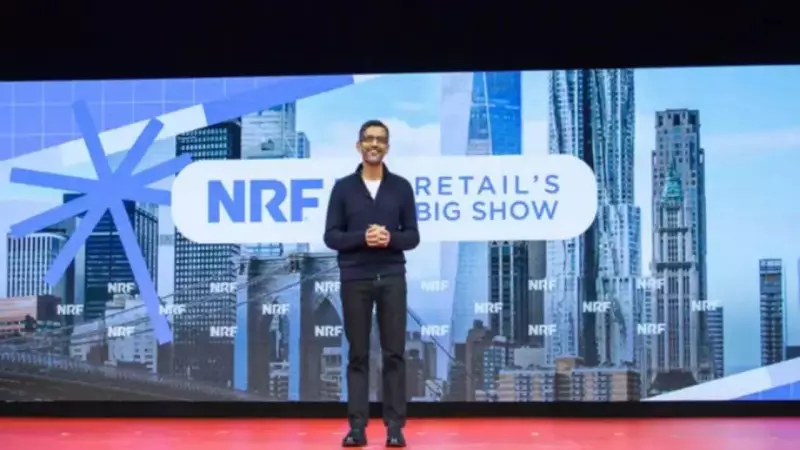
In a major address at the National Retail Federation 2026 event, Google CEO Sundar Pichai laid out the tech giant's ambitious roadmap to empower retailers through artificial intelligence. He described a pivotal moment where AI is fundamentally reshaping commerce, offering tools to navigate rapid change and meet evolving consumer demands.
The AI Inflection Point in Retail
Pichai framed the current era as exceptionally dynamic for the retail sector, a transformation primarily driven by the widespread adoption of AI technology. Google, which has partnered with retailers for over twenty years, is now applying a full-stack AI approach to spur innovation. The scale of this shift is staggering. In December 2024, Google's API for retailers processed 8.3 trillion tokens. By the end of 2025, that figure skyrocketed to over 90 trillion tokens, marking an elevenfold increase in just one year.
This explosive growth underscores the critical need for robust AI solutions that serve both businesses and shoppers. Reflecting on nearly three decades of collaboration, Pichai emphasized, "Success is always shared." Google's vision is to leverage its familiar products, infused with AI at every step, to create seamless experiences that build lasting customer engagement far beyond a simple search or purchase.

Introducing the Universal Commerce Protocol (UCP)
While discovering products is engaging, making final decisions can be complex. To bridge this gap, Google is pioneering "agentic commerce," where intelligent AI agents guide customers from initial exploration to final purchase. The cornerstone of this initiative is the Universal Commerce Protocol (UCP).
Designed as an open, agnostic framework compatible with existing standards, UCP aims to make the entire shopping journey frictionless. It was developed in collaboration with industry giants including Shopify, Etsy, Wayfair, Target, and Walmart, and has received endorsements from more than 20 other companies. The protocol supports cross-industry applications and is ready for immediate implementation.
A key application is native checkout. Shoppers can complete purchases directly within Google's ecosystem, such as AI Mode in Search and Gemini, without being redirected. For example, a customer searching for a Monos suitcase could instantly see personalised pricing, loyalty benefits, and product suggestions, and checkout via Google Pay, all while the retailer maintains full control over the customer relationship.
AI Agents and the Future of Retail Service
Artificial intelligence agents are revolutionising retail operations. By leveraging company and customer data, these agents deliver highly personalised experiences both online and in physical stores. Google's new offering, Gemini Enterprise for Customer Experience, is built specifically for this reality. Major retailers like The Home Depot and McDonald's are already deploying such agents.
Furthermore, Google is working with partners like Kroger to integrate AI-powered shopping assistants directly into their mobile apps. These virtual sales associates provide detailed guidance, proactive recommendations, and tailored support, digitally replicating the helpfulness of an in-store experience. Gemini Enterprise for Customer Experience, currently available in preview, integrates fully with the Universal Commerce Protocol to encourage broad, standards-based adoption.
On the logistics front, Google's delivery platform, Wing, is tackling the critical challenge of last-mile delivery. In partnership with Walmart, Wing doubled its delivery volume in 2025 within existing markets. This success has fueled expansion into new U.S. cities: Houston, Orlando, Tampa, and Charlotte. The goal is to create faster, more reliable delivery networks, allowing retailers to reimagine the shopping journey from the first click to the final doorstep.