

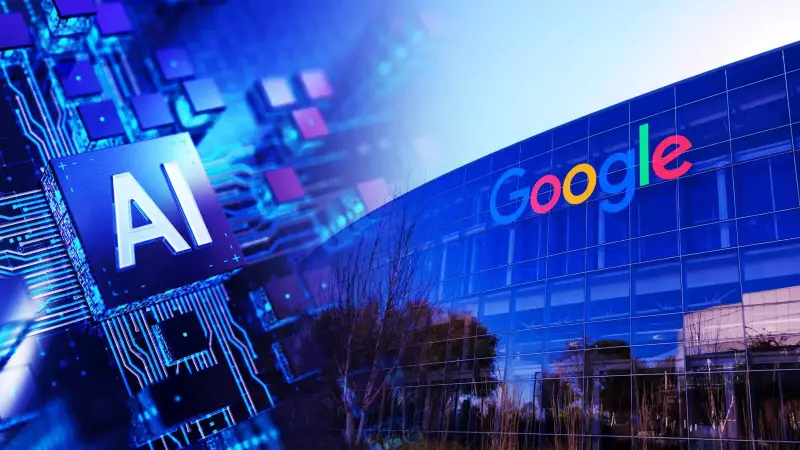
Google Unleashes Ironwood TPU to Revolutionize AI Development
In a significant move that could transform India's artificial intelligence landscape, Google has announced the widespread availability of its most advanced chip to date - the seventh-generation Tensor Processing Unit codenamed Ironwood. The technology giant is making this cutting-edge hardware accessible to customers worldwide in the coming weeks, marking a strategic push to attract more AI developers to its cloud platform.
The Ironwood TPU, which was initially unveiled for testing and limited deployment in April, represents Google's latest offensive in the intensifying battle for dominance in AI infrastructure. This custom-built silicon is specifically engineered to train and operate massive machine-learning models, positioning Google as a formidable competitor in the rapidly evolving AI hardware space.
Unprecedented Performance and Scalability
Built entirely in-house by Google's engineering teams, Ironwood is designed to handle both the training of large AI models and power real-time applications such as chatbots and digital agents. What sets this chip apart is its remarkable scalability - the technology can connect up to 9,216 TPUs in a single pod, effectively eliminating data bottlenecks that typically hamper the most demanding AI models.

According to Google's technical specifications, this breakthrough architecture allows users to run and scale the largest, most data-intensive models in existence. The company claims that Ironwood delivers more than four times the performance compared to its previous TPU generation, making it one of the most powerful AI accelerators currently available in the market.
The impact of this technological leap is already becoming evident. AI startup Anthropic has revealed plans to utilize as many as 1 million Ironwood chips to power its Claude language model, demonstrating the chip's capability to handle enterprise-scale AI workloads.
Intensifying Cloud Competition and Market Dynamics
The rollout of Ironwood occurs amid an increasingly competitive race between technology giants including Google, Microsoft, Amazon, and Meta to control the foundational infrastructure supporting artificial intelligence. While most large language models currently rely on Nvidia's GPUs, Google's TPUs represent a growing trend of custom silicon designed to optimize efficiency, performance, and cost for specialized AI workloads.
Alongside the new chip, Google has announced comprehensive upgrades across its cloud computing platform, aimed at making services cheaper, faster, and more flexible. This aggressive innovation strategy is part of Google's broader effort to close the gap with larger rivals Amazon Web Services and Microsoft Azure, both of which continue to lead the cloud market.
Recent financial data reveals Google Cloud posted $15.15 billion in third-quarter revenue, representing a 34% year-over-year increase. While impressive, this growth still trails Microsoft Azure's 40% expansion, though it exceeds AWS's 20% growth rate during the same period.
In a telling indicator of its commercial momentum, Google disclosed that it has signed more billion-dollar cloud contracts in the first nine months of 2025 than in the previous two years combined.
Substantial Infrastructure Investment and Future Outlook
To meet the exploding demand for AI infrastructure, Google has significantly increased its capital expenditure forecast for 2025. The company now plans to invest $93 billion, up from an earlier estimate of $85 billion, reflecting the substantial resources required to build and maintain cutting-edge AI hardware.
Google CEO Sundar Pichai emphasized the strategic importance of this investment during a recent earnings call, stating, We are seeing substantial demand for our AI infrastructure products, including TPU-based and GPU-based solutions. It's one of the key drivers of our growth over the past year, and we continue to see very strong demand as we invest to meet it.

For Indian developers and enterprises looking to leverage artificial intelligence, the availability of Ironwood TPUs represents a significant opportunity. The enhanced performance and scalability could accelerate innovation across various sectors including healthcare, finance, and education, potentially positioning India as a major player in the global AI ecosystem.
As the AI infrastructure war intensifies, Google's Ironwood rollout marks a crucial milestone in making advanced computing resources more accessible to developers worldwide, while simultaneously challenging Nvidia's dominance in the AI hardware market.





