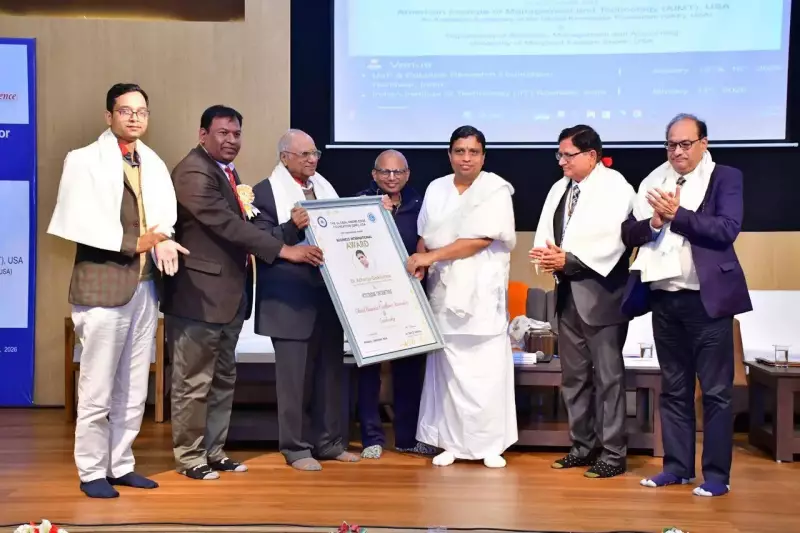
Haridwar Hosts Major International Conference on Smart Healthcare Technologies
Haridwar witnessed a significant gathering of experts from January 15 to 17 as Patanjali University, in partnership with the Indian Institute of Technology Roorkee, organized a three-day International Conference on "Integration of Smart Technologies in Healthcare and Management." The event took place at the Patanjali Research Foundation auditorium and received support from several prominent organizations including the American Institute of Management and Technology, Global Knowledge Foundation, Bureau of Indian Standards from Dehradun, and the University of Maryland Eastern Shore from the United States.
Conference Aims and Inaugural Ceremony
The conference set out with clear objectives to promote technology-driven, sustainable healthcare management and encourage global improvements in public health through smart technology integration. The inaugural session began with traditional elements including lamp lighting, Dhanvantari Vandana, and a group musical performance that set a thoughtful tone for the proceedings.
Revered Acharya Balkrishna extended a warm welcome to all dignitaries by presenting them with bouquets, shawls, and commemorative mementos. Vice Chancellor Prof. Mayank Kumar Agrawal delivered the official welcome address, after which participants witnessed the release of the conference abstract book containing research papers and presentations.

Expert Insights on Healthcare Technology
Dr. Dev Sharma addressed the gathering and highlighted the critical importance of service and public welfare in healthcare systems. He emphasized the growing need for secure and effective healthcare through digital health management, robust cyber security measures, and AI-assisted smart medical systems. His presentation specifically mentioned personalized treatment selection analysis as a promising area for technological advancement.
Prof. Laxmidhar Behera, Director of IIT Mandi, spoke extensively about telemedicine as an emerging discipline with tremendous potential. While acknowledging that artificial intelligence is transforming every aspect of modern life, he stressed that ethical considerations must remain at the forefront of technological implementation. Prof. Behera also expressed appreciation for Patanjali's ongoing efforts to preserve Indian knowledge systems and Sanatan values.
Cultural Perspectives and Technological Integration
Revered Acharya Balkrishna provided unique cultural insights during his address, underscoring the global recognition of Sanatan culture. He explained the concept of "Sahasra Chandra Darshan" as a traditional symbol representing longevity, health, and wisdom in Indian heritage. His elaboration extended to natural farming practices, maintaining harmony with nature, and the philosophy of "Vasudhaiva Kutumbakam" (the world is one family) within the context of globalization.
Focusing specifically on healthcare technology, Acharya Balkrishna highlighted the transformative role of the Internet of Things (IoT) in modern medicine. He discussed wearable sensors, connected medical devices, and smart hospital systems that enable efficient data collection and analysis for better patient outcomes.
Standards, Research, and National Development
Chief Guest Mr. Sachin Chaudhary from the Bureau of Indian Standards emphasized the fundamental importance of national standards, quality assurance, and safety protocols in healthcare systems. His address reinforced the need for standardized approaches to ensure reliability and effectiveness in medical technologies.
Prof. Kamal Kishore Pant, Director of IIT Roorkee, shared valuable insights on digital health, artificial intelligence applications, telemedicine advancements, and the global relevance of Indian cultural approaches to wellness and healthcare.
Dr. Vedpriya Arya presented a comprehensive overview of Patanjali's research and development initiatives, with particular focus on AI-based applications in agriculture technology, soil testing methodologies, and healthcare innovations. His presentation reaffirmed the vision of Atmanirbhar Bharat (self-reliant India) and Viksit Bharat (developed India) through technological advancement and indigenous research.

Collaborative Efforts for Future Healthcare
The conference brought together academic institutions, research organizations, and international partners to create a platform for meaningful dialogue about the future of healthcare technology. Participants engaged in discussions about balancing technological innovation with ethical considerations, preserving traditional knowledge while embracing modern advancements, and developing sustainable healthcare solutions for global populations.
This gathering in Haridwar represents a significant step toward integrating smart technologies into healthcare systems while maintaining cultural values and ethical standards. The collaborative efforts demonstrated during the three-day event highlight India's growing role in shaping the future of global healthcare through technological innovation and traditional wisdom.