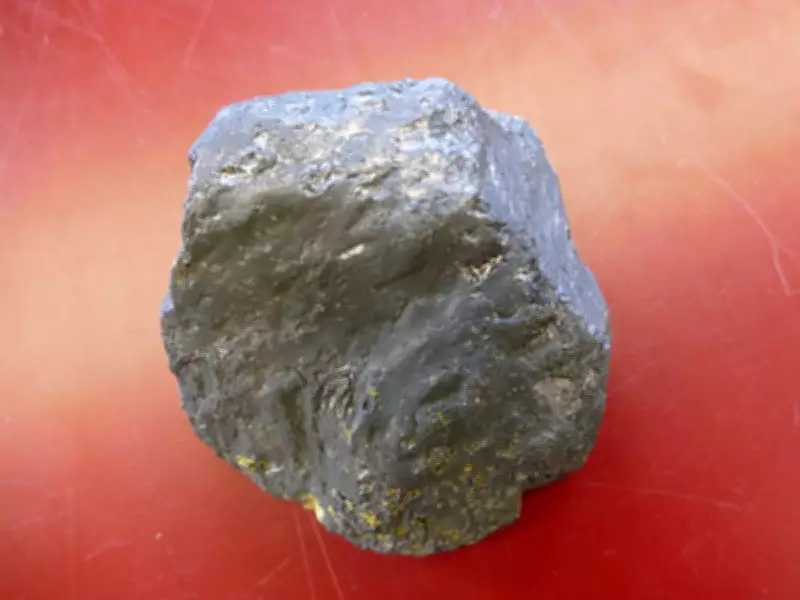
Disbelief often marks the first reaction to how one of the greatest material breakthroughs of the twenty-first century came about. The simple tools used to isolate a substance that altered the course of physics were a roll of sticky tape and a piece of graphite.
The Discovery of Graphene
In 2004, a team of researchers at the University of Manchester, led by Andre Geim and Konstantin Novoselov, peeled graphite with adhesive tape repeatedly until they were left with very thin flakes. These experiments successfully isolated graphene, a single layer of carbon atoms arranged in a flat honeycomb lattice. The method sounded more like a classroom science trick than a Nobel-winning experiment, demonstrating that profound materials breakthroughs do not always require expensive machinery.
Why One Atomic Layer Was a Big Deal
Before this experiment, the scientific community believed that an actual two-dimensional crystal would be unstable under normal conditions. Scientists thought such a thin sheet would melt or curl up due to thermal fluctuations. Graphene changed the paradigm of condensed-matter physics. One might not expect a layer only one atom thick to seem very solid, but the real question was whether its internal structure would keep it intact. When properly isolated and studied, graphene turned out to be extraordinarily stable. The material is surprisingly strong and stiff, and it also possesses very strange electrical properties due to its unique quantum behavior, as noted in a popular summary on NobelPrize.org.

How the Researchers Proved They Had Something New
The real breakthrough was not merely peeling thin flakes of carbon. The actual scientific achievement was to identify, measure, and characterize what had been isolated. NobelPrize.org explains that Geim and Novoselov had to perform rigorous transport measurements and microscopy to prove that the flakes acted as a separate, working two-dimensional system. The simplicity of the Scotch-tape technique was just the beginning, according to an account published in Nature Nanotechnology. The follow-through required serious, complex physics to prove that the material possessed the theoretical electron mobility long thought impossible to observe in real life. Having established these strict characterizations, the study confirmed that electrons in graphene behave like massless particles, moving at speeds far higher than those in conventional semiconductors.
The Myth of Grand Tools in Breakthrough Science
Graphene is not evidence that advanced modern science is always cheap or simple. However, it does challenge the assumption that important discoveries must always begin with visibly grand, intimidating apparatus. Sometimes the key advance is conceptual modesty: trying the obvious thing carefully enough to see if the world behaves better than current theories allow. As the documentation on NobelPrize.org explains, the researchers did not simply brute force the problem with technology. Instead, they cornered it with a minimalist idea and demonstrated through careful measurements that what they obtained was fully real. This serves as a reminder to the global scientific community that elegant science is not always spectacular or expensive if the idea is sound.
Why the Story Still Matters
The story of graphene is told around the world because it combines a very tactile image with a real, massive scientific payoff. Everyone can imagine a strip of tape peeling layers off a block of graphite. At the same time, the general public can easily understand the wonder of a material that is only one atom thick yet serves as an amazing conductor of both electricity and heat. The discovery provides a human-scale visual and frontier-science consequence for readers. These two elements are rarely found together in the same scientific story, which is why the public imagination remains captivated by the idea of a flat material derived from everyday pencil lead.