Hyderabad Researchers Pioneer AI-Driven Cancer Detection and Personalized Therapy
In a significant leap for oncology, researchers at the International Institute of Information Technology, Hyderabad (IIIT-H), are harnessing the power of artificial intelligence, genetics, and epigenetics to revolutionize cancer care. This innovative approach moves beyond traditional one-size-fits-all treatments toward precision medicine, aiming to enhance early detection and tailor therapies to individual patients.
Integrating Multiple Data Streams for Deeper Insights
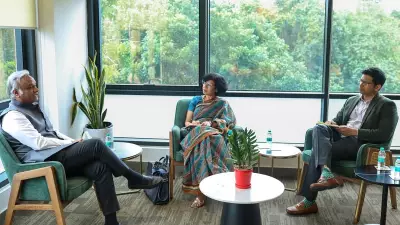
At the Centre for Computational Natural Sciences and Bioinformatics (CCNSB), Professor Nita Parekh and her team are merging genetic mutations, epigenetic changes, and medical imaging patterns to unravel the complexities of cancer development and behavior. "Cancer is now understood as a multifactorial disease," explains Professor Parekh. "It's shaped by genetics, gene regulation, environmental factors, and time, not just mutations alone." This holistic view marks a departure from early 20th-century theories that focused narrowly on tumor origins.
Decoding Cancer Genomes for Subtype-Specific Treatments
The team's work involves detailed analysis of cancer genomes to map variations across different cancers and their subtypes. "By examining genetic changes—from small DNA alterations to larger deletions, duplications, and gene fusions—we can identify which mutations are critical," says Professor Parekh. This research has yielded practical applications, such as in diffuse large B-cell lymphoma, an aggressive blood cancer. Here, the team discovered subtype-specific mutations and disrupted pathways that explain why some patients respond to treatment while others do not, paving the way for targeted therapies.

Epigenetics: The Missing Piece in Cancer Regulation
Beyond genetics, the team emphasizes the role of epigenetics, particularly DNA methylation, in cancer progression. "Genes alone don't tell the full story," notes Professor Parekh. Her group studies regulatory shifts involving promoters, enhancers, and non-coding RNAs, which, while not coding for proteins, significantly influence gene expression. In breast cancer, this approach combines methylation data, RNA profiles, and machine learning to identify early markers and signatures linked to various subtypes. "Breast cancer isn't a single disease; early identification of its subtypes is crucial for effective treatment," she adds.
AI-Driven Innovations in Medical Imaging
Parallel to genetic and epigenetic studies, the team is developing AI-driven tools for mammography analysis. Using curated datasets, they train models for early detection, segmentation, and classification of breast cancer. "This work complements our other research, offering a non-invasive method to improve diagnostic accuracy," Professor Parekh states. These advancements hold promise for reducing false positives and enabling timely interventions.
Implications for Global Cancer Care
The integration of AI with biological data represents a frontier in oncology, with potential impacts on:
- Early Detection: Identifying cancers at earlier, more treatable stages.
- Personalized Therapy: Customizing treatments based on individual genetic and epigenetic profiles.
- Research Efficiency: Accelerating discoveries through computational models.
As cancer care evolves, the work at IIIT Hyderabad underscores the importance of interdisciplinary collaboration in tackling one of humanity's most persistent health challenges. This research not only advances scientific understanding but also offers hope for more effective and personalized cancer treatments worldwide.