IIT-Madras Professor Leads Groundbreaking Efforts in Human Brain Mapping and Medtech Innovation
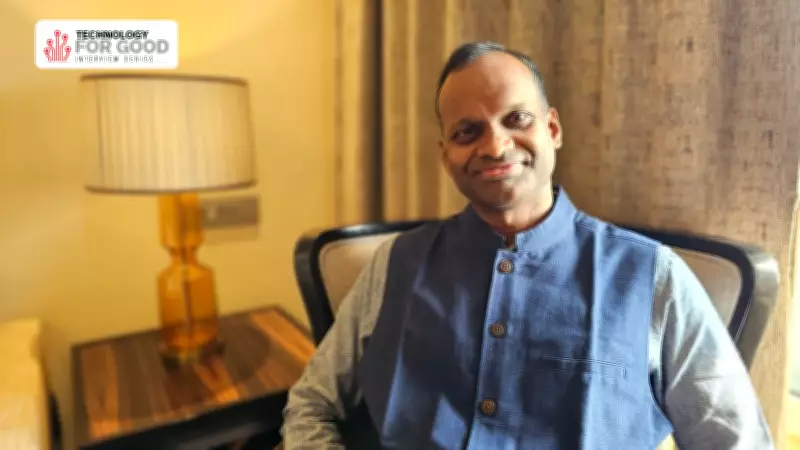
Professor Mohanasankar Sivaprakasam, a distinguished faculty member at the Indian Institute of Technology Madras (IIT Madras), is at the forefront of pioneering research aimed at creating the world's most detailed human brain maps. In an exclusive interview, he shared insights into his multifaceted roles, the transformative work being conducted at the centres he oversees, and the evolving medtech landscape in India.
Academic and Professional Background
Dr. Mohanasankar Sivaprakasam holds a B.Tech from Anna University, an MS in Electrical Engineering from North Carolina State University, and a PhD in Electrical Engineering from the University of California, Santa Cruz. His early research focused on implantable medical electronics, including work on retinal stimulation to restore vision in blind patients. This experience provided him with a deep understanding of neuroscience, electrophysiology, and biomaterials. Since returning to India in 2008, he has been dedicated to translational research at IIT Madras, bridging the gap between academic inquiry and practical healthcare solutions.
Leadership at Healthcare Technology Innovation Centre (HTIC) and Sudha Gopalakrishnan Brain Centre
Prof. Sivaprakasam heads two significant centres at IIT Madras: the Healthcare Technology Innovation Centre (HTIC) and the Sudha Gopalakrishnan Brain Centre. Established in 2011, HTIC serves as a leading medtech innovation ecosystem, collaborating with approximately 40 medical institutions, industries, and government agencies to develop affordable healthcare technologies. Over the past 15 years, HTIC has grown from a modest 3,000-square-foot space to a 15,000-square-foot facility, resulting in 14 commercially successful products that have benefited around two crore patients globally. The centre has also incubated more than 60 healthtech startups, fostering entrepreneurship in the sector.

The Sudha Gopalakrishnan Brain Centre, inaugurated in March 2022, focuses on imaging entire human brains at cellular resolution. This ambitious project aims to generate detailed maps across the human lifespan, including for various brain diseases. Unlike existing methods like MRI, which provide images at millimeter scales, this centre's work involves slicing brains, imaging them at half-micron detail, and digitally reconstructing them to create comprehensive atlases. The first set of human brain maps was released in early 2025, advancing the field tenfold and positioning India as a leader in global brain cartography efforts.
Notable Innovations and Impact
Under Prof. Sivaprakasam's guidance, HTIC has spearheaded several impactful innovations. Key projects include:
- Mobile Eye Surgical Unit: Designed to address cataract surgery backlogs in rural areas, this unit has facilitated 40,000-45,000 surgeries in remote regions.
- 3nethra and 3nethra Neo: Portable eye screening devices for adults and newborns, respectively, which have been deployed in over 2,500 locations across 40-50 countries, screening millions of individuals.
- Indigenous Endoscopy Platform: Developed over five years, this platform reduces India's reliance on imported endoscopy systems and represents a significant achievement in domestic medtech manufacturing.
- Startup Success Stories: Incubated startups like MediSim VR, which offers virtual reality surgical training, and C3 Med-Tech, focusing on ultra-portable eye screening using mobile phones.
Challenges in the Indian Medtech Ecosystem
Prof. Sivaprakasam highlighted structural challenges facing Indian medtech startups. While funding and innovation ecosystems have improved, scaling remains difficult due to conservative healthcare systems where hospitals, not patients, choose technologies. He emphasized the need for large domestic companies to aggregate products and markets, facilitating startup growth through acquisitions and distribution networks.

Global Medtech Startups with Indian Roots
He praised several Indian-origin startups making global strides, such as Twin Health, which uses digital twins to reverse metabolic disorders; Innovaccer, an AI-driven healthcare data company; and Voxelgrids, working on indigenous MRI systems. These examples showcase Indian talent but often target international markets, underscoring the potential for deeper domestic penetration.
Future Directions and AI in Healthcare
Looking ahead, Prof. Sivaprakasam sees immense potential in AI to streamline healthcare inefficiencies, from administrative tasks to diagnostics and disease prediction using non-medical data like sleep patterns. His work at the Sudha Gopalakrishnan Brain Centre, involving the imaging of over 350 human brains across lifespans and conditions, is poised to yield transformative insights over decades, influencing neuroscience, drug discovery, and clinical practices.
In summary, Prof. Mohanasankar Sivaprakasam's efforts exemplify a holistic approach to healthcare innovation, combining academic rigor, industry collaboration, and entrepreneurial support to address critical challenges and position India as a global leader in medtech and brain science.