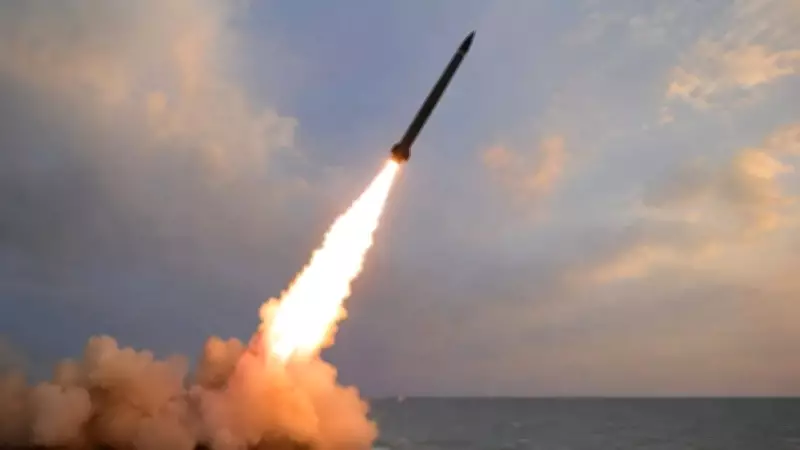
India achieved a significant milestone on Friday evening when the Defence Research and Development Organisation (DRDO) conducted the maiden test launch of a nuclear-capable intercontinental ballistic missile (ICBM) off the coast of Odisha. The test, which took place without prior official announcement, has placed India among a select group of nations possessing ICBM technology.
Details of the Test Launch
A defence source confirmed to Times of India that the missile tested falls under the ICBM category, although it does not appear to be the Agni-6 missile. DRDO has not yet issued an official statement regarding the test. This launch follows a report by TOI days earlier that DRDO was preparing for an ICBM test.
Global Context of ICBM Capability
Only four countries—the United States, Russia, China, and North Korea—currently possess and have deployed ICBMs with ranges exceeding 12,000 kilometres. France and Britain have operational nuclear-armed submarine-launched ballistic missile (SLBM) technology. If India perfects its ICBM capability, it will be able to reach any target worldwide, including the United States.

Strategic Implications
The possession of nuclear-capable ICBM technology enhances India's ability to respond to a nuclear attack, thereby strengthening its deterrence posture. It also demonstrates mastery in complex rocket propulsion, guidance systems, and re-entry technology. During a recent defence summit, DRDO Chairman Samir V Kamath stated that the organisation is ready to move forward with the Agni-6 missile as soon as government approval is granted, with all technical preparations complete.
Additional Technological Advancements
In a related development, India has successfully developed a glide weapon system technology that can convert an unguided warhead into a guided precision weapon. On Thursday, DRDO and the Indian Air Force jointly conducted the first flight trial of the Tactical Advanced Range Augmentation (TARA) weapon off the Odisha coast. This modular range extension kit is India's first indigenous glide weapon system, marking its entry into an elite group of countries with advanced stand-off weapons capabilities.
Conclusion
The successful test of the nuclear-capable ICBM and the advancement of glide weapon technology underscore India's growing prowess in strategic defence systems. These developments are expected to significantly enhance the country's national security and deterrence capabilities.