

India's IT Industry Embraces AI-Driven Transformation for Global Leadership
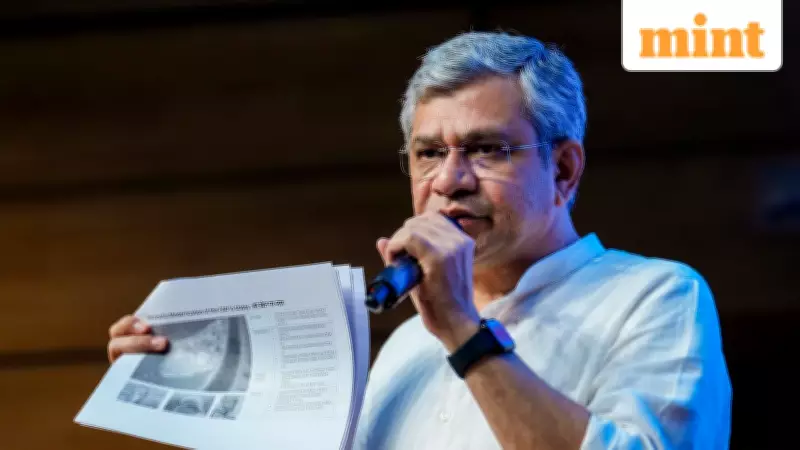
Union Minister for Electronics and Information Technology Ashwini Vaishnaw has declared that India's information technology sector is undergoing a fundamental shift, transitioning from its traditional services model to an artificial intelligence-driven approach. Speaking at an event in Bengaluru on Saturday, Vaishnaw described this strategic pivot as a monumental opportunity to establish India as a premier global hub for next-generation digital services.
Government-Industry-Academia Collaboration Fuels AI Revolution
The minister emphasized that this transformation is being meticulously guided through close coordination between government bodies, industry leaders, and academic institutions. This tripartite collaboration aims to ensure India can fully capitalize on what Vaishnaw termed "a new industrial revolution powered by artificial intelligence." Over the past eighteen months, extensive discussions with technology companies have focused on adapting to rapid global changes while simultaneously preparing the workforce and infrastructure for AI-led services.
Global Capability Centers Deliver AI Solutions Worldwide
Vaishnaw highlighted how artificial intelligence enables Indian firms to deliver specialized, high-value solutions to international clients through global capability centers based in India. These GCCs serve global shipping lines, retail corporations, and various multinational enterprises, creating exceptional opportunities for Indian engineers and technology professionals. "Indian IT is moving from the old model to a new AI-based services model," Vaishnaw stated, noting the sector's increasing focus on providing advanced AI solutions rather than conventional outsourcing services.

The expansion of global capability centers demonstrates India's growing appeal as a technology destination, with more than 2,000 GCCs already established nationwide. This number surpasses the scale witnessed during the traditional IT services boom and reflects increasing global confidence in India's technological capabilities. The minister attributed this growth to supportive government policies and a robust ecosystem that combines skilled talent with expanding infrastructure.
Data Centers Form Critical AI Infrastructure Backbone
Minister Vaishnaw stressed that data centers constitute the essential backbone of AI deployment and will be critical for delivering services at scale. Referring to announcements in the recent Union Budget, he explained that reforms aimed at boosting the data center sector would significantly support the rapid evolution of artificial intelligence technologies. "In the five-layer architecture of AI, data centers provide the core infrastructure. With sufficient data centers, we can deliver AI services globally," he elaborated.
The minister further clarified that both domestic and foreign investors would receive equal treatment regarding tax benefits related to data center investments, ensuring a level playing field for all participants in this crucial sector.
Academic Reforms Prepare Workforce for AI Era
Recognizing the need to prepare talent for this technological shift, Vaishnaw emphasized that academic institutions must urgently update their curricula to match evolving industry requirements. He revealed that more than 200 colleges have already revised their BTech and MTech programs to align with AI-focused skills development. The industry is concurrently working toward establishing a common curriculum framework, similar to initiatives previously implemented in the telecom and semiconductor sectors.
Vaishnaw described this comprehensive effort as a "trifecta" involving academia, industry, and government working in perfect synchronisation to build India's AI capabilities.
Karnataka Emerges as Manufacturing and Semiconductor Hub
The minister highlighted Karnataka's growing significance in electronics and semiconductor manufacturing, noting that the state has benefited substantially from government electronics component schemes. A large electronics manufacturing facility near Bengaluru is expected to employ approximately 40,000 people at a single site, demonstrating the scale of this industrial development.

Bengaluru is also playing a pivotal role in the semiconductor ecosystem, with two companies having expressed serious interest in establishing AI server manufacturing operations in India. Specific details will be announced once these plans are finalized, according to the minister's statement.
This comprehensive transition positions India's IT industry at the forefront of global technological innovation, leveraging artificial intelligence to deliver next-generation services while creating substantial employment opportunities and strengthening the nation's economic foundation.
